
16.02.1943–present
José Ramón Díaz Alejandro
Ramón Alejandro (born 1943) left Cuba at seventeen and studied in Buenos Aires, then from 1963 lived in Paris, where he worked in Johnny Friedlaender’s printmaking studio. He drew machines hovering in empty space under harsh shadows, later tropical fruit and imaginary ruins, illustrated books and wrote prose in Spanish. He now lives in Miami.
Biography
Alejandro’s first solo exhibition, shown under the single title “Alejandro”, opened in 1969 at the Galerie Maya in Brussels. Two years later it was repeated at the Galerie Jacques Desbrière in Paris, and in 1987 it returned to Paris, to the Galerie Du Dragon.
He was born on 16 February 1943 in Havana and spent his childhood in the suburb of La Víbora. His grandfather and an uncle were painters who had trained at the academies of fine arts in Madrid and Havana. As a child he saw the copies of famous masterpieces made by his grandfather, and later travelled to see the originals. In 1960 he left Cuba and his family. He first visited Argentina, Brazil and Uruguay and began studying at the school of fine arts in Buenos Aires. In 1963 he came to Europe, travelled through Spain, including Asturias, where his family came from, and settled in Paris. There he joined Johnny Friedlaender’s printmaking studio.
His work was shown in Cuba too: in 1965 he took part in the “Exposición de La Habana” at the gallery of the Casa de las Américas. Two years later his prints were in an exhibition of Latin American graphic art in Rome. From 1969 to 1971 he held a fellowship from the Cintas Foundation in New York. In 1971 he took part in two Paris exhibitions, “Grands et Jeunes d’Aujourd’hui” and the “Salon de Mai”, at the Musée d’Art Moderne de la Ville de Paris.
He began painting in 1966 and worked in a wide range of techniques: engraving, etching, drawing, watercolour, oil, acrylic. He worked slowly and with ever greater care. In his early sheets and canvases, disquieting machines hover in empty space, lit by a harsh light from the side: cages, nails, harrows, rakes and mechanisms with no evident purpose, as if ready to pierce and crush. The absurdity of the devices sits beside the flawless logic of their intricate cast shadows. The titles are often humorous, for example “The Furniture Store of Louis XVII”, or drawn from literature, notably Octavio Paz. Critics compare the atmosphere to Piranesi’s prisons.
From 1978 buildings crudely hewn from rock appear in his work, some on fragile scaffolding, others sharp as a knife blade, remains of unknown civilisations amid tropical greenery. After a trip to Venezuela in 1988, cut tropical fruit becomes more and more frequent, showing its pulp on curved surfaces among playing cards, dominoes, dice and Cuban coins. Figures, animals and seeds look at the viewer from the side. He is also drawn to paper rockets, kites and iridescent colours. In the 2010s calligraphic inscriptions appeared on the backs of his canvases, and later the words made their way onto the front.
He illustrated many books with engravings and lithographs. He also wrote himself, in Spanish: the surrealist story “Pure Perte” (1974) with erotic drawings; “Adua la Pedagoga” (2012), about his first years in Paris and the Cuban circle there, which included the cinematographer Néstor Almendros; and “La Familia Calandraca” (2014), the first volume of a planned tetralogy. From 1974 to 1977 he contributed to the journal “Minuit”. His own books appeared from Fata Morgana and other publishers.
He has made few sculptures. In 2007, at the Grand Palais in Paris, he showed one of his machines, built from a refrigerator, in a travelling exhibition of Cuban artists.
In Paris he took French citizenship and set up a studio at the foot of Montmartre. In 1976–1978 he lived in Madrid. From 1995 to 2004 he lived in Miami; in 2005 he tried without success to settle in Havana; from 2007 he lived in Mexico City, then returned to Paris. Since 2011 he has lived in Miami, in South Beach. His works are held by the Bibliothèque nationale de France, the San Diego Museum of Art, the Musée d’Art Moderne de la Ville de Paris, the Centre National d’Art Contemporain and the Musée des Beaux-Arts in Caen.
Profile notes
Profile and sources
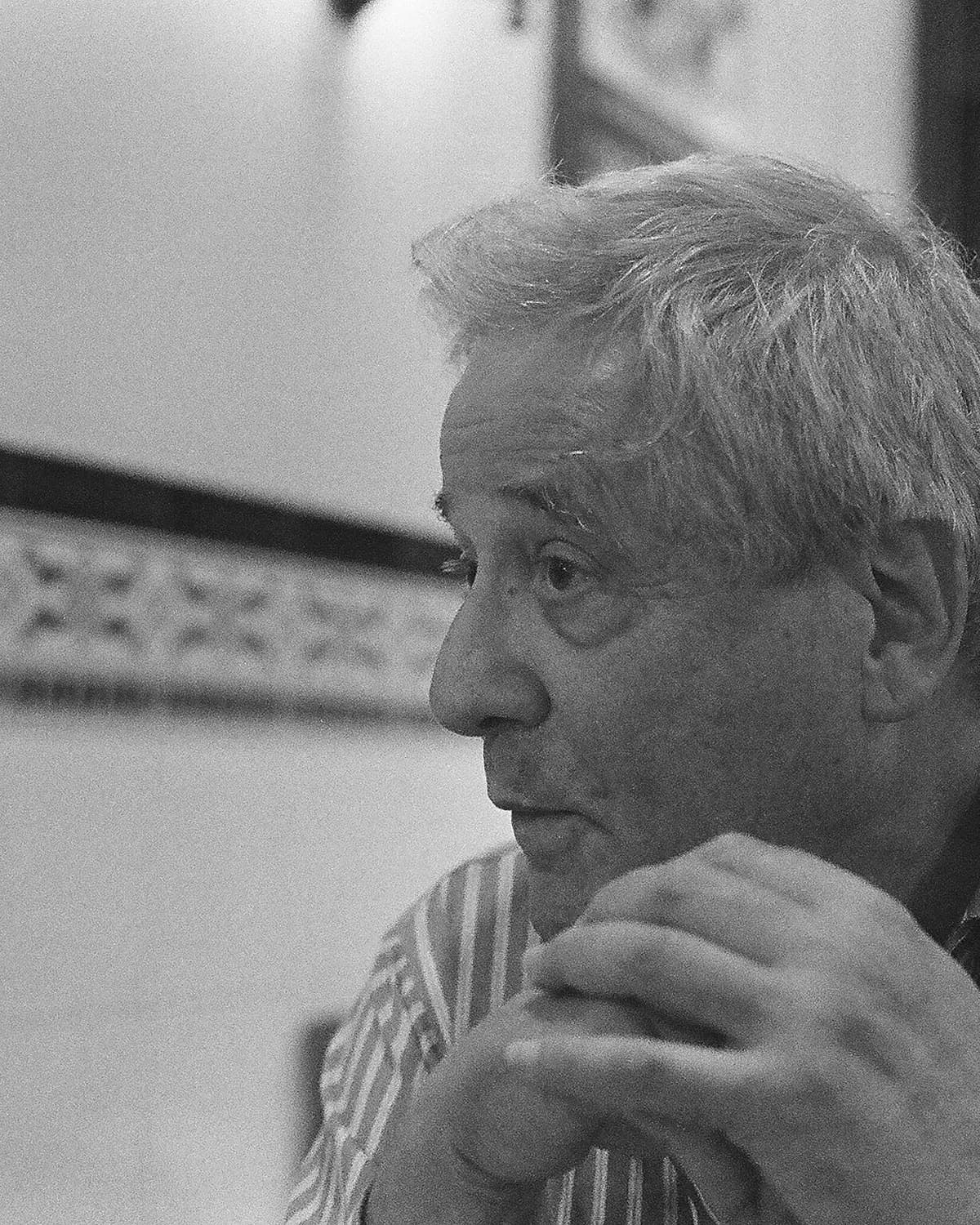
Image
Artist image
Rodrigo Lopes de Barros; Wikimedia Commons; CC BY-SA 4.0.
