
1725–1803
José de Alcíbar
José de Alcíbar worked in Mexico City in the second half of the eighteenth century and was one of the founders of the Royal Academy of San Carlos, where he taught until his death. He painted altarpieces and pictures for churches, and portraits of a viceroy and of clergy. His paintings are held in Mexico, Madrid and Budapest.
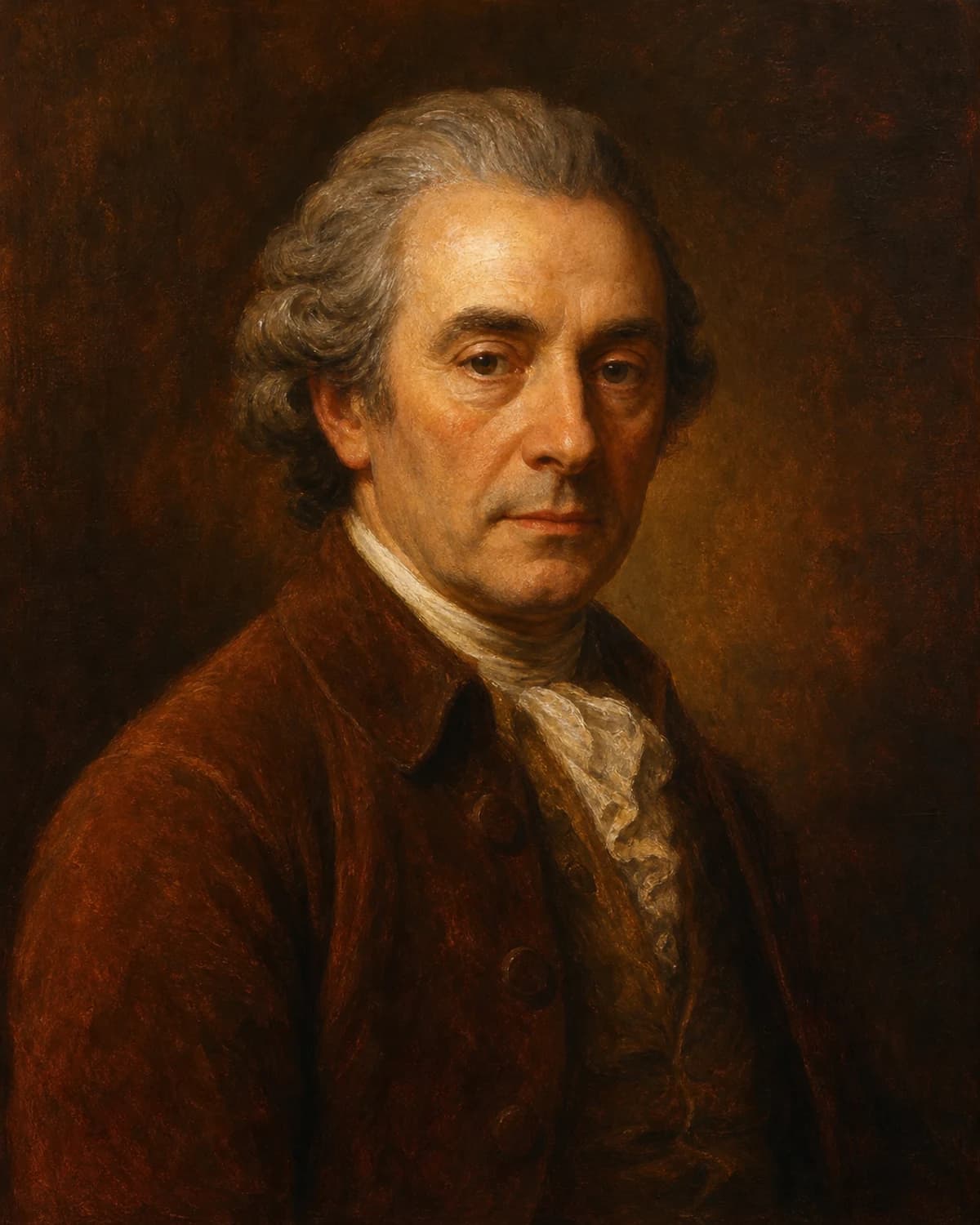
Biography
The dates of Alcíbar’s life are not firmly established: his birth year is given as 1725 or as “around 1725–1730”, and he died in 1803. For an eighteenth-century artist from New Spain this is the usual situation: no parish records appear in the texts available to us, and checking the details is hard.
He was born in Mexico City, of Basque origin. His surname is spelled in different ways: Alcíbar or Alzíbar.
About his training people speak cautiously. Possibly his teacher was José de Ibarra, one of the leading Mexican painters of his time. What is known for certain is something else: Alcíbar worked in the studio of Miguel Cabrera, the most sought-after artist in New Spain in the middle of the century. His own period of activity is usually counted from 1751; by some accounts it lasted until 1801, by others until 1806.
In 1784 the Royal Academy of Fine Arts of San Carlos opened in Mexico City, and Alcíbar was among its founders. He became a professor and took part in the life of the academy until his death. It is said that he also took an active part in other cultural affairs of the city, but I found no details of this. The paradox is that the founding of the academy itself led to a change of taste: painters trained in Spain, such as Ginés Andrés de Aguirre and Cosme de Acuña, came to Mexico and had a marked effect on local styles. So the success of Alcíbar as a teacher in part prepared the ground for what pushed aside the earlier school.
Most of his works are religious paintings made for churches. The five altarpieces in the Chapel of San Nicolás Tolentino at the Hospital Real de Indios (the Royal Hospital for Indigenous People) were completed by 1781, and he painted images for them. Five years later he painted two canvases for the pennons of the Galician Brothers, who had an altar in the chapel of the Convent of San Francisco in Mexico City. One of his best-known works, “The Adoration of the Kings” (1775), is in the sacristy of the Templo de San Marcos in Aguascalientes. Among his other works are “The Blessing of the Table” and “The Ministry of Saint Joseph” in the Museo Nacional de Arte in Mexico City, “Santa María la Mayor” and “Conditions for a Good Confession” in the Pinacoteca de La Profesa, and “Saint Augustine” in the Museo Regional de Guadalajara. Portraits hold a notable place. There is his portrait of the Viceroy Antonio María de Bucareli in the Templo de La Profesa and that of Bishop Antonio de San Miguel, now in the Museo Regional Michoacano. The Museo Nacional de Historia in Chapultepec Castle holds the portrait of Sister María Ignacia de la Sangre de Cristo, and the Museo Soumaya in Mexico City the portrait of María Ignacia Moreno y Barrio, daughter of the Marquis of Valle Ameno. Portraits of the nun María Anna Josefa de San Ignacio and of Martín de Mayorga are in Budapest (Museum of Fine Arts) and in the Museo del Prado respectively, and the portrait of Andrés García Gamba is in the Museo de La Rioja in Logroño.
He also painted scenes from the series of casta paintings (pictures of the racial classifications of colonial society): “From Indian and Loba, Sambayga Is Born” belongs to the Pérez Simón collection. An altarpiece of the Virgin of Guadalupe is in the Archdiocese of Santa Fe in New Mexico, and “Saint Joseph and the Virgin as Mediators” is in the Museo de América in Madrid.
Alcíbar died in Mexico City in 1803.
Related context
Associations
Works connected through artistic movements, cultural context and period. Priced works available in this market appear first.








Profile notes
Profile and sources
Image
Artist image
На основе открытого изображения: Luis Alvaz; Wikimedia Commons; CC BY-SA 4.0.
