
12.01.1856–15.04.1925
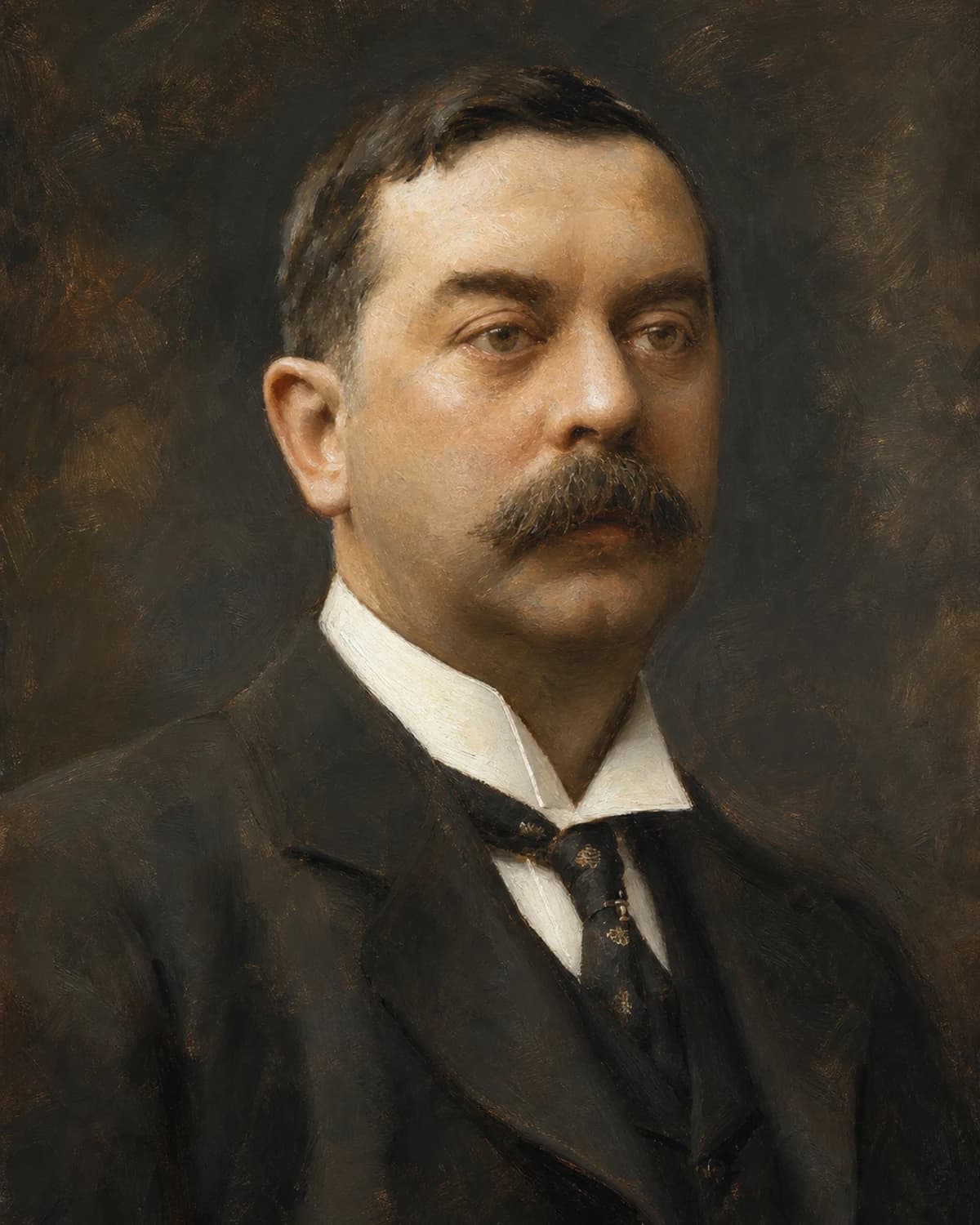
John Singer Sargent
John Singer Sargent (1856–1925), an American born in Florence who spent almost his whole life in Europe, was considered the leading portrait painter of his generation. After the scandal over his “Portrait of Madame X” at the Salon of 1884 he moved to London. He left about 900 oil paintings, more than 2,000 watercolours and the murals in the Boston Public Library.
Biography
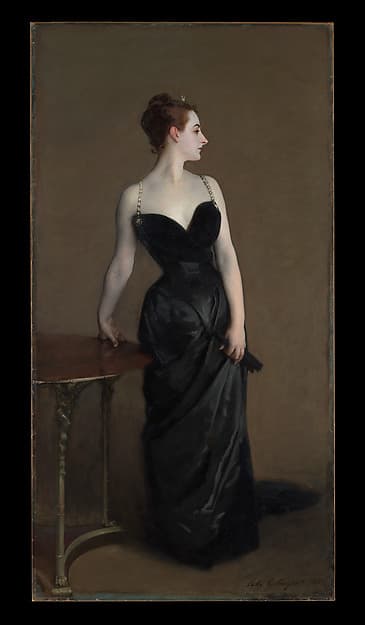
In the first version of the portrait of Madame Gautreau, the strap of her dress slipped off her right shoulder. Sargent had sought the chance to paint this Parisian beauty on his own initiative, without a commission; he worked on the picture for more than a year and showed it at the Salon of 1884. The public greeted the canvas with such hostility that he put the strap back in place, but it was too late: French commissions dried up.
In 1885 he admitted to his friend Edmund Gosse that he was thinking of giving up painting for music or business.
He was born on 12 January 1856 in Florence. His father, FitzWilliam Sargent, was an eye surgeon in Philadelphia; after the death of their elder daughter the parents left for Europe and stayed on there as wandering expatriates. They had stopped in Florence because of a cholera epidemic. The boy had no regular schooling; his mother, a capable amateur artist, gave him sketchbooks and took him on drawing excursions. At thirteen he had a few watercolour lessons from the German landscape painter Carl Welsch. He grew up well read and musical, and spoke English, French, Italian and German fluently.
An attempt to enter the Academy of Florence came to nothing, as the school was being reorganised at the time. In Paris, from 1874, he studied with the portraitist Carolus-Duran. That same year he passed the demanding entrance examination for the École des Beaux-Arts at his first attempt. Carolus-Duran taught painting in the manner of Velázquez, directly on the canvas with a loaded brush and without careful preparatory drawing, and Sargent quickly became the star pupil of the studio. His own inclination was towards landscape, but his teacher turned him to portraiture. His first major portrait, and his first canvas accepted at the Salon, was the portrait of his friend Fanny Watts in 1877. In 1879 he painted Carolus-Duran himself, and Henry James later remarked that this talent, on the very threshold of its career, already had nothing more to learn.
Then came Spain. Sargent studied Velázquez, listened to Spanish music and watched the dancing; out of this journey grew “El Jaleo” (1882). As a musician he was almost as gifted as he was as a painter, and he did much to make Gabriel Fauré known. Velázquez’s “Las Meninas” echoes in “The Daughters of Edward Darley Boit” (1882), whose unusual composition provoked debate.
After the failure of “Madame X” he moved to London for good, settling in Chelsea in 1886. Henry James had urged him to make the move. As early as 1885 he had stayed with Monet at Giverny and painted him at work at the edge of a wood; after that visit he began painting out of doors himself, and bought four of Monet’s pictures for his own collection. Even so, he was not accepted as an Impressionist: in Monet’s words, Sargent was too much under the influence of Carolus-Duran. His first major success at the Royal Academy came in 1887 with “Carnation, Lily, Lily, Rose”, in which two girls light paper lanterns in a garden at Broadway in the Cotswolds. The Tate Gallery bought it at once.
His first professional trip to New York and Boston, in 1887–1888, brought more than twenty commissions, among them a portrait of the collector Isabella Stewart Gardner. In Boston he had his first solo exhibition. By then his method was settled. Sargent would visit the client’s house to see where the portrait was to hang, go through the wardrobe and choose the dress. He usually needed eight to ten sittings, though he tried to capture the face in one. He made hardly any sketches, laying the paint directly on the canvas, and sometimes broke off to play the piano for his sitter. He kept no assistants: he primed his canvases, varnished them and chose the frames himself.
In the 1890s he painted on average fourteen commissioned portraits a year. “Lady Agnew of Lochnaw” (1892) belongs to that decade. He was called “the Van Dyck of our times” (by Rodin, it is said, not without irony). In 1898 the London art dealer Asher Wertheimer commissioned twelve portraits of his family from him, the largest commission from a single patron in his whole career; they are now in Tate Britain. He was elected a member of the Royal Academy. Among his sitters were Robert Louis Stevenson and Presidents Theodore Roosevelt and Woodrow Wilson.
In 1907, at fifty-one, he officially closed his studio. Painting a portrait, he said, would be quite amusing if one were not obliged to talk while doing it. That same year he painted his last self-portrait, for the Uffizi Gallery. After that came watercolours, more than two thousand of them in all: Venice, often seen from a gondola, the Alps, where he travelled with his sisters, the Middle East, Maine, Florida. In 1909 he showed eighty-six watercolours in New York, and the Brooklyn Museum bought eighty-three of them.
For almost thirty years, from 1895 to 1919, he worked on the “Triumph of Religion” murals in the Boston Public Library. He never painted the final section: the panels “The Church” and “The Synagogue”, installed at the end of 1919, drew accusations of anti-Semitism, and Sargent abandoned the plan.
In 1918 the British Ministry of Information made him a war artist. The result was the huge painting “Gassed”. In the same year his niece Rose-Marie, whom he had painted many times in the Alps, was killed when the Paris church of Saint-Gervais was shelled.
By the time he finished his portrait of John D. Rockefeller in 1917, critics were already placing him among the masters of the past, and the modernists held that he understood neither American life nor Cubism and Futurism. Sargent accepted this in silence but did not change his opinion of the new art: what he admired now, he said, were Ingres, Raphael and El Greco. I think this answer says a good deal about him. His last portrait in oil, painted in 1925, was of the Marchioness Curzon of Kedleston. Sargent died on 14 April 1925 (the 15th is sometimes given) at his home in Chelsea, London. He is buried in Brookwood Cemetery in Surrey.
Artist works
Works by the artist
Works by John Singer Sargent available in this edition of NEOARCA.
Related context
Associations
Works connected through artistic movements, cultural context and period. Priced works available in this market appear first.








Profile notes
Profile and sources
Image
Artist image
На основе открытого изображения: James E. Purdy; Wikimedia Commons; Public domain.
