
10.1632–15.12.1675
Johannes Vermeer
Johannes Vermeer (1632–1675) lived all his life in Delft, served as a headman of the local Guild of Saint Luke and, like his father, dealt in paintings. About thirty-five of his works are known, among them “The Milkmaid”, “View of Delft”, “Girl with a Pearl Earring”, “The Astronomer” and “The Geographer”. After his death he was almost forgotten; the French critic Théophile Thoré-Bürger rediscovered him in the 1860s.
Biography
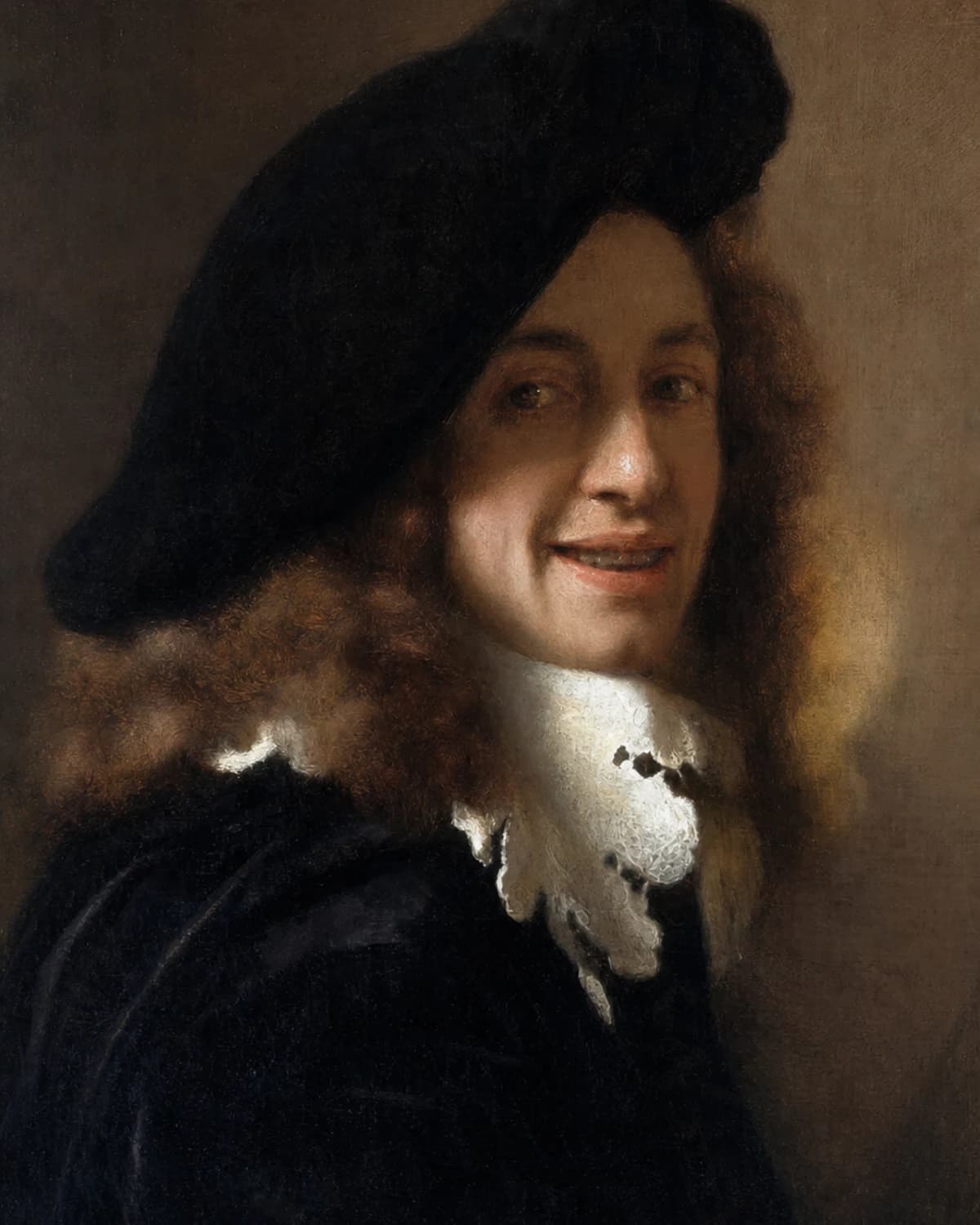
What do we know about Vermeer for certain? The record of his baptism in Delft on 31 October 1632. The record of his marriage. Guild documents, IOUs, the inventory of his possessions made after his death. Not a single letter, not a single drawing, not one reliable portrait. Some thirty-five paintings. Everything else has to be inferred from them and from the archives.
His father, Reijnier Jansz, wove silk, was registered with the guild as an art dealer, and in 1641 bought a large inn on the market square, the “Mechelen”. The purchase weighed heavily on the family, and the debts dragged on for years. When his father died in October 1652, Johannes took over his picture dealing. Who taught him to paint is unknown. Leonaert Bramer and Carel Fabritius are mentioned, but there is no proof.
In April 1653 he married Catharina Bolnes. She was a Catholic, from a noticeably richer family, and her mother, Maria Thins, was at first against the match; most likely it was she who insisted that the groom convert to Catholicism before the wedding. They were married in the quiet village of Schipluiden near Delft. The young couple moved in with the bride’s mother, in a quarter that people in Delft called the “Papists’ Corner”. In December of the same year Vermeer joined the Guild of Saint Luke; later he was elected its headman several times.
His first works look nothing like the Vermeer we are used to. “Diana and Her Companions”, “Christ in the House of Martha and Mary”: large canvases on mythological and Gospel subjects. “The Procuress” (1656) is already a genre scene, but a noisy one, with echoes of the Utrecht Caravaggists. And then he shuts the door. One room, a window on the left, one or two people.
A woman reads a letter. Weighs pearls. Pours milk. Plays the virginal. In “The Milkmaid” (around 1658–1659) the bread, the earthenware jug and the rough whitewashed wall are painted so densely that you want to touch them, and the thin stream of milk running from the jug into the bowl looks almost like a rite. “View of Delft” (around 1660–1661) is one of his two townscapes; Marcel Proust called it the most beautiful painting in the world. “Girl with a Pearl Earring” (around 1665) is not a portrait at all but a tronie, a study of a head in exotic costume, a genre the Dutch were happy to buy. Who sat for it is unknown and, it seems, will stay unknown.
How he achieved this is partly understood. Expensive ultramarine made from lapis lazuli (Vermeer did not stint on it even where a cheaper paint would have done), highlights laid on in small light dots, very exact perspective. The argument about the camera obscura has gone on for a long time: the soft edges and glowing “circles” on objects resemble the image in a lens. There is no direct evidence, and the inventory of his possessions after his death lists neither a camera nor lenses. To my mind it does not matter all that much. Optics may have suggested something, but the choosing and the leaving out were still his.
Why are there so few paintings? The historian John Michael Montias, who spent many years working in the Delft archives, proposed a plausible answer: Vermeer apparently had a regular buyer, the Delft collector Pieter van Ruijven, who acquired most of his works. With a patron like that one could paint two or three pictures a year and take one’s time. At the end of the 1660s come “The Astronomer” (1668) and “The Geographer” (1669), male figures, which are rare in his work. Delft was then a city of cartographers, scholars and lens grinders, so both paintings grew out of surroundings the artist knew well.
In 1672, which the Dutch call the “Disaster Year”, the Republic was attacked by France and its allies, and the picture market collapsed. Vermeer fell into debt and died in December 1675; on 15 December he was buried in the Old Church in Delft (many reference books give that date as the date of his death). Catharina was left with eleven children and the creditors, and she asked the court to release her from her husband’s debts. The trustee appointed for the estate was Antonie van Leeuwenhoek, the man who first saw microorganisms through a microscope.
After that, for nearly two hundred years, hardly anyone remembered Vermeer. In the 1860s Théophile Thoré-Bürger gathered everything he could find and called him the “Sphinx of Delft”. And in the twentieth century his fame grew so great that a Dutchman, Han van Meegeren, set about painting “unknown early works by Vermeer”. One of the forgeries was bought by Hermann Göring.
Artist works
Works by the artist
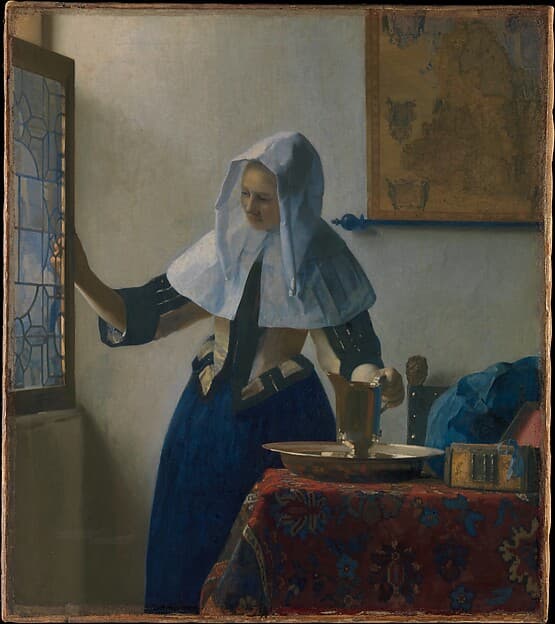
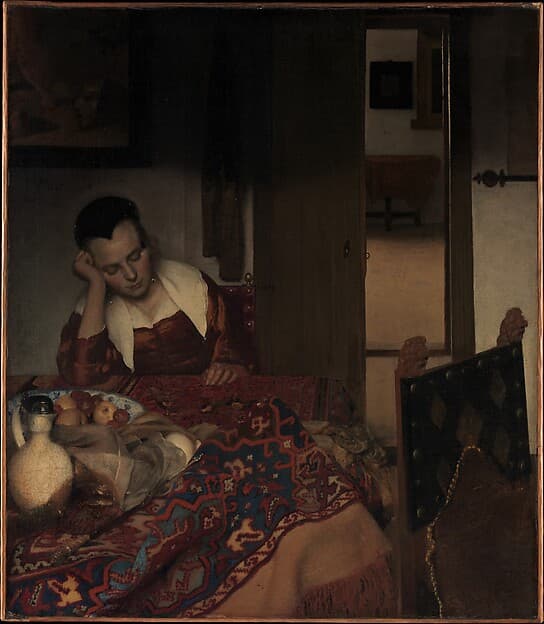
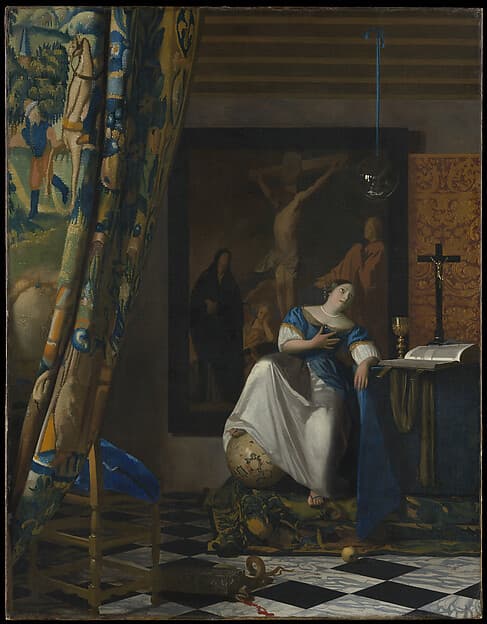
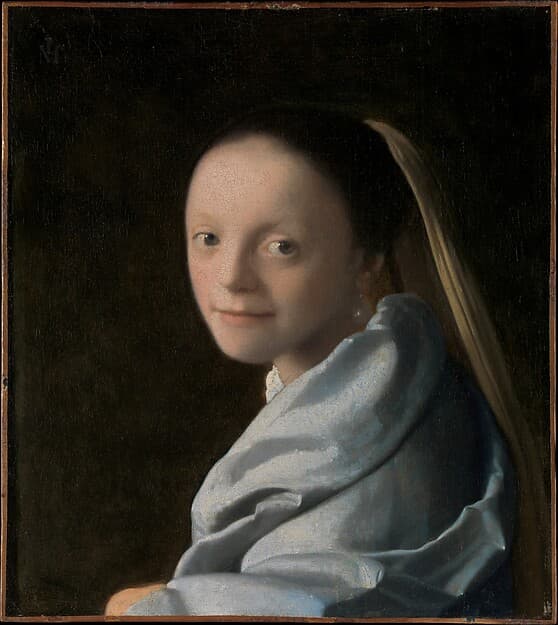
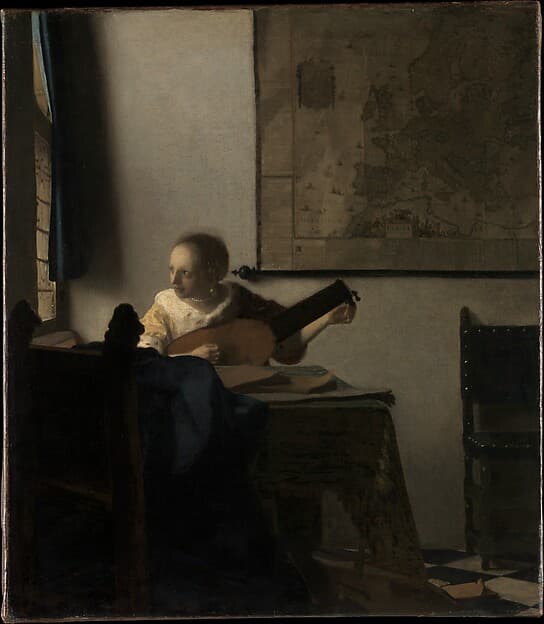
Works by Johannes Vermeer available in this edition of NEOARCA.
Related context
Associations
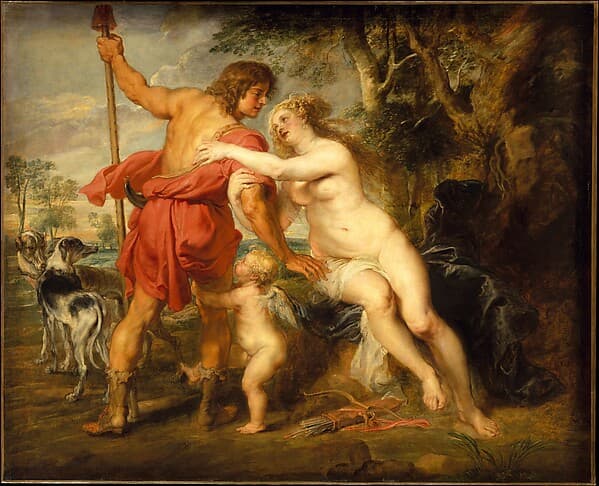
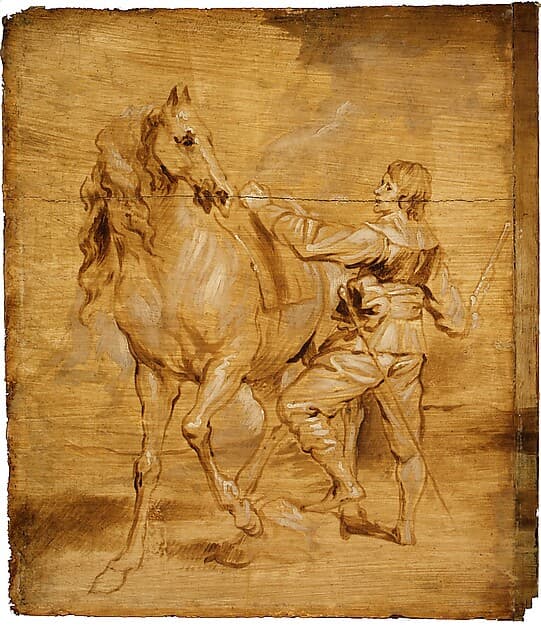
Works connected through artistic movements, cultural context and period. Priced works available in this market appear first.
Profile notes
Profile and sources
Image
Artist image
На основе открытого изображения: Johannes Vermeer; Wikimedia Commons; Public domain.
