
12.02.1925–30.10.1992
Joan Mitchell
Joan Mitchell grew up in Chicago, belonged to the New York School in the 1950s and from 1959 lived in France, from 1967 in Vétheuil, next to Monet’s former house. She painted large, often multi-panel abstractions from remembered landscapes: “I carry my landscapes around with me.” Under her will a foundation was set up that supports working artists.
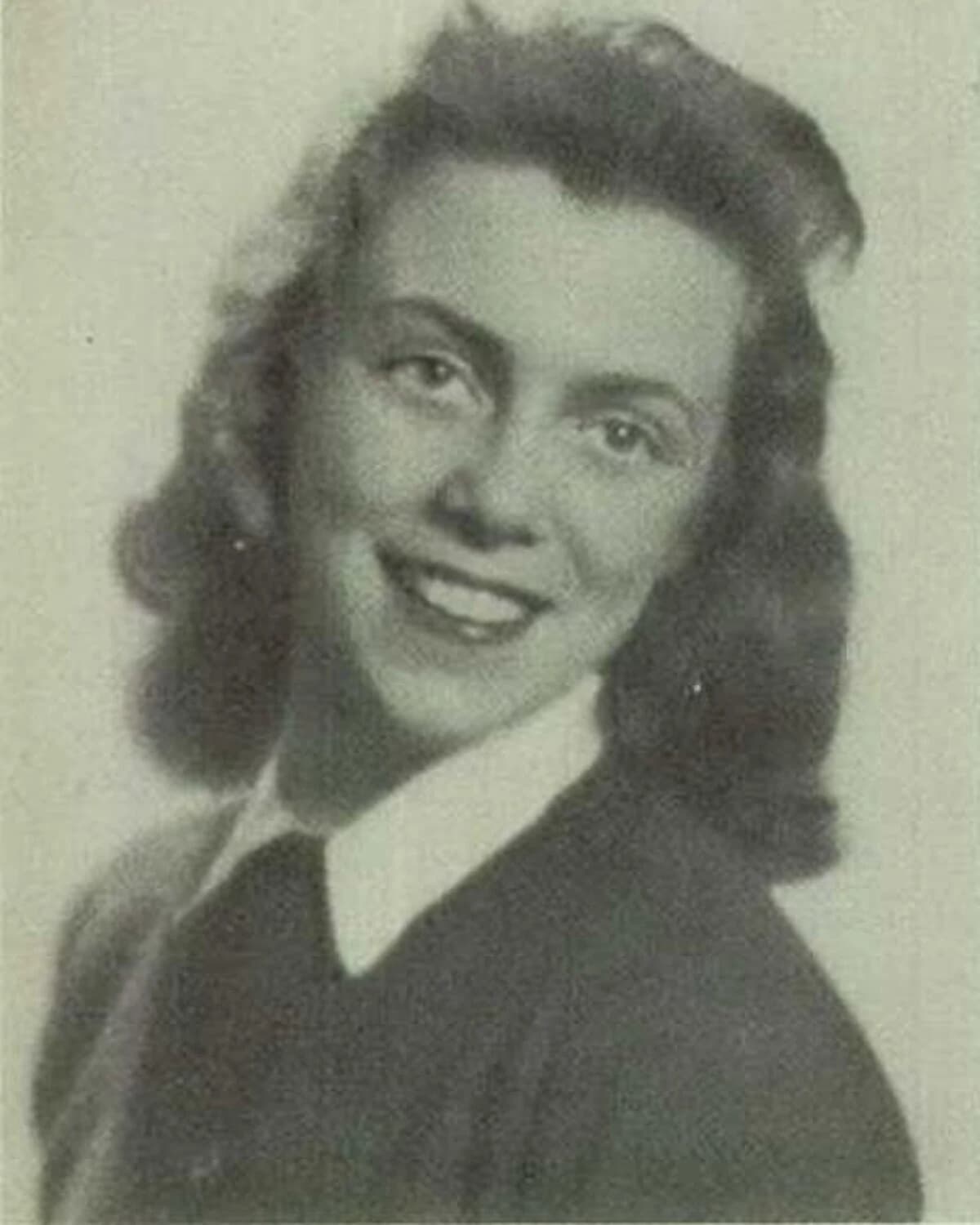
Biography
In 1951 Joan Mitchell and Leo Castelli carried a large abstract painting of hers right across the city. It had been accepted for the “Ninth Street Show”, which Castelli organised with members of the Artists’ Club in New York; Jackson Pollock, Willem de Kooning and Hans Hofmann hung alongside. Franz Kline and de Kooning thought the canvas excellent and gave it a good place on the wall. Mitchell was twenty-six.
She was born on 12 February 1925 in Chicago. Her father, James Herbert Mitchell, was a dermatologist and president of the American Dermatological Association; her mother, the poet Marion Strobel, was co-editor of the magazine “Poetry”. As a girl she was keen on diving and figure skating, and a dealer later said that she approached painting almost as a competition. On Saturdays she went to classes at the Art Institute of Chicago and looked closely at its nineteenth-century paintings; in summer she stayed at the institute’s Ox-Bow art colony. At the Francis Parker School she was in the same class as Edward Gorey; they stayed friends afterwards, though neither thought much of the other’s work.
She spent two years at Smith College in Massachusetts, but she wanted only to paint and transferred to the School of the Art Institute of Chicago: a bachelor’s degree in 1947, a master’s in 1950. After moving to New York in 1947 she meant to study with Hans Hofmann, went to one class and, by her own account, fled in horror without having understood a word. A travelling fellowship allowed her to work in Paris and Provence in 1948–1949 and to visit Spain and Italy, and over that year her painting became noticeably more abstract. In September 1949, at Le Lavandou, she married the publisher Barney Rosset, the future founder of Grove Press; they divorced in 1952.
In 1950, at the Whitney Annual, she saw a painting by de Kooning for the first time, and that same year she painted “Figure and the City”, her last work with a human figure. Later she said that she had known even then that this figure would be the last. Her studio was in Greenwich Village, first on Eleventh Street, then on Ninth. She was a regular at the Cedar Tavern and at the Club on Eighth Street, where you could only get in by invitation, and she was constantly in the studios of Philip Guston, Kline and de Kooning. Aesthetic labels, though, she could not stand. Her first solo exhibition took place in 1952, and after that the Stable Gallery in New York showed her for many years. In 1956 came “Hemlock”; the title arrived after the work was finished, from the “dark and blue feeling” of Wallace Stevens’s poem “Domination of Black”. In 1958 the painting was shown at the Whitney Museum in the exhibition “Nature in Abstraction”, after which the museum bought it. A year earlier “ARTnews” had published the first substantial article about her, Irving Sandler’s “Mitchell Paints a Picture”. It was to him that she said the sentence later quoted more than any other: “I carry my landscapes around with me.”
In Paris in 1955 Mitchell met the Canadian painter Jean-Paul Riopelle (their relationship lasted until 1979) and Samuel Beckett. By 1959 she was living in France for good, in a studio on the rue Frémicourt in the 15th arrondissement. Her work went to the 29th Venice Biennale, the São Paulo Biennial and the second documenta in Kassel. In Paris she was represented for almost thirty years by the Galerie Jean Fournier. The paintings of 1960–1964 are darker than the earlier ones: dense clots of colour in the centre, paint thrown and squeezed onto the canvas, smeared with the fingers. She herself called these works “very violent and angry”.
She met the new movements with mockery: “Pop art, op art, flop art, slop art… I fall into the last two categories.”
After her mother’s death in 1967, Mitchell bought a property in Vétheuil, not far from Giverny and 56 kilometres from Paris; Claude Monet had once lived in the gardener’s cottage on this estate. She lived there until the end, and the view of the Seine and her own garden became the constant material of her paintings. In 1969 Mitchell finished her first large triptych, “Sans Neige”, about five metres wide. In 1972 the Everson Museum in Syracuse showed 49 of her French paintings under the title “My Five Years in the Country”, and Peter Schjeldahl predicted in “The New York Times” that she would be recognised as one of the best American painters of the sixties and seventies, and not just of the fifties. In 1979 came the polyptychs “La Vie en rose”, named after the Édith Piaf song, and “Salut Tom”, dedicated to the late critic Thomas Hess. In 1982 she had an exhibition at the Musée d’Art Moderne de la Ville de Paris; it was the first time an American woman artist had been given a solo show there.
In December 1985 she had an unsuccessful hip operation. While recovering at a clinic in Louveciennes she began painting in watercolour, then worked at the easel in a smaller format; this is how the “River” cycle came about. A year later Mitchell went with her New York dealer Xavier Fourcade to Lille to see the Matisse exhibition from the Hermitage in Leningrad, and the “Lille” cycle grew out of that trip. After Fourcade’s death on 28 April 1987 came the “Chord” series. I think the late paintings are best explained by her own words about the “Sunflowers” of 1990–1991: she wanted to convey the feeling of a dying sunflower. In 1988–1989 a large retrospective that opened at the Corcoran Gallery toured museums in the United States; Mitchell called this “getting into art history alive”.
In October 1992 she flew to New York for the Matisse exhibition at the Museum of Modern Art, returned to Paris on 22 October and died on 30 October at the American Hospital. Under her will, the Joan Mitchell Foundation was set up in New York in 1993; it gives grants to artists and keeps her archive.
Profile notes
Profile and sources
Image
Artist image
Unknown author Unknown author; Wikimedia Commons; Public domain.
