
20.04.1893–25.12.1983
Joan Miró
Joan Miró (1893–1983) grew up in Barcelona and from 1920 divided the year between Paris and the farm at Mont-roig, where he painted “The Farm”, bought by Hemingway. In 1924 he drew close to the Surrealists, worked out a language of signs made of stars, birds and ladders, and in 1940–1941 painted the 23 gouaches of the “Constellations”. His last decades were spent working on Mallorca: ceramics, sculpture, the UNESCO walls, more than a thousand lithographs.
Biography
He would come back at night to the studio on Rue Blomet, sometimes without supper, lie down and see figures on the ceiling. These he jotted down in a notebook. That, by his own account, is how “Harlequin’s Carnival” (1924–1925) came about, full of weightless creatures like coloured shadows.
Joan Miró i Ferrà was born on 20 April 1893 in Barcelona, the son of the goldsmith and watchmaker Miquel Miró, and grew up in the Gothic Quarter. From the age of seven he went to drawing classes at a private school on Carrer del Regomir; in 1907, to his father’s dismay, he entered the La Llotja school of fine art, while also completing a commercial course and putting in time as a clerk. In 1911 he fell ill, recovered at his parents’ farm in Mont-roig del Camp and gave up the office; he then studied at Francesc Galí’s private school and at the Cercle Artístic de Sant Lluc. His first solo show, at the Galeries Dalmau, was ridiculed, and the works in it defaced. The early canvases, “Portrait of Vicent Nubiola” and “Nord-Sud” (both 1917), are thickly painted after Cézanne, and these years are called his Catalan Fauvism; in the summer of 1918 at Mont-roig came landscapes in which every blade of grass is picked out separately.
In 1920 he moved to Paris, but returned to Mont-roig every summer. “The Farm” (1921–1922) he began there and finished in Paris: a Catalan farmyard in which every object, down to the French newspaper in the centre, is picked out separately and on equal terms. Hemingway bought it and wrote that it had in it all that you feel about Spain when you are there and all that you feel when you are away. His first Paris show was arranged in 1921 by Josep Dalmau. The Surrealists found “The Farm” too realistic, and from the summer of 1923 at Mont-roig he went over to signs: in “The Tilled Field” and “Catalan Landscape (The Hunter)” the hunter is assembled from a triangle for a head, curved lines for a moustache and angles for a body, and the code is so dense that Miró later drew up a key to it himself. In 1924 he joined Breton’s circle; Breton called him “the most Surrealist of us all”, but Miró never became a member of any group, keeping his freedom. In 1926 he made designs for Diaghilev with Max Ernst, in 1928, after a trip to Holland, he painted the “Dutch Interiors” from postcards of Sorgh and Jan Steen, and in the collage “Spanish Dancer” of the same year a cork, a feather and a hatpin found room on a blank sheet. On 12 October 1929 in Palma he married Pilar Juncosa; in 1931 Pierre Matisse opened a gallery in New York and from then on represented him in America. In 1932 Miró designed Massine’s ballet “Jeux d’enfants”, in the 1930s he painted “picture-poems”, in which the inscription winds across the canvas together with the line, and spoke ever more loudly of the “assassination of painting”, that is, of a break with the bourgeois picture.
The Civil War closed the road home. In Paris he lived in a cheap hotel, painted “Still Life with Old Shoe”, the poster “Aidez l’Espagne” and, for the Republic’s pavilion at the 1937 World Exhibition, the mural “The Reaper”. In 1939 he left for Varengeville on the Normandy coast, and on 20 May 1940, as the Germans were entering Paris, he barely managed to cross into Franco’s Spain. In Varengeville, Palma and Mont-roig in 1940–1941 he painted the 23 gouaches of the “Constellations”, among them “The Nightingale’s Song at Midnight and the Morning Rain”; by his account the cycle came out of night, stars and the music of Bach and Mozart. Seventeen years later Breton answered it with a cycle of poems.
From 1944 he took up ceramics and sculpture. In 1947 he made a mural for a hotel restaurant in Cincinnati, in 1948–1949 he travelled from Barcelona to Paris, to Mourlot and Lacourière, to master printing: the result was more than a thousand lithographic editions. In 1954 he received the Venice Biennale prize for printmaking, in 1958 the Guggenheim award, and in those same years he laid out the “Wall of the Sun” and the “Wall of the Moon” for the UNESCO building in Paris. Then came ceramic walls for Harvard (1960–1961), St Gallen (1964), Barcelona airport and the glass pavilion of the Osaka exhibition (both 1970), a garden of sculpture and ceramics for the Maeght Foundation at Saint-Paul-de-Vence (1964), more than 250 illustrated books. Tapestry he refused at first, then learned the craft from Josep Royo; their tapestry of 1974 for the World Trade Center perished on 11 September 2001, another, of 1977, hangs in the National Gallery in Washington. In 1975 the Fundació Joan Miró opened in Barcelona, in 1978 the first full exhibition in his homeland was held in Madrid, in 1981 the city of Palma set up a second foundation in the four studios he had donated, and in the same year his “The Sun, the Moon and One Star” was unveiled in Chicago.
It seems to me that the best account of his late years is the sheer pace: hundreds of ceramics, paintings on windows, notes on gas sculpture and four-dimensional painting.
He died at his home in Palma on 25 December 1983, at ninety. He is buried in the Montjuïc cemetery in Barcelona.
Related context
Associations
Works connected through artistic movements, cultural context and period. Priced works available in this market appear first.








Profile notes
Profile and sources
Image
Artist image
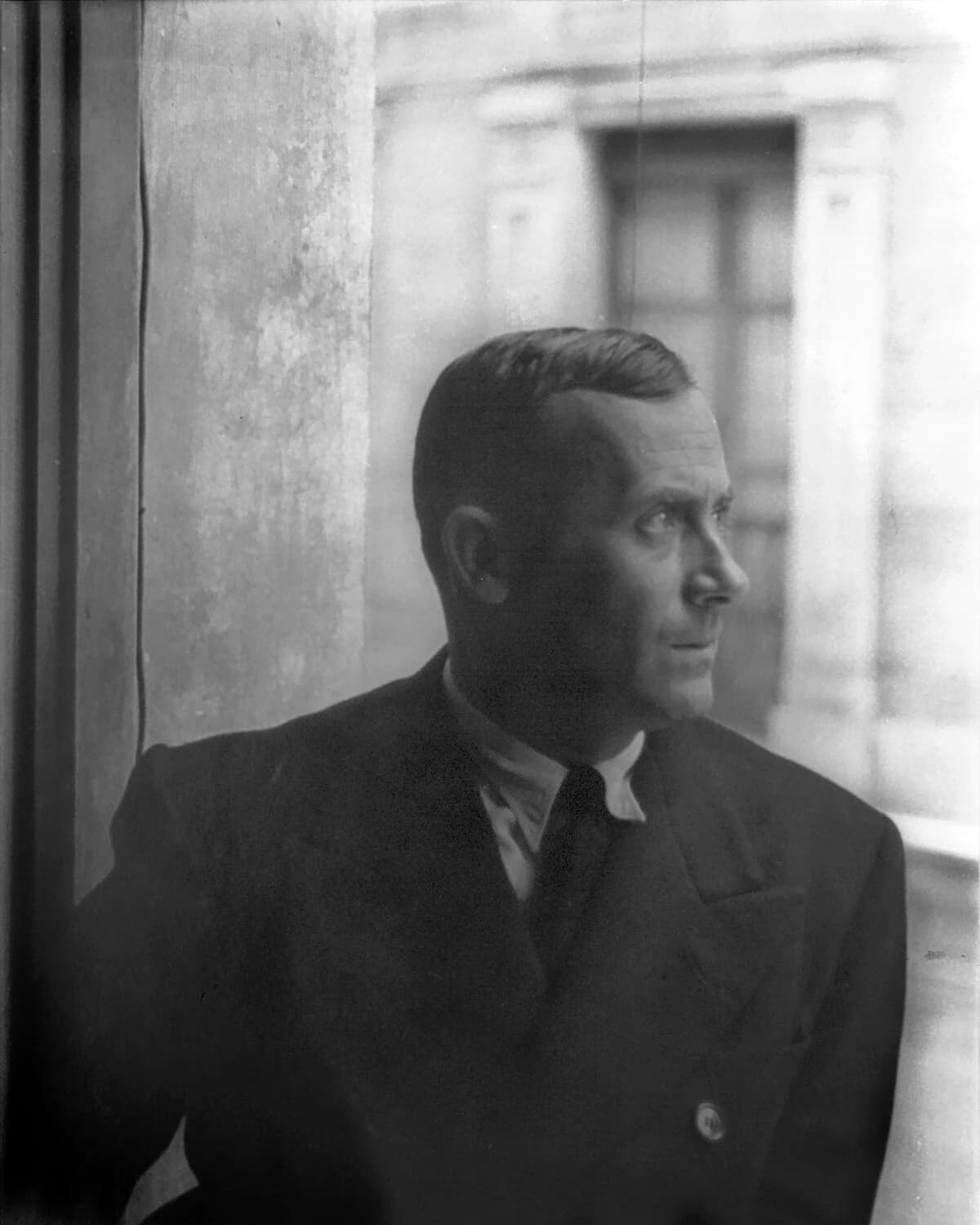
Carl Van Vechten; Wikimedia Commons; Public domain.
