
05.04.1732–22.08.1806
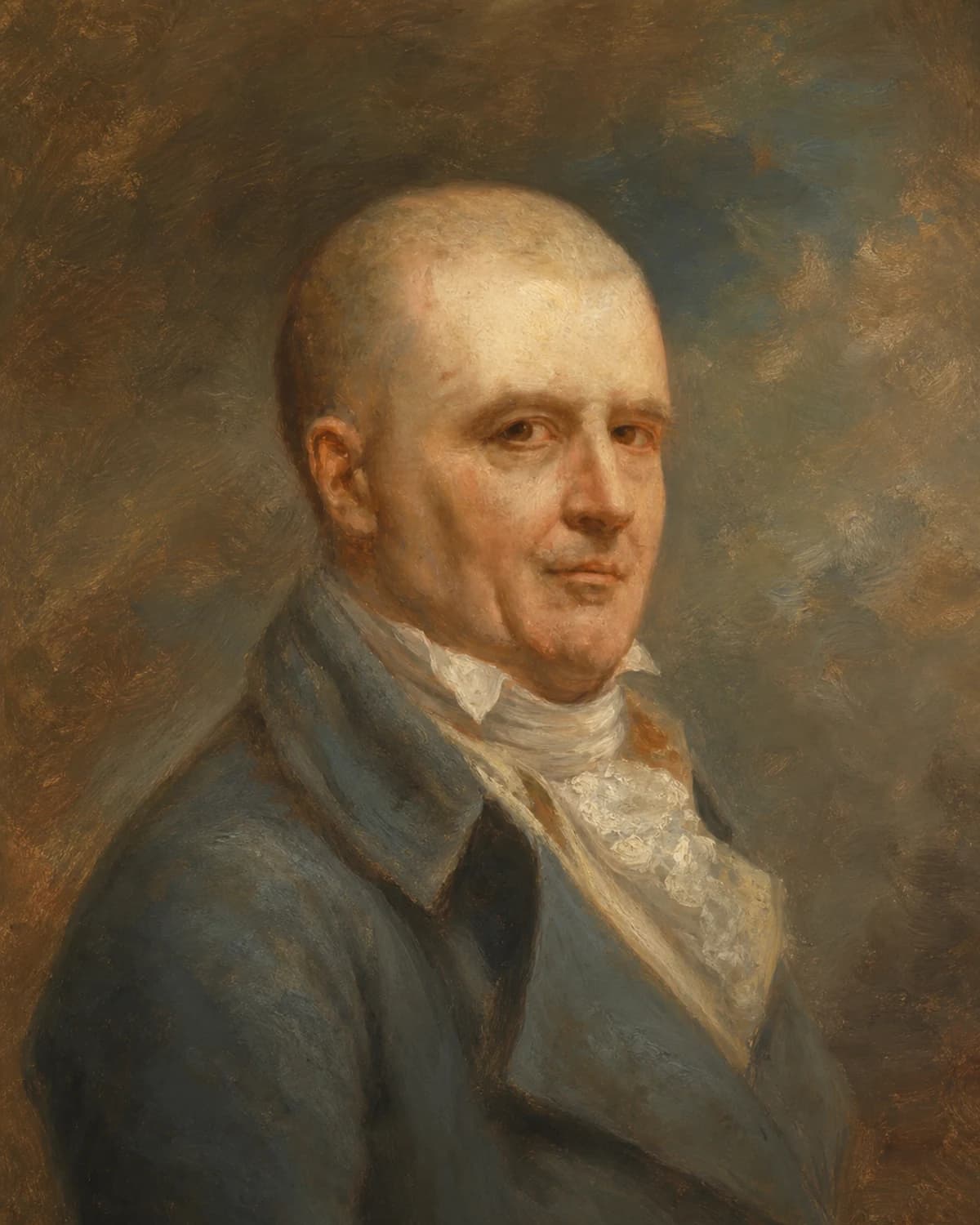
Jean-Honoré Fragonard
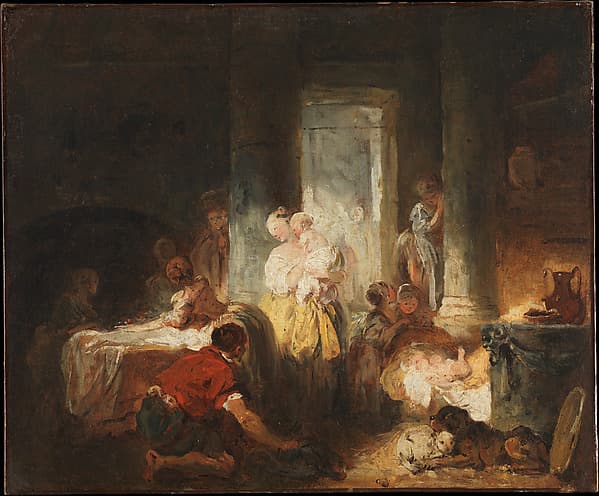
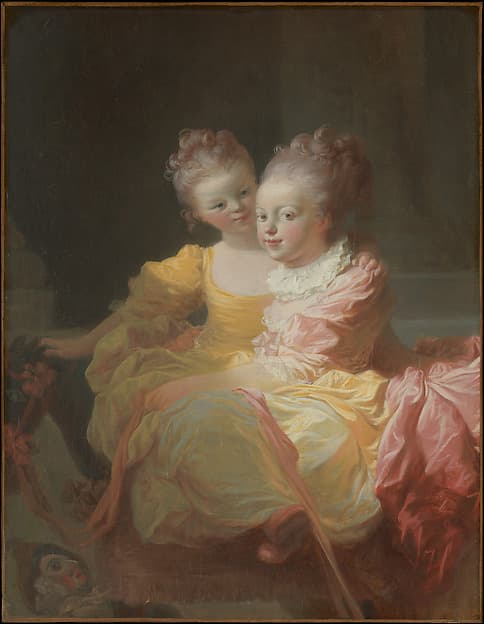
Jean-Honoré Fragonard, a pupil of Boucher and a pensionnaire of the French Academy in Rome, was admitted to the Royal Academy for a history painting, “Coresus and Callirhoe” (1765), but made his name with galant scenes for private patrons: “The Swing”, “The Bolt” and the “Progress of Love” cycle for Madame du Barry. The Revolution deprived him of patrons, and he died in Paris in 1806 almost forgotten.
Biography
Around 1767 a Parisian nobleman asked the painter Gabriel François Doyen to paint his mistress on a swing. Doyen found the commission too frivolous and passed it on to Fragonard. That, at least, is what the dramatist Charles Collé tells in his memoirs; another account names the patron as Monsieur de Saint-Julien, receiver general of the clergy, who supposedly wanted the swing to be set in motion by a bishop, with himself placed so that he could see the lady’s legs.
In the picture the swing is pushed from the shadows by a man in the background, while a young man hides below, in the bushes. “The Happy Accidents of the Swing” (1767–1768) is now in the Wallace Collection in London, and it is Fragonard’s best-known work.
He was born on 5 April 1732 in Grasse, to François Fragonard, a journeyman glover, and Françoise Petit, and grew up an only child: a younger brother died at ten months. In 1738 the family moved to Paris. At thirteen Jean-Honoré was working as a clerk for a notary, and it was the notary who first noticed that the boy could draw. He studied briefly with Chardin, and around 1749 came to François Boucher, who soon trusted him to make replicas of his own pictures. In 1752, though not yet a student of the Academy, Fragonard won the Prix de Rome with “Jeroboam Sacrificing to Idols”. He then spent three years under Charles-André van Loo at the École royale des élèves protégés. Before leaving he painted “Christ Washing the Feet of the Apostles” for the cathedral at Grasse.
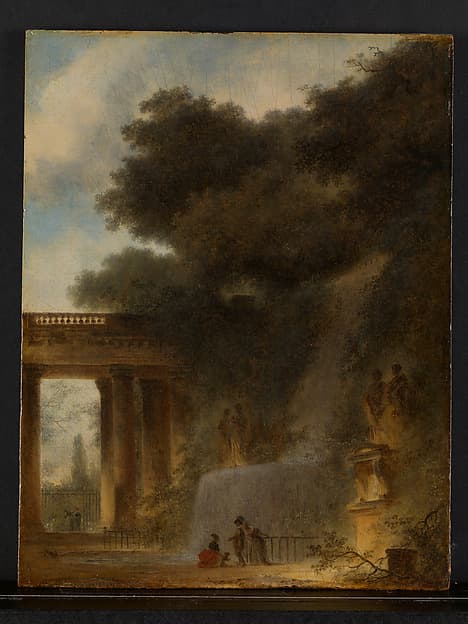
In December 1756 he took up residence at the French Academy in Rome, then directed by Charles-Joseph Natoire, and remained in Italy until 1761. There he became friends with Hubert Robert, looked at Tiepolo and Pietro da Cortona, copied the old masters, and from 1760, together with Robert, drew gardens with fountains, grottoes and terraces. His chief patron became the Abbé Richard de Saint-Non. From April to September 1761 the two of them travelled through Italy, by way of Florence, Bologna and Venice, and at the abbé’s request Fragonard copied what they saw in churches and palaces. Back in Paris, he was given a studio and lodgings in the Louvre.
In 1765 his “Coresus and Callirhoe”, painted as a cartoon for the Gobelins manufactory’s series “The Loves of the Gods”, was a success at the Salon and opened the doors of the Academy to him. Diderot wrote a long, pompous and not wholly serious eulogy of the picture, and the king bought it. A career as a history painter seemed to lie ahead. But official commissions came hard to Fragonard, and he began to work for private clients. His galant scenes had enormous success at the court of Louis XV; he also painted pastorals, portraits and small cabinet pictures, and made etchings after his own drawings. In 1771 the Comtesse du Barry commissioned from him, for her pavilion at Louveciennes, four pictures on “The Progress of Love”: “The Pursuit”, “The Meeting”, “The Lover Crowned” and “The Love Letter”. Some time later they were returned, because they did not suit the Neoclassical architecture of the pavilion. Fragonard kept them. Later, in Grasse, he hung them in his cousin’s salon and painted ten more panels to fill the walls; in 1915 the whole cycle was bought by Henry Frick, and it is now in New York, in his collection. Copies hang in Grasse.
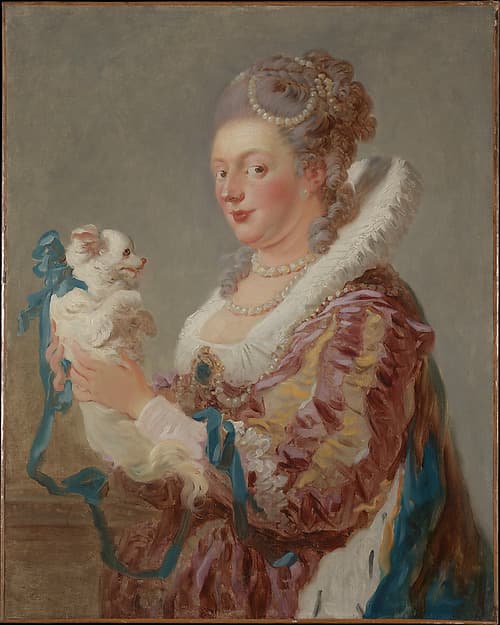
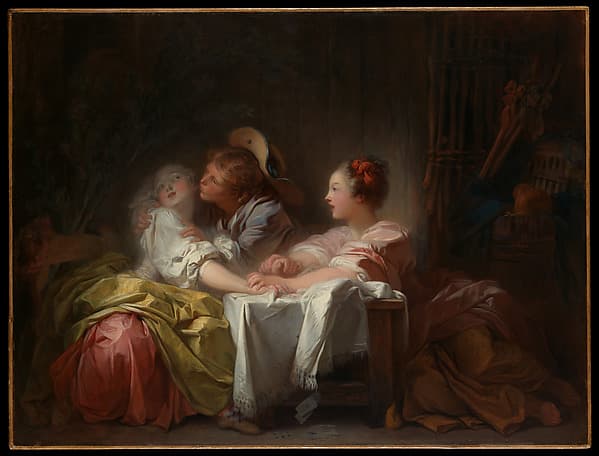
In 1769 he married the miniaturist Marie-Anne Gérard, also a native of Grasse. In the same period came the so-called fantasy figures, each of which, according to the artist himself, was painted in about an hour. From 1778 his wife’s younger sister, Marguerite Gérard, studied with him and helped in the studio; together they painted “The Stolen Kiss” (1787), which is in the Hermitage. He finished “The Bolt” in 1777 and conceived it as a pendant to “The Adoration of the Shepherds”: profane love set against sacred love. Both pictures are now in the Louvre. He painted more than five hundred and fifty pictures but dated only five, so the chronology, to be honest, has to be reconstructed from indirect evidence.
In October 1773 the tax farmer Pierre-Jacques Onésyme Bergeret de Grancourt took him on a journey: by way of his estate at Nègrepelisse to Italy, and on the way back through Vienna, Prague, Dresden, Frankfurt and Strasbourg. They were home in September 1774.
The Revolution left him without patrons: some were executed, others emigrated. In 1790–1791 he lived in Grasse with his cousin Alexandre Maubert. In 1793 he joined the Commune of the Arts, and later, at the instance of Jacques-Louis David, the National Assembly appointed him one of the curators of the museum in the Louvre. In 1805 an imperial decree evicted all the artists living in the Louvre, and Fragonard moved in with his friend Veri, in the galleries of the Palais-Royal.
There he died on 22 August 1806, almost unnoticed by his contemporaries. The funeral service was held at the church of Saint-Roch, and he was buried in the old Montmartre cemetery. The grave disappeared around the middle of the nineteenth century, and in 1873 Wilhelm Lübke did not mention his name in his history of art. A marble plaque now hangs on the wall by the place of burial.
Artist works
Works by the artist
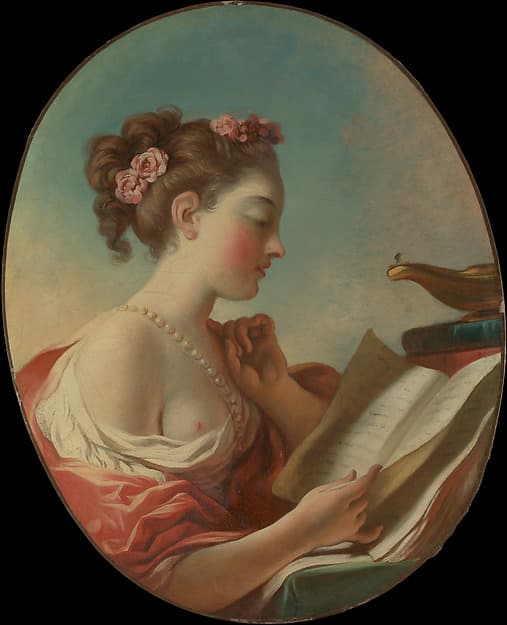
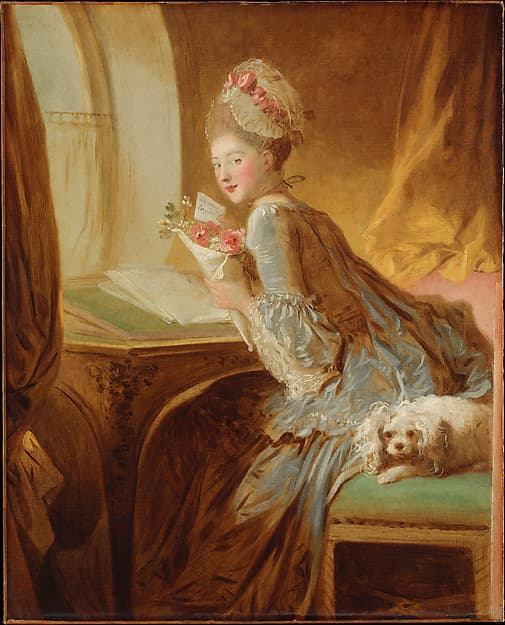
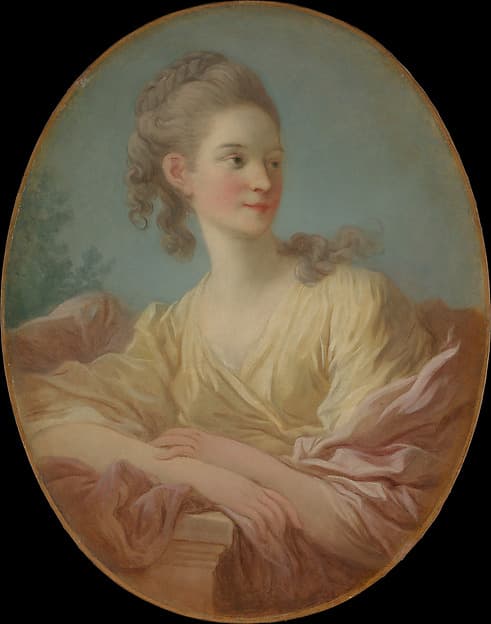
Works by Jean-Honoré Fragonard available in this edition of NEOARCA.
Related context
Associations
Works connected through artistic movements, cultural context and period. Priced works available in this market appear first.








Profile notes
Profile and sources
Image
Artist image
На основе открытого изображения: Jean-Honoré Fragonard; Wikimedia Commons; Public domain.
