
29.08.1780–14.01.1867
Jean-Auguste-Dominique Ingres
Jean-Auguste-Dominique Ingres (1780–1867) saw himself as a history painter and an heir to Raphael, yet he is remembered above all for portraits: the “Portrait of Monsieur Bertin”, the pencil sheets of his Roman years, the “Grande Odalisque” with its over-long back. A pupil of David, he argued with Delacroix for thirty years about line and colour, lived twice in Rome, and at eighty-three finished “The Turkish Bath”. To Montauban he bequeathed more than four thousand works and his violin.
Biography
In Rome after the fall of Napoleon, English travellers would knock at Ingres’s door and ask whether this was where the man who drew the little portraits lived. He answered with irritation: “No, the man who lives here is a painter!” A pencil portrait, four hours of work, was then his main source of income; over his lifetime some four hundred and fifty such sheets accumulated, and today they are ranked almost above his history paintings.
He himself considered the portrait, all his life, a lesser genre taken up for money. To my mind that irritated reply at the door says more about him than any manifesto.
Ingres was born on 29 August 1780 in Montauban, the first of seven children. His father, a jack-of-all-trades in the arts and an amateur violinist, taught him to draw and to play himself. In 1791 the Revolution closed the school in Montauban, and that was the end of the boy’s formal education. The same year his father took him to the academy in Toulouse, where the painter Guillaume-Joseph Roques passed on to him a lifelong veneration of Raphael. From thirteen to sixteen he played second violin in the orchestra of the Capitole in Toulouse. In August 1797 he left for Paris, for the studio of Jacques-Louis David, and in 1801 “The Ambassadors of Agamemnon in the Tent of Achilles” won him the Prix de Rome; the treasury had no money, and he had to wait until 1806 to leave for Italy.
He filled the wait with portraits: Bonaparte as First Consul for Liège (1803), three portraits of the Rivière family, “Napoleon I on His Imperial Throne” (1806), where the face and hands are almost lost among the sceptre, the sword of Charlemagne, the furs and the golden chains. At the Salon of 1806 all this met a cold reception: David passed a severe judgement, and the critic Chaussard wrote that Ingres wanted to carry art back four centuries, to the manner of Jean de Bruges. The artist read the clippings in Rome and swore in his letters never to exhibit at the Salon again.
At the Villa Medici he worked furiously. To Paris he sent bathers, among them the “Valpinçon Bather” (1808), painted from the back and wearing a turban. In 1811 he finished the enormous “Jupiter and Thetis”; the critics found the proportions exaggerated and the space flat and airless. In 1813 he married Madeleine Chapelle, having proposed by letter without ever having seen his bride. General Miollis commissioned “The Dream of Ossian” for Napoleon’s bedroom in Rome, and Murat, King of Naples, commissioned the “Grande Odalisque” (1814), for which Ingres was never paid: in 1815 Murat’s kingdom collapsed. With the departure of the French the commissions ended, and those portraits of tourists began. In 1819 the “Grande Odalisque” reached the Salon, and the critic Kératry calculated that her back had three vertebrae too many.
In 1820 Ingres and his wife moved to Florence. There came the first stroke of luck: “Roger Freeing Angelica” was bought for Louis XVIII and hung in the Musée du Luxembourg. Four years went into “The Vow of Louis XIII” for the cathedral of Montauban; in November 1824 the picture reached the Paris Salon and brought him recognition. In the same room hung Delacroix’s “The Massacre at Chios”, and the quarrel of the two schools, line against colour, dragged on for thirty years. “The Apotheosis of Homer” he failed to finish for the Salon of 1827 and showed in grisaille opposite “The Death of Sardanapalus”; Delacroix he called “the apostle of ugliness”.
He struggled for a long time with the portrait of the publisher Louis-François Bertin (1832), until one day he saw Bertin in animated conversation and asked him to come tomorrow: the portrait was done. Manet later called the picture “the Buddha of the bourgeoisie”. A year later “The Martyrdom of Saint Symphorian”, ten years of work, was savaged by neoclassicists and romantics alike. Ingres announced that he would never again accept a state commission or show a single picture at the Salon, and he kept his word. At the end of 1834 he left for Rome as director of the French Academy.
Six Roman years went on the students, the library, the plaster casts, and journeys to Orvieto, Siena, Ravenna and Urbino. There was a great deal of music at the Academy: with Paganini and the students Ingres worked through Beethoven’s violin pieces. Gounod recalled how, after Stendhal had spoken slightingly of Beethoven, Ingres told the doorman: if this gentleman ever calls again, I am not at home. He sent little to Paris, among it the small “Antiochus and Stratonice” (1840), after which the king himself received him at Versailles. In April 1841 he returned to Paris for good.
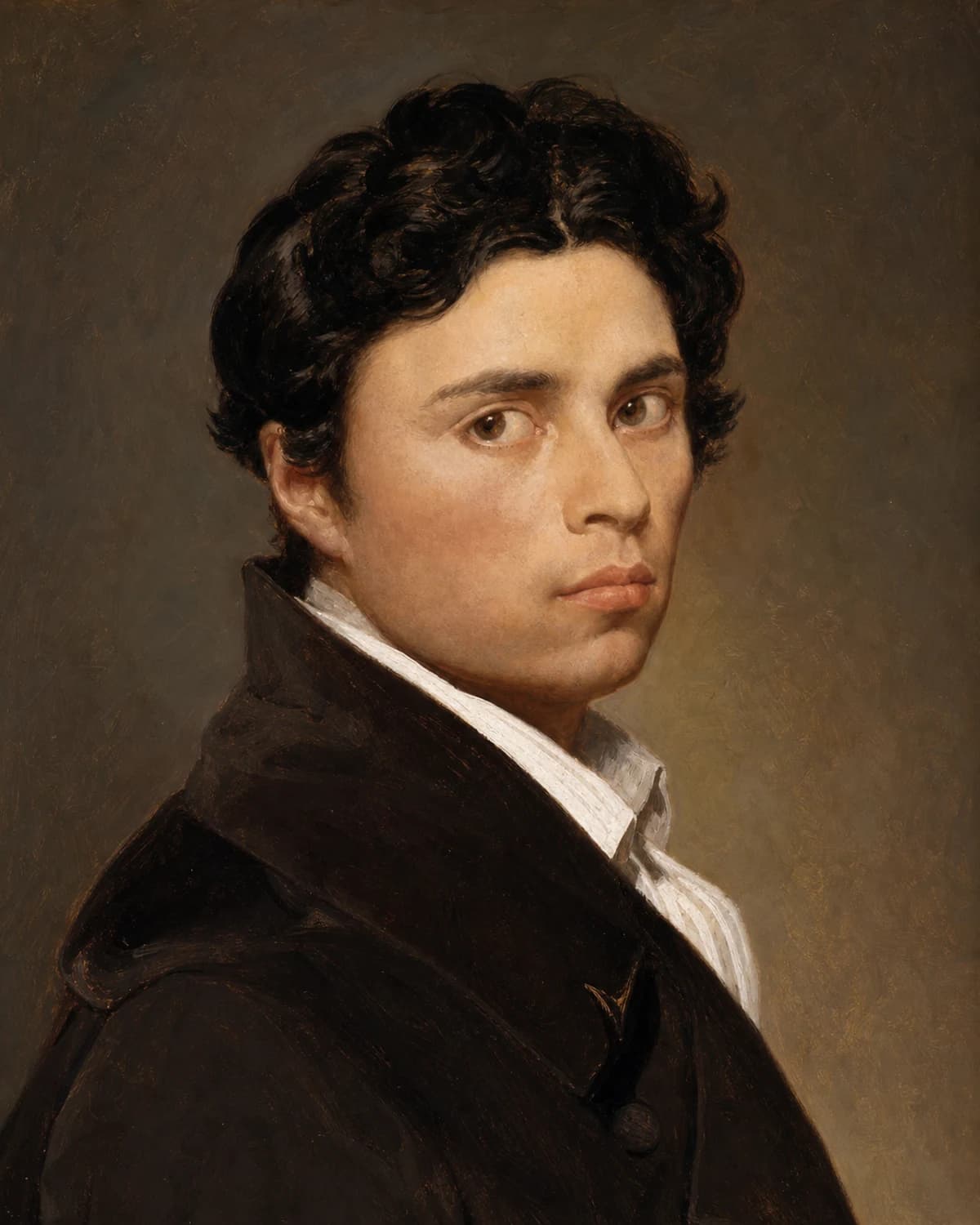
Then came a professorship at the École des Beaux-Arts (he took his students to the Louvre and told them not to look at Rubens) and two huge murals for the Château de Dampierre, “The Golden Age” and “The Iron Age”, begun in 1843: five hundred preparatory drawings, until in 1847 the growing crowd of nudes unsettled the patron and the work stopped. On 27 July 1849 Madeleine died. In 1851 Ingres announced his gift to his native town and left the École, and in 1852, at seventy-one, he married Delphine Ramel; then came “The Source” (1856), begun back in 1820, and the self-portrait for the Uffizi (1858), where the only touch of colour is the red rosette of the Legion of Honour. In 1862 Napoleon III made him a senator.
“The Turkish Bath” he finished in 1852 as a square, sold to Prince Napoleon, got back (legend has it that Princess Clotilde was shocked by the abundance of naked bodies), reworked into a tondo and signed with the date 1862. The Louvre accepted it as a gift only in 1911, having refused it four years earlier.
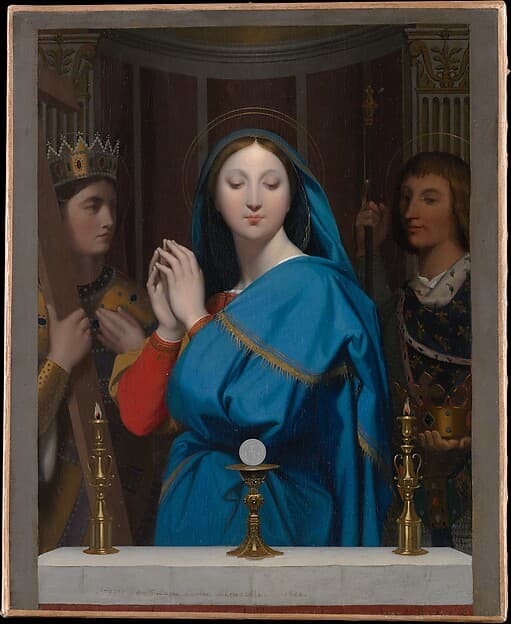
His last painting, the eighth version of “The Virgin of the Host”, bears the date 31 December 1866. On 8 January 1867 he was still copying Giotto at the Bibliothèque nationale, and in the evening he listened to quartets by Mozart and Cherubini. Ingres died on 14 January 1867 in his apartment on the Quai Voltaire; he is buried at Père Lachaise, with a tomb made by one of his pupils. The contents of his studio, more than four thousand drawings and paintings, together with his violin, he bequeathed to Montauban, where his museum opened in 1869.
Artist works
Works by the artist
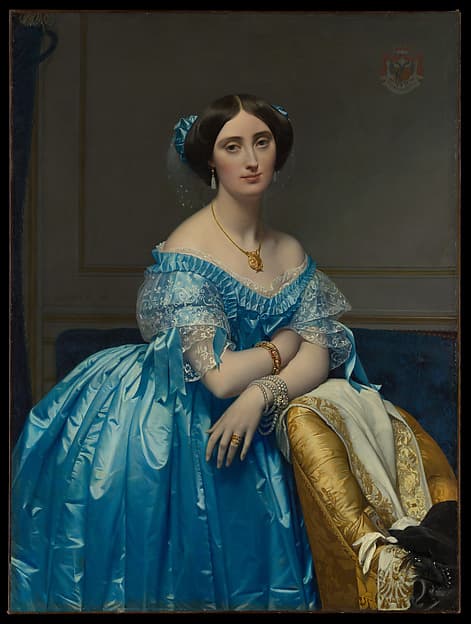
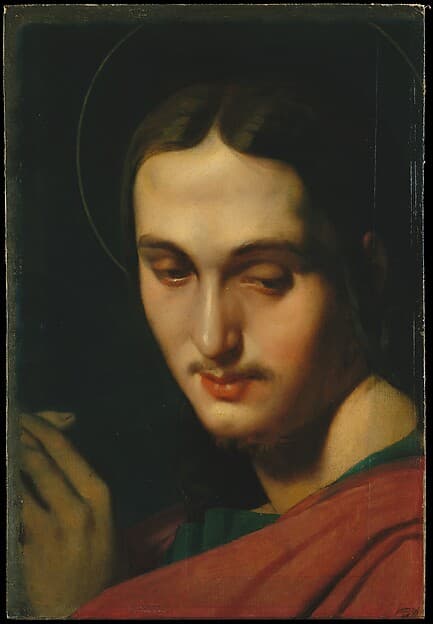
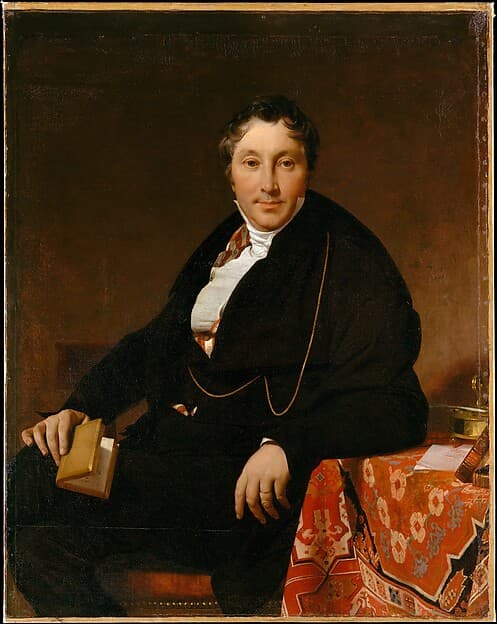
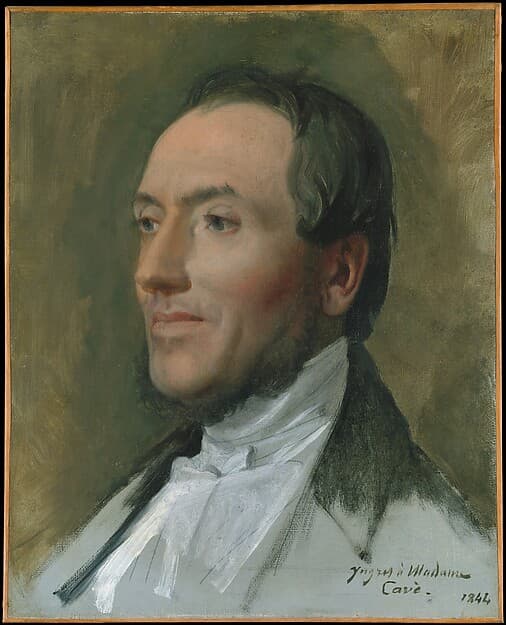
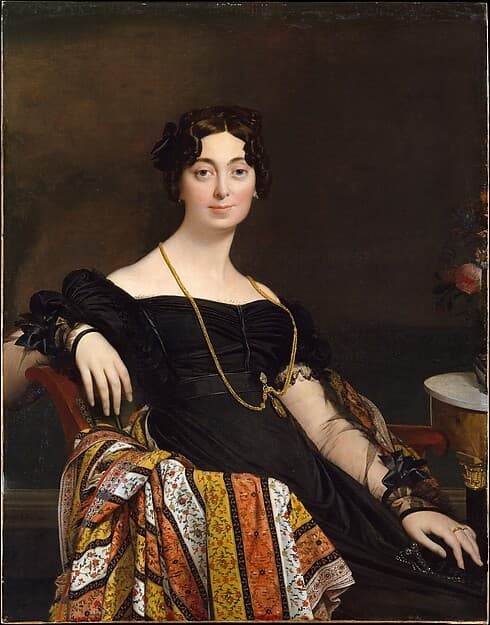
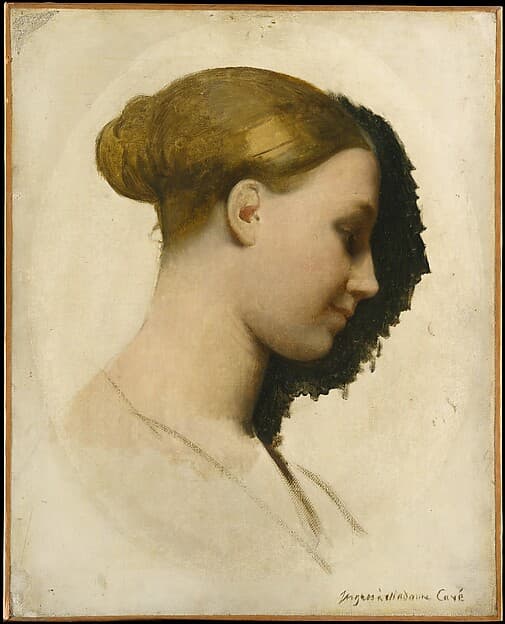
Works by Jean-Auguste-Dominique Ingres available in this edition of NEOARCA.
Related context
Associations
Works connected through artistic movements, cultural context and period. Priced works available in this market appear first.








Profile notes
Profile and sources
Image
Artist image
На основе открытого изображения: Jean-Auguste-Dominique Ingres; Wikimedia Commons; Public domain.
