
10.07.1834–17.07.1903
James McNeill Whistler
James McNeill Whistler (1834–1903), an American who spent part of his boyhood in St Petersburg and nearly all his life in London and Paris, called his paintings “nocturnes”, “symphonies” and “arrangements”, championed “art for art’s sake” and took Ruskin to court. His best-known painting is the portrait of his mother, “Arrangement in Grey and Black No. 1”; his etchings brought him no less fame.
Biography
On 25 and 26 November 1878, in the High Court in London, the Attorney General, Sir John Holker, acting for John Ruskin, cross-examined the plaintiff. Ruskin had written that Whistler was asking a large sum for flinging a pot of paint in the public’s face; the picture in question was “Nocturne in Black and Gold: The Falling Rocket”, a night-time firework display in London’s Cremorne Gardens. Holker asked how long the painting had taken. Two days, Whistler replied. And for two days’ work, such a price? No, said the artist, he asked it for the knowledge gained in the work of a lifetime.
The jury found in his favour and awarded him a farthing, the smallest coin there was. The legal costs, together with the debts from building the White House on Tite Street in Chelsea, had ruined him by May 1879, and his works, his collection and his house went under the hammer.
At the same trial he declared St Petersburg his birthplace: he would be born when and where he pleased, and he did not choose Lowell.
James Abbott Whistler was born on 10 July 1834 (according to other sources, 11 July) in Lowell, Massachusetts, the son of the railway engineer George Washington Whistler and Anna McNeill. In 1842 Nicholas I invited his father to build the St Petersburg–Moscow railway, and in the winter of 1842/1843 the family moved to Russia. The boy took private lessons, including some from Alexander Koritsky, and at eleven he entered the Imperial Academy of Arts. In 1849 his father died, and the family returned to his mother’s home town, Pomfret, Connecticut. In July 1851 Whistler was admitted to the Military Academy at West Point, where his father had once taught drawing; the short-sighted cadet with long curls, nicknamed “Curly”, came first in drawing and did poorly in everything else. In 1854 he was dismissed after failing a chemistry examination: silicon, he answered, is a gas. Then came work as a draftsman for the United States Coast Survey; for drawing sea serpents and mermaids in the margins of the maps he was moved to the etching division, where in two months he learned the technique that would make his name. In 1855 he left for Paris and never returned to America.
In Paris he studied briefly with Charles Gleyre and took from him two rules for life: line matters more than colour, and black is the foundation of tonal harmony. In 1858, with the printer Auguste Delâtre, he issued the “French Set” of etchings, made friends with Fantin-Latour and through him entered the circle of Courbet, which included Legros, Manet and Baudelaire. From 1859 he lived in London: “At the Piano”, showing a mother in black and a daughter in white in a music room, was exhibited at the Royal Academy in 1860, and the “Thames Set” of etchings appeared at the same time. “Symphony in White, No. 1”, a portrait of Joanna Hiffernan in a white dress standing on a wolfskin, was rejected by the Academy; it was shown in a private gallery and, in 1863, at the Salon des Refusés in Paris. Then came his passion for Asian art: “The Little White Girl”, “The Golden Screen” (1864) and the butterfly signature, which grew out of a monogram modelled on the potters’ marks on porcelain; around 1880 he gave the butterfly a sting.
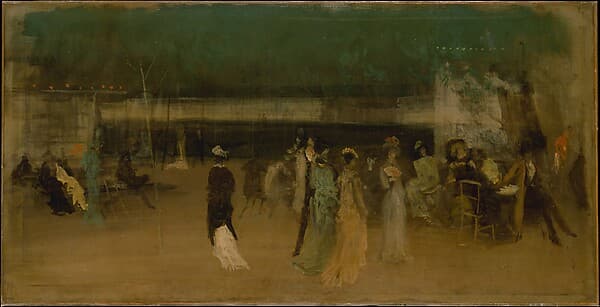
In 1866 he travelled to Valparaíso in Chile and painted his first night views of the harbour there. Back in London, he painted the Thames and the fireworks at Cremorne in thinned paint, barely indicating ships and lights. The word “nocturne” was suggested to him by his patron Frederick Leyland, an amateur musician devoted to Chopin, and Whistler retitled his earlier works as “symphonies”, “harmonies” and “arrangements”. In 1871 a model failed to turn up, and he asked his mother to sit for him. Standing tired her, so she was seated, and dozens of sittings were needed. The Royal Academy accepted “Arrangement in Grey and Black No. 1” only after Sir William Boxall lobbied for it, and hung it badly. In 1891, with Mallarmé’s help, the French government bought the picture; it is now in the Musée d’Orsay. For Leyland, too, in 1876–1877, he painted a dining room built to display porcelain in blue, green and gold, without sketches, as the mood took him: the “Peacock Room”, since 1923 in the Freer Gallery in Washington.
After the bankruptcy he was commissioned to make twelve etchings in Venice. The three-month trip stretched to fourteen months, and he came back with more than fifty etchings, nocturnes, watercolours and over a hundred pastels. In January 1881 his mother died, and in her honour he began calling himself McNeill. In February 1885 he gave the “Ten O’Clock” lecture, in which art serves only itself and nature is “very rarely right”. In 1886 he was elected president of the Society of British Artists, which the Queen’s favour made Royal, but in 1888 he lost re-election by a single vote. That same year he married Beatrice Godwin, and in 1890 he published “The Gentle Art of Making Enemies”. In 1892 he received the Legion of Honour and moved to Paris, to Mallarmé, Monet and Rodin; to my mind, he was received more warmly there than in London, where he had been forced out of the Society for “eccentricities” and his non-English background. In 1896 his wife died.
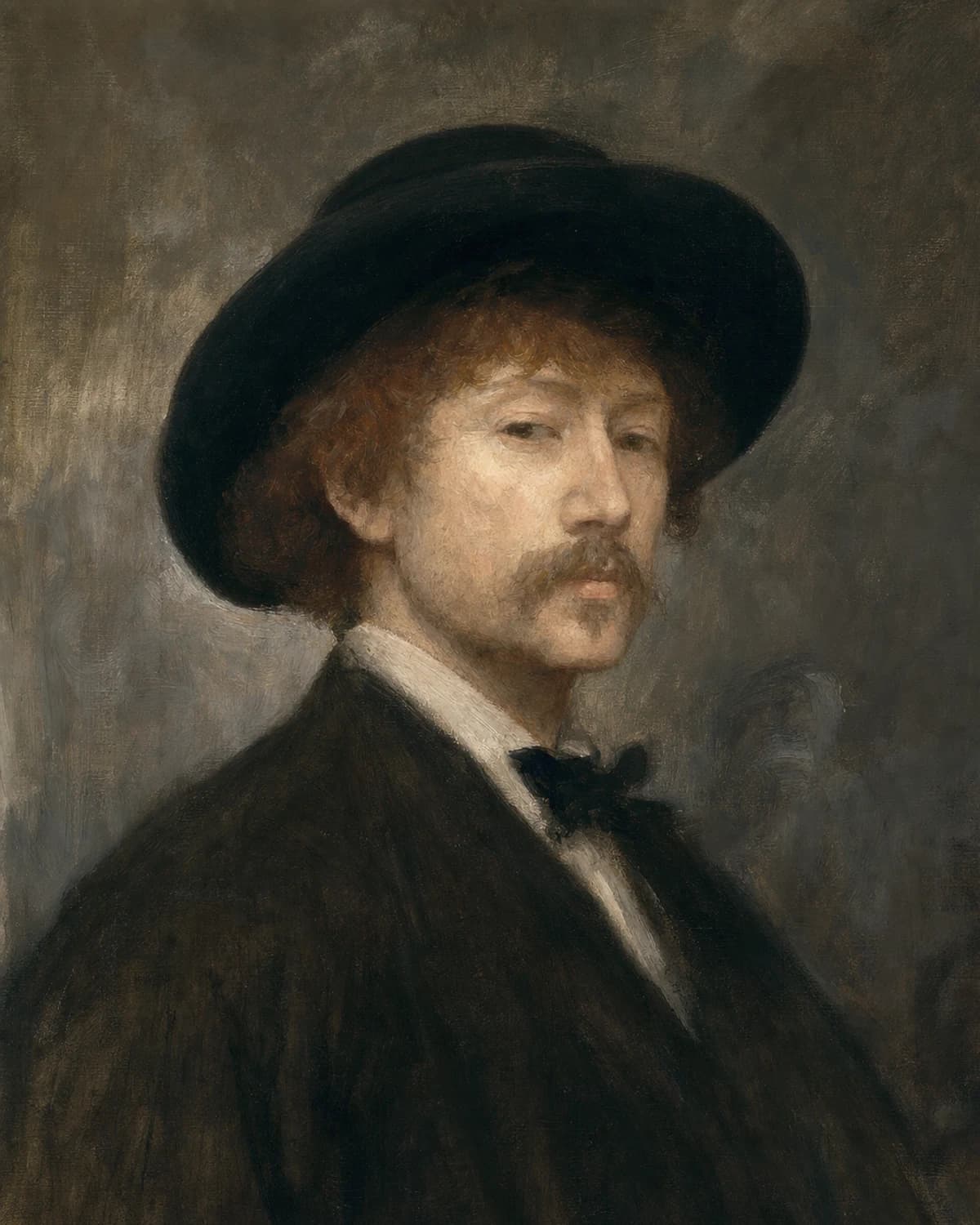
His last years went on small watercolour seascapes, a self-portrait in oil and a school opened in 1898 and closed in 1901. His last completed portrait, of Richard Canfield, occupied him until May 1903. Whistler died on 17 July 1903 in London and is buried in Chiswick Old Cemetery beside St Nicholas Church. His estate went to his sister-in-law, Rosalind Birnie Philip; she gave most of the collection to the University of Glasgow.
Artist works
Works by the artist
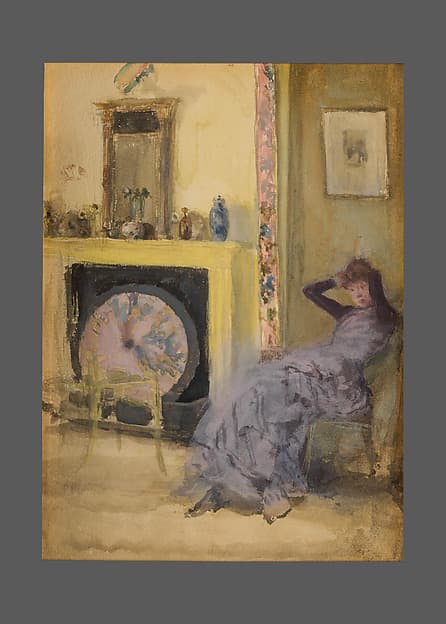
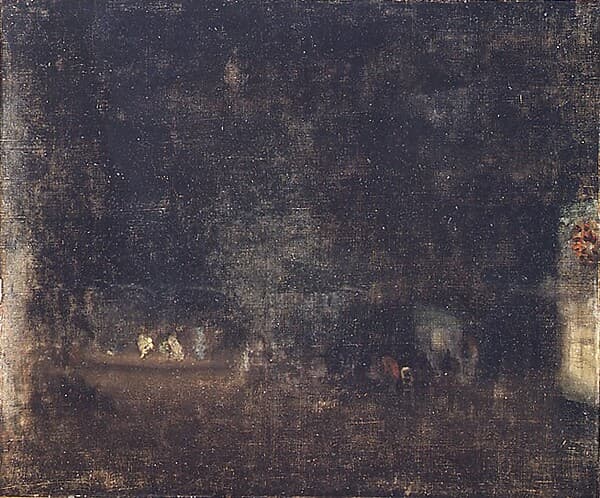
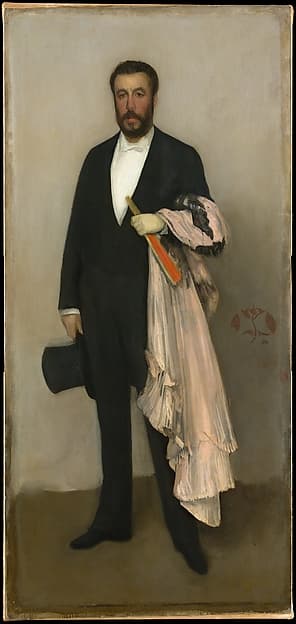
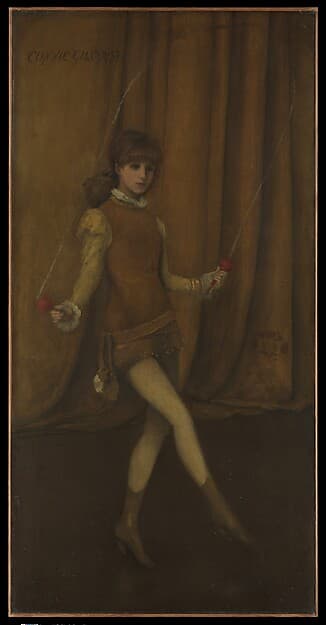
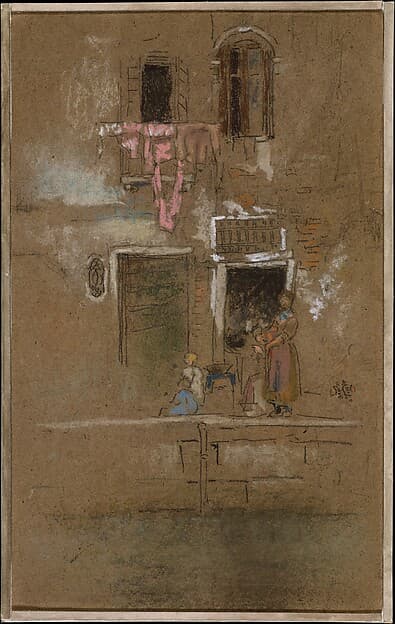
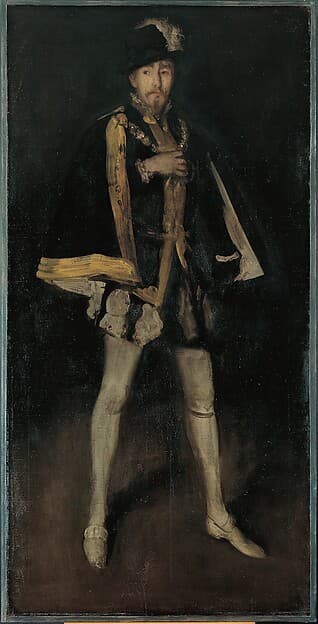
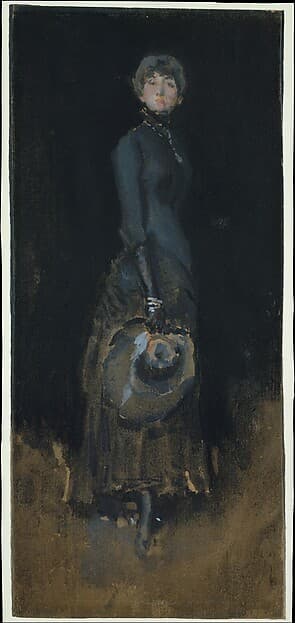
Works by James McNeill Whistler available in this edition of NEOARCA.
Related context
Associations
Works connected through artistic movements, cultural context and period. Priced works available in this market appear first.








Profile notes
Profile and sources
Image
Artist image
На основе открытого изображения: James McNeill Whistler; Wikimedia Commons; Public domain.
