
28.11.1931–present
Jacobo Borges
Jacobo Borges (born 1931) grew up in Catia, a poor district of Caracas, and in his early twenties won a scholarship to Paris with the painting “The Lamp and the Chair”. In 1967 he staged the multimedia installation “Imagen de Caracas” in the centre of the city and gave up painting for five years to work in film and theatre. He designed for the stage, made films, drew and painted; in 1995 a museum bearing his name opened in Catia.
Biography
In 1952 the jury of a young painters’ competition, run by the newspaper El Nacional, Metro-Goldwyn-Mayer and the French Embassy in Venezuela, awarded first prize to the painting “The Lamp and the Chair”.
The prize was ten months of study in Paris. The artist stayed in Paris for several years.
Jacobo Borges was born on 28 November 1931 in Caracas. As a teenager he changed jobs often: he worked as a lithographer at the cardboard company Cartones de Venezuela and as a draftsman at the advertising agency McCann-Erickson, where Carlos Cruz-Diez worked beside him. Between 1945 and 1948 he met the painter Armando Reverón, the poet Aquiles Nazoa and the Cuban writer Alejo Carpentier. In 1949 he enrolled at the School of Plastic and Applied Arts in Caracas and studied there for two years; in 1951 he worked at the Taller Libre de Arte (Free Art Workshop) and showed his first paintings.
After returning from Paris he held solo exhibitions at the Museum of Fine Arts and the Lauro Gallery. Prizes then followed almost without a break: in 1957 the José Loreto Arismendi Award at the Official Annual Salon of Venezuelan Art and an honourable mention at the São Paulo Biennial, in 1960 the first Arturo Michelena Prize, in 1961 the National Drawing Prize (for “I Want to See Too”), and in 1963 the National Painting Prize for “The Coronation of Napoleon”. In 1958 he represented Venezuela at the Venice Biennale. At the same time he designed stage productions: Victor Hugo’s “Hernani”, Albert Camus’s “Caligula”, Tennessee Williams’s “The Glass Menagerie” and Federico García Lorca’s “Blood Wedding”. He also worked with the literary and artistic groups Tabla Redonda and El Techo de la Ballena.
In 1965 Borges began the series “The Players”, but in the same year he left painting. With a team of filmmakers, photographers, set designers, writers, musicians and sound technicians he turned to new media: film, video, photography, performance and installation. For five years he painted nothing. His paintings were nevertheless sent to major group shows; in 1966 the Guggenheim Museum in New York acquired his “Figure in a Room: The Ice-Cream Eater”, after the museum’s director, Thomas Messer, invited him to the exhibition “The Emergent Decade: Latin American Painters and Painting in the 1960s”.
“Imagen de Caracas” took three years to prepare. In 1967, for the city’s 400th anniversary and with the backing of the city government, it was shown in a purpose-built hall in the centre of Caracas, 4,900 square metres in area and 20 metres high, made of tubes and scaffolding. Visitors walked through it and interacted with projected images and moving objects. Borges was responsible for the film material, the theatrical element and the construction of the installation. In 1969 he directed a short film, “22 de mayo” (16 mm, 35 minutes).
He returned to painting in 1971, showing four series of drawings at the Viva México Gallery: “Los Novios” (The Betrothed), “Los Traidores” (The Traitors), “La Farsa” (The Farce) and “El Che”. In 1976 the Museum of Modern Art in Mexico City, under Fernando Gamboa, invited him to present a retrospective of 48 works from 1962 to 1976, which was then shown at the Museum of Fine Arts in Caracas. Julio Cortázar wrote a short story inspired by one of his paintings, and Marta Traba devoted an essay to him, “Borges bajo los focos” (Borges under the Spotlights). In 1979 the book “The Mountain and Its Time”, with his texts and drawings, was published.
The next decade was spent between Caracas, New York, Berlin, Mexico City and the south of France. In 1982 a book about him by Dore Ashton was published in Caracas in Spanish and English; in the same year he was the first recipient of the Armando Reverón Award from the Venezuelan Association of Plastic Artists, and the CDS Gallery in New York held his first solo exhibition in that city. In 1985 he received a Guggenheim Foundation fellowship, and in 1986 the German Academic Exchange Service (DAAD) invited him to work in Berlin. The exhibition “From Fishing… to the Mirror of Waters, 1956–1986”, with sixty works, toured Monterrey, Mexico City, Berlin, Bogotá and Caracas. In 1988 he represented Venezuela at the Venice Biennale and was awarded the Order of Francisco de Miranda, First Class.
From 1994 to 2006 Borges taught summer courses in Salzburg, at Hohensalzburg Fortress. In 1995 the Jacobo Borges Museum opened in Caracas, conceived as an eco-museum with an anthropological view of culture. It stands in Catia, where the artist grew up.
In Salzburg in 1995 he showed the installation “Der Himmel Senkte Sich” (The Sky Came Down), a thousand square metres in area, and in 1998 he reinstalled it in the ruins of the Retén de Catia prison. Later he turned to digital techniques: from 2002 he worked on “Armony. Chrysler Project”, photographing and filming the Chrysler Building in New York from his window, and in 2008 he developed a digital technique he called “duborcom”. In 2020 he released “Diary in Times of Pandemic” on the Prodavinci website.
Profile notes
Profile and sources
Image
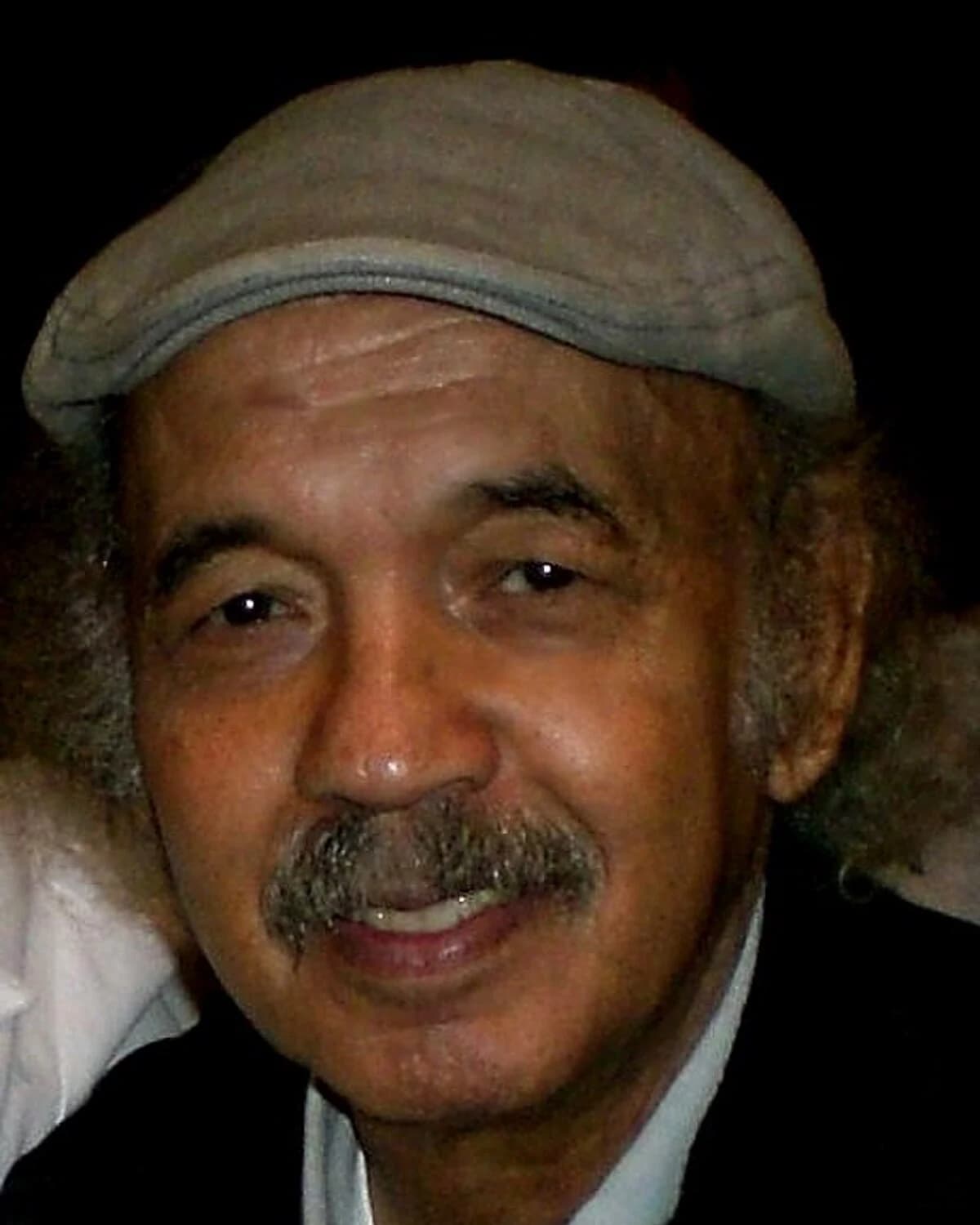
Artist image
Guillermo Ramos Flamerich; Wikimedia Commons; CC BY-SA 3.0.
