
01.03.1716–27.10.1800
Itō Jakuchū
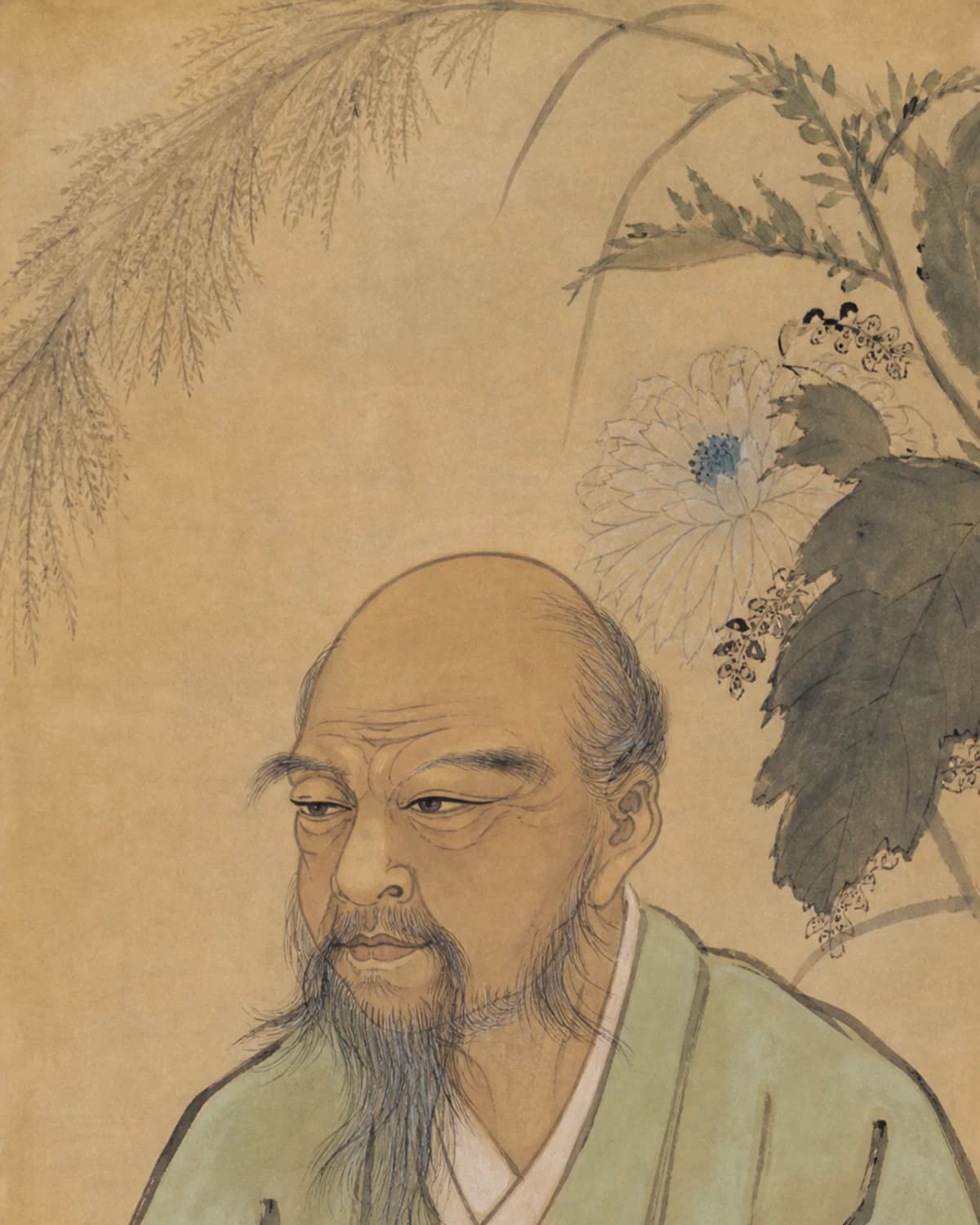
Itō Jakuchū (1716–1800) inherited his father’s grocery shop in Kyoto’s Nishiki market and gave up trade for painting only at forty. He learned above all from life: from the vegetables in the shop, the fish in the market and the chickens in his own garden. His cycle of thirty scrolls, the “Colorful Realm of Living Beings”, given to the temple of Shōkoku-ji, is designated a National Treasure of Japan.
Biography
Where the Buddha lies in pictures of the nirvana, Itō Jakuchū has a daikon radish. Around it crowd mourning vegetables: aubergines, turnips, mushrooms; the sacred sal trees are replaced by stalks of maize, the lotus pedestal by a woven basket. The daikon was not chosen for the part by chance: it means a great deal in Zen culture. Why the “Vegetable Parinirvana” was painted, historians have never decided; some connect it with the death of the artist’s mother, others with the death of his brother.
The man who painted it had sold vegetables for more than fifteen years.
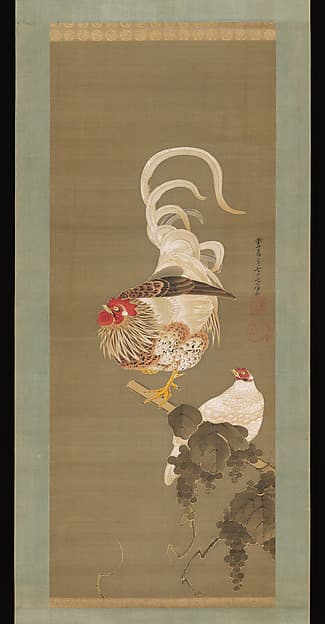
Jakuchū was born in 1716 in Kyoto, the eldest son of the grocer Itō Genzaemon, whose shop, Masuya, stood in the very centre of the city, in the Nishiki food district. His gift for drawing showed early. It is said that at about fifteen he studied with Ōoka Shunboku, an Osaka master of the Kanō school known for his paintings of birds and flowers, but the school’s strict rules did not suit him. After that he taught himself: he drew the vegetables in his father’s shop, the fish in the Nishiki market and the chickens in his garden, and took Chinese painting as his model. He painted tigers and phoenixes too, but his chickens and other birds show that he worked from life. In 1739 his father died suddenly, and the twenty-three-year-old son became master of the shop. He neglected the business: painting interested him more.
In his late thirties he built a two-storey studio on the west bank of the Kamo River and called it Shin’en-kan, the “Villa of the Detached Heart”, after a line by the Chinese poet Tao Qian. Around the same time he became friends with Daiten Kenjō, a monk of the Rinzai school and later abbot of the Kyoto temple of Shōkoku-ji. The friendship opened the temple’s collection of Japanese and Chinese painting to him and brought new acquaintances, and the name Jakuchū itself, taken from the Tao Te Ching and meaning “like the void”, may have been Daiten’s idea. Jakuchū was deeply bound up with Zen and was regarded as a lay brother.
In 1756, at forty, he gave up the shop and moved to Shōkoku-ji to devote himself entirely to painting. Around 1757 he began the “Colorful Realm of Living Beings”: thirty hanging scrolls in colours on silk, birds, animals and plants on a monumental scale and with the detail that such a size demands. He dedicated the cycle to the memory of his parents and of a younger brother who had died early, finished it around 1765, and then gave it to the temple together with three scrolls of the Shaka Triad. The scrolls now belong to the Museum of the Imperial Collections. At about forty-four, at Daiten’s request, he painted fifty panels for Kinkaku-ji, and where anyone else would have put a pine, bamboo, a plum tree or Mount Fuji, he has grapevines and banana trees. In the Heian jinbutsushi, a directory of Kyoto’s notable residents, his name stood second among the painters, immediately after Maruyama Ōkyo.
In the spring of 1767 Jakuchū and Daiten travelled by boat down the Yodo River from Kyoto to Osaka. Out of this trip came the scroll “Jōkyōshū”, “Impromptu Pleasures Afloat”, made by printing from carved woodblocks in imitation of Chinese ink rubbings: the ground is black, the landscape and Daiten’s poems grey and white. The scroll is in the Metropolitan Museum of Art in New York. Stranger still is his masume-gaki technique: the screen is first ruled in pale ink into squares of about a centimetre, each square is filled with a light tone, a darker one is laid over it, and the corners are touched in darker still. Jakuchū invented the technique himself, and only three works were made this way, among them the screen “Birds and Animals in the Flower Garden”, with its white elephant, in the Idemitsu Museum of Arts. To my mind, nothing made in Japan at the time looks more modern.
In his fifties and sixties he painted less, making prints and ink paintings instead: he had become one of the elders of the Nishiki market, which was then threatened with closure, and he fought stubbornly to keep it open. He returned to painting in earnest only after seventy. He lost his house in the Great Tenmei Fire, went to Osaka to seek the support of Kimura Kenkadō, and painted large works there, such as the sliding doors “Cactus and Domestic Fowls”. At eighty came the screen “Elephant and Whale”, found in 2008 in an old house in the Hokuriku region and now in the Miho Museum. There were no elephants in Japan, but in 1728 two were brought from Vietnam to Nagasaki for the shogun Tokugawa Yoshimune and led through Kyoto; the Jakuchū specialist Tsuji Nobuo believes that the fourteen-year-old boy may have seen them.
Jakuchū spent his last years at the temple of Sekihō-ji, a branch of the Manpuku-ji monastery on the southern outskirts of Kyoto, where pupils and friends gathered around him, among them Matsumoto Hōji. He went on painting until his death on 27 October 1800, in his eighty-fifth year. A new fame came much later: in 1970 Tsuji Nobuo included him in his book “Lineage of Eccentrics”, and since then Jakuchū has been regarded as the Edo-period painter the public loves most.
Artist works
Works by the artist
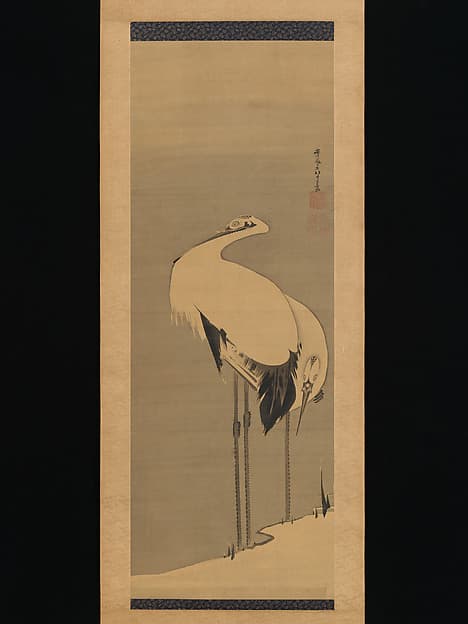
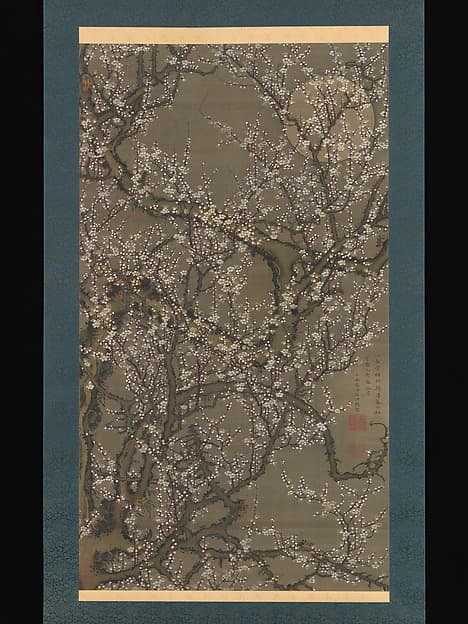
Works by Itō Jakuchū available in this edition of NEOARCA.
Related context
Associations
Works connected through artistic movements, cultural context and period. Priced works available in this market appear first.








Profile notes
Profile and sources
Image
Artist image
На основе открытого изображения: Kubota Beisen; Wikimedia Commons; Public domain.
