
25.12.1883–14.08.1939
Isaak Brodsky
Isaak Brodsky (1883–1939), a pupil of Repin, painted landscapes and portraits before the revolution and won medals in Munich; after 1917 he became one of the creators of the official Soviet portrait: Lenin in the Smolny, on the rostrum, against the Kremlin. From 1934 he headed the All-Russian Academy of Arts. He collected more than a thousand works by Russian artists, and his Leningrad flat became a museum.
Biography
In 1907 Valentin Serov, having looked at the work of Isaak Brodsky, then a student at the Academy of Arts, said of him: “He is equally a master in every manner and interesting everywhere.” And he predicted a fine future for him. I think the first half of that remark describes Brodsky’s later path better than the second: he went on to change his manner more than once.
He was born on 25 December 1883 (6 January 1884) into a Jewish family in Sofiyivka, a Bulgarian village in the Taurida Governorate. His father was a trader and landowner, registered as a merchant of the second guild of the town of Nogaisk. At the Berdyansk municipal school, which Brodsky finished in 1896, the drawing teacher noticed his gifts and began giving him separate lessons. The boy was musical too, but his parents saw him as a future architect. From 1896 to 1902 he studied in Odesa, at the art school, under Luigi Iorini, Kiriak Kostandi and Gennady Ladyzhensky: first architecture, then sculpture for half a year, and only after that did he choose painting. In 1900 he received a small bronze medal for a still life, and in 1901 a small silver medal for a drawing from the model. David Burliuk was his classmate, and Mitrofan Grekov, the future battle painter, his friend.
In 1902, as a medallist of the Odesa school, he was admitted without examinations, on probation, to the Higher Art School of the Academy of Arts in St Petersburg, and he spent five years studying under Ilya Repin. His teacher, Brodsky recalled, had given him not his manner of painting but his attitude to art. He graduated from the Academy in 1908. From 1904 he exhibited regularly, from 1905 with the Society of South Russian Artists, later with the Kuindzhi Society and the Union of Russian Artists. In 1909 “Portrait of His Wife” (1908) and “Towards Spring” (1906) won a medal at the International Exhibition in Munich. Then, on an Academy travelling scholarship, he spent two years touring Germany, France, Spain and Italy. On Capri he stayed with Maxim Gorky and Maria Andreyeva and painted their portraits (1910), and in 1911, again at Gorky’s, he painted Fyodor Chaliapin. From the same journey come his Italian architectural landscapes. In 1913 his “Winter in the Provinces” won a gold medal in Munich.
In the summer of 1917 Brodsky and Repin were invited to paint Alexander Kerensky. The drawing from life, Brodsky said, was left in the Winter Palace after the sitting and disappeared in the events that followed. That same year he painted Nikolay Chkheidze and Irakli Tsereteli.
He accepted Bolshevik rule and quickly became its portraitist. His Lenin appears against the Kremlin (1923), on the rostrum and against the Smolny (1925), at a workers’ meeting at the Putilov factory in May 1917 (1929), in the Smolny (1930); there were portraits of Stalin, Lunacharsky, Frunze, Kalinin, Kirov and Voroshilov, among them “K. E. Voroshilov on a Ski Outing” (1937). In 1924 he joined the Association of Artists of Revolutionary Russia and became head of its Leningrad branch. That same year in Moscow he showed a vast painting, “The Formal Opening of the Second Congress of the Comintern in the Uritsky Palace in Leningrad”, with hundreds of real participants; Repin later called him “the Raphael of our time” for it. Critics on the left, Boris Arvatov, Nikolai Tarabukin and Nikolai Punin, reproached both the Association and Brodsky himself for backwardness. Korney Chukovsky, who visited him in February 1926, noted in his diary that in the dining room that served as a studio, assistants were turning out copies of “The Execution of the 26 Baku Commissars” for clubs and village soviets, while the artist touched them up and signed them. In May 1928 Brodsky was expelled from the Association for commercial activity. And in April 1929 the twenty-fifth anniversary of his creative work was lavishly celebrated, with the same Chukovsky presiding over the evening.
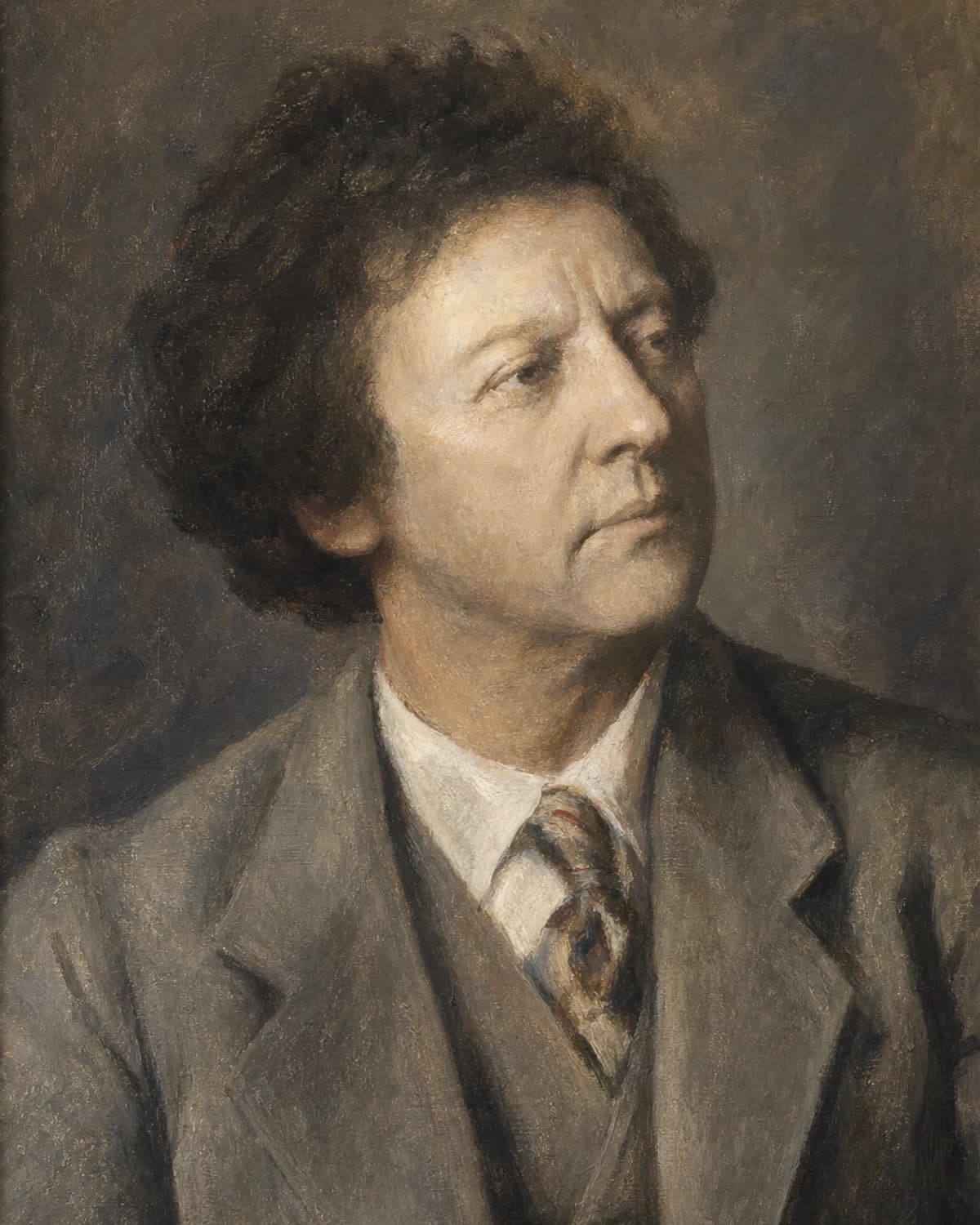
From 1932 he was a professor, from 1934 director of the All-Russian Academy of Arts, and in 1934–1935 rector of the Leningrad Institute of Painting, Sculpture and Architecture. At first, he recalled, only two students signed up for his studio and the party bureau assigned five more, but within a year or two his studio had become the largest in the Academy. His pupils included Aleksandr Laktionov, who painted a portrait of his teacher in 1938, Yuri Neprintsev, Pyotr Belousov, Nikolai Timkov and Pyotr Vasiliev. In 1932 he became an Honoured Art Worker of the RSFSR, in 1934 he was the first artist to receive the Order of Lenin, and in 1939 he was awarded the degree of Doctor of Art History.
All his life he collected paintings.
His collection numbered more than a thousand works: Repin, Levitan, Serov, Vrubel, Korovin, Golovin, Benois, Kuindzhi, Kramskoi, Malyavin, Boris Grigoriev, Alexandre Jacovleff, Chagall. He gave hundreds of pieces to Soviet museums, and in Berdyansk, where he had gone to school, he founded an art museum in 1930 and gave it about two hundred paintings.
Isaak Brodsky died on 14 August 1939 in Leningrad and is buried at the Literatorskiye Mostki. His daughter Lidiya also became a painter. His flat in the Golenishchev-Kutuzov House on Arts Square, where he had lived since 1925, became a museum, and his collection still hangs there. In 1940 Lassalle Street near Nevsky Prospekt was renamed Brodsky Street; in 1991 it got back its old name, Mikhailovskaya.
Related context
Associations
Works connected through artistic movements, cultural context and period. Priced works available in this market appear first.








Profile notes
Profile and sources
Image
Artist image
На основе открытого изображения: Mordovian History Museum; Wikimedia Commons; CC BY-SA 4.0.
