
02.01.1913–16.11.2002
Hussein Bicar
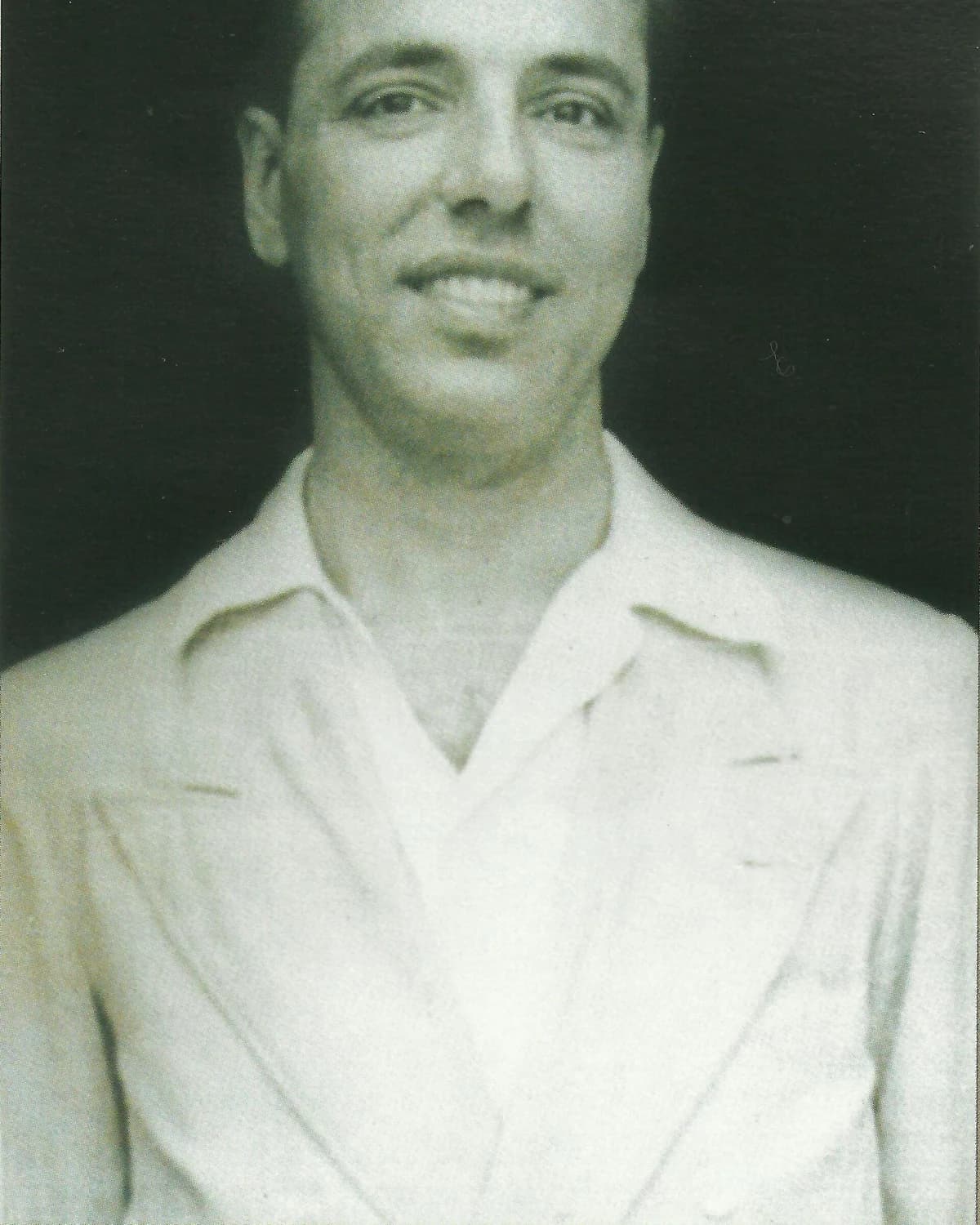
Hussein Bicar (1913–2002) illustrated Taha Hussein’s “The Stream of Days” and created the children’s magazine Sinbad, which began in 1952. A graduate of the School of Fine Arts in Cairo, he taught, painted portraits, wrote columns for the newspaper Akhbar El Yom and drew illustrated reports from trips through Africa, Spain and Syria. For a documentary about Abu Simbel he painted a series of pictures.
Biography
In 1939 an Egyptian art teacher found himself in Berlin on the day war was declared. His job in Morocco was over, the Mediterranean was closed to travellers, and Hussein Bicar made his way home around the Cape of Good Hope. He spent three months of the voyage in Mozambique, painting portraits for money: the colony was Portuguese and neutral.
He was born on 2 January 1913 in Alexandria, in the Anfoushi quarter, into an Egyptian family of distant Cypriot descent. His father died early. By the age of eight the boy played the lute, and by nine he was already giving music lessons to Alexandrian society ladies, who by custom could not study with an adult male teacher. He never learned to read music and said that he played only by ear.
At fifteen his mother took him to Cairo, to the Higher School of Fine Arts in the Shoubra quarter. The school had been founded privately in the early 1900s, its teachers were Europeans, and the curriculum followed Western models. He was helped especially by a Swedish teacher, Friedman Cluezel, who saw a portrait painter in him and asked him to draw his own likeness. In 1928 the school came under the Ministry of Education, and Egyptian artists who had studied in Europe began to be hired, among them the sculptor Mahmoud Mokhtar. In his last year Bicar studied with Ahmed Sabri, then the best portrait painter in Egypt, who became his mentor and lifelong friend. He graduated in 1933 (by other accounts, in 1934), among the top of his class. His hope of living as a freelance artist was broken by the Depression of the 1930s; he took whatever work he could, painting folkloric scenes for the wax museum in Helwan and teaching in primary and secondary schools. The versatility he developed in those years served him well later.
In 1939 he joined a group of teachers invited by the Moroccan government. In four years there he became fluent in Spanish and travelled widely in Europe.
In 1943 Bicar returned to Cairo and became an assistant to Ahmed Sabri at the Faculty of Fine Arts. Seventeen years later he was heading its painting department, and most of a generation of Egyptian artists studied with him. He urged them to look for subjects in their own heritage. It was then that he was noticed as an illustrator: he was commissioned to draw the pictures for Taha Hussein’s “The Stream of Days”, the first illustrated book published in Egypt. After that he began to write and illustrate for children himself. The publishing house Dar al-Maaref issued his books; he worked for it as an art consultant and designed covers, among them books by Kamel Kilani, a pioneer of children’s literature in Arabic. His main project was the magazine Sinbad, begun in 1952, the first of its kind in Egypt. Bicar invented the hero himself, a wanderer in Eastern dress with a bag, a spyglass and a staff.
In 1959 the brothers Ali and Mustafa Amin, owners of the newspaper Akhbar El Yom, persuaded him to leave the faculty. He became something like a foreign correspondent who sends back illustrated reports: Ethiopia, Syria, Algeria, Morocco, Tunisia, Spain. In 1962 the newspaper was nationalised and the trips came to an end. He stayed on as its regular art critic and ran a column of his own four-line poems, “The Rubaiyat”, with drawings.
In the 1960s, because of the building of the Aswan Dam, Ramesses II’s temple at Abu Simbel was moved under the auspices of UNESCO. For the documentary “The Eighth Wonder”, the Canadian director John Feeney filmed the moving of the temple, and Bicar was asked to depict its construction in paintings. He worked on them for more than two years and travelled to Nubia and Thebes. The film was shown at the Berlin documentary film festival in 1973. Fifty-four of the paintings are reported to be kept now in the Abu Simbel museum in Kafr El Gouna, near Hurghada.
The subjects of his painting are Egyptian: peasants, Nubia, Alexandria, Pharaonic themes. His line is spare, and his figures often look sculpted. To my mind his portraits are the strongest part of his work: he painted them all his life, beginning as a student.
Bicar was a Baháʼí, and in Egypt that faith was banned in 1960.
In the 1980s he was arrested along with others; the charges against him were dropped. Later he received state honours, among them the Mubarak Prize in 2000. He died on 16 November 2002.
Related context
Associations
Works connected through artistic movements, cultural context and period. Priced works available in this market appear first.








Profile notes
Profile and sources
Image
Artist image
Unknown author Unknown author; Wikimedia Commons; Public domain.
