
1858–20.03.1930
Hoca Ali Rıza
Hoca Ali Rıza (1858–1930) began as an army officer: he studied at Kuleli Military High School and at the military academy, and retired in 1911 as a lieutenant colonel. He taught drawing and, from 1914, landscape painting at the School of Fine Arts. He painted landscapes and city views; his last exhibition in his lifetime was held in Paris in 1928.
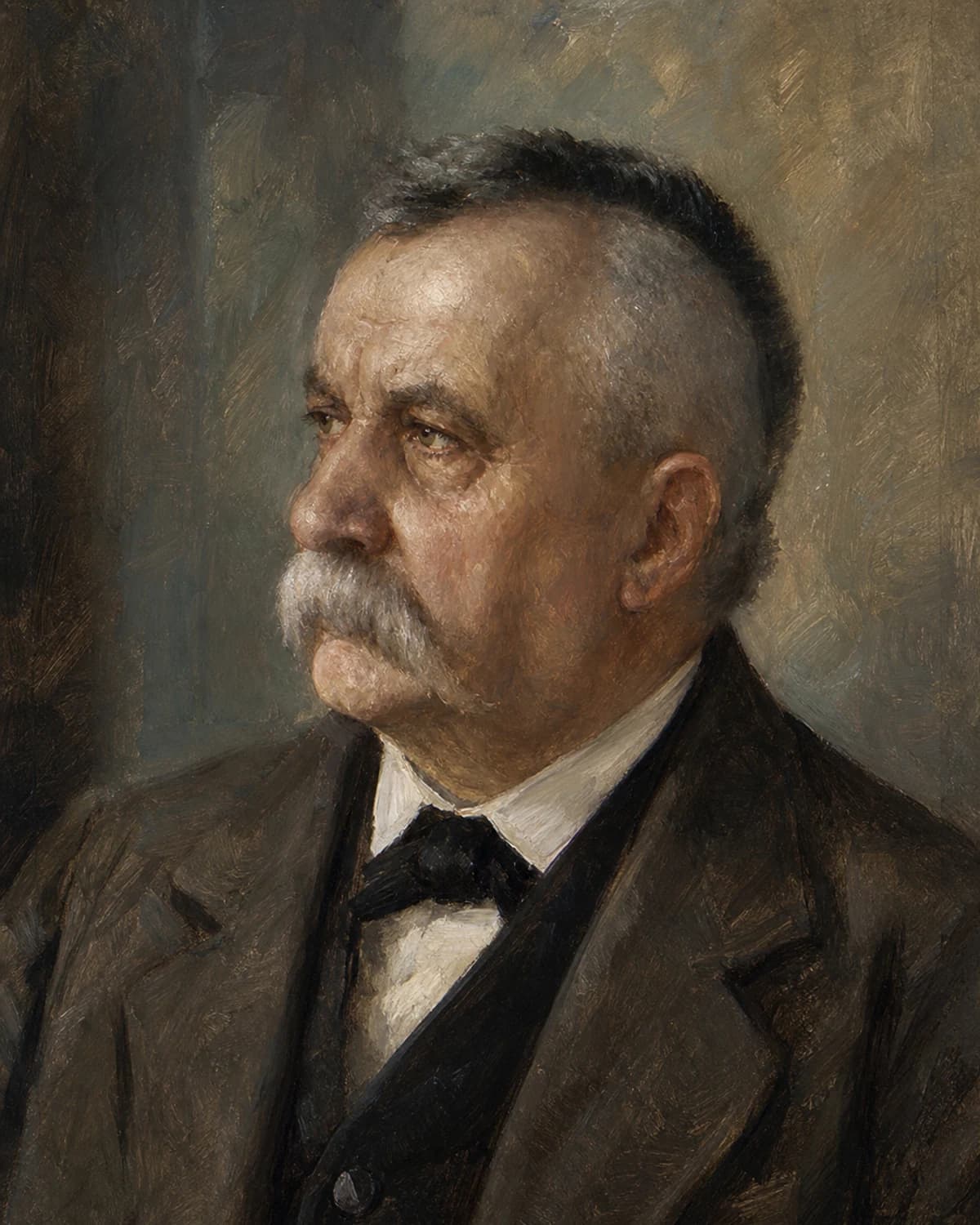
Biography
In 1928 an exhibition opened in Paris, organised by the painter and member of parliament Celal Esat Arseven. It was the last one in Hoca Ali Rıza's lifetime: he was about seventy, and still lived in Üsküdar, where he was born.
He was born in 1858. His father was a cavalry major and an amateur calligrapher. The sources give no exact date of birth, only the year.
His education was military. After primary school he entered Kuleli Military High School, then the Turkish Military Academy, where his drawing teachers were Osman Nuri Pasha and Süleyman Seyyid. In 1881 he received an award from Sultan Abdülhamid II, and three years later he finished the course as a lieutenant and became Nuri Pasha's assistant. He planned to continue his studies in Naples, but the trip had to be cancelled because of a cholera epidemic in the city.
After that his career ran along several lines at once, and the officer's was the main one. In 1891 he joined a government commission studying Turkish-Islamic artefacts. In 1895 he was promoted to kolağası (senior captain) and began work as a design artist at the new Imperial Porcelain Factory. In the same years he worked alongside the Italian painter Fausto Zonaro, who was giving painting lessons to the wife of a court dignitary at Yıldız Palace. During the Greco-Turkish War, Ali Rıza served as a war artist in Ionia. In 1903 he sat on the commission that set up the Museum of Antiquities. From 1909 he headed the Military Publications Office for two years, and at the same time he chaired the Ottoman Painters Association. In 1911 he retired with the rank of yarbay (lieutenant colonel).
From 1914 his life was one of teaching. He began teaching landscape painting at the School of Fine Arts, now Mimar Sinan Fine Arts University. When the Ministry of Education cut staff, he moved to the Çamlıca Girls' High School and stayed there for three years. He then taught at another girls' school in Üsküdar, and from 1929 until his death at a boys' school.
Hoca Ali Rıza died on 20 March 1930 in Üsküdar.
He became known chiefly as a landscape painter: he is described as the author of Impressionist landscapes and architectural views. It seems to me that his military and engineering background matters here, but the available texts have no documents on how it affected his painting, so this is only a guess. After his death his pictures stayed in circulation. In 1933 the Halkevleri society in Ankara showed them in its first exhibition, which turned out to be one of the sixteen solo exhibitions of the artist held afterwards. In 2022 a selection of his works was shown in the old Galatasaray post office building on İstiklal Caddesi in Istanbul, as part of the Beyoğlu Cultural Road festival.
Related context
Associations
Works connected through artistic movements, cultural context and period. Priced works available in this market appear first.








Profile notes
Profile and sources
Image
Artist image
На основе открытого изображения: Hoca Ali Rıza; Wikimedia Commons; Public domain.
