
21.11.1910–09.08.1943
Graham Bell
Graham Bell (1910–1943) worked in a bank and on a farm in Durban, moved to Britain in 1931 and six years later became one of the founders of the Euston Road School in London. For three years he wrote for the New Statesman and was its arts editor. He was killed in 1943 during a training flight in a bomber.
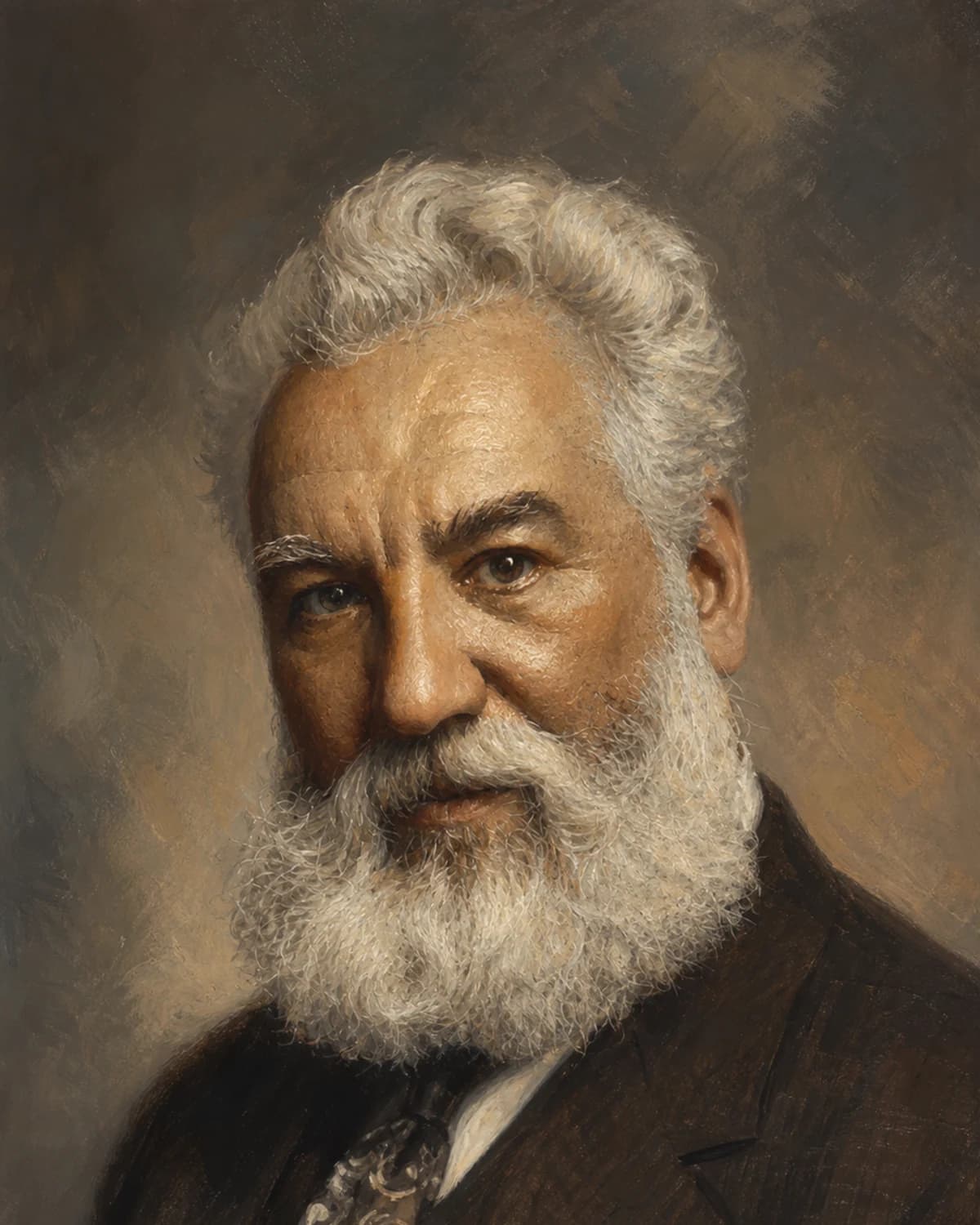
Biography
In 1934 Graham Bell showed several non-representational works at the exhibition “Objective Abstractions” at the Zwemmer Gallery in London. For an artist later known as a realist this is an unexpected episode, but it was brief: soon afterwards Bell gave up painting altogether.
His full name was Frank Graham Bell. He was born on 21 November 1910 in what is now South Africa; the sources give the place differently, Durban or the Transvaal Province. His younger brother, Geoffrey Graham Bell, also became an artist. Before taking up art Bell worked in a bank and on a farm; he studied at the Durban Art School, and in 1931 held his first one-man exhibition there, at the City Hall.
In the same year he moved to Britain with a young actress, Anne Bilbrough, whom he later married. At first he was influenced by the painting of Duncan Grant, then he met William Coldstream. It was Geoffrey Tibble who pushed him towards abstraction.
From 1934 to 1937 Bell wrote rather than painted: he contributed to the New Statesman, the weekly political and cultural magazine, and in time became its arts editor. Then he returned to painting. In 1937, together with Coldstream, Lawrence Gowing, Rodrigo Moynihan, Victor Pasmore and Claude Rogers, he became a founder of the Euston Road School. This group of realist painters set up a school of painting and drawing at 316 Euston Road in London, where its members taught and studied. They drew on a tradition going back to Cézanne and set themselves against the avant-garde movements, insisting on traditional subjects painted in a realist manner. Their programme rested on a social aim: to create an art that a wide public could understand. Most of them were socialists, and some were members of the Communist Party. Many also worked for Mass Observation, the movement that recorded everyday British life, documenting their times, but they were not propagandists in the manner of Socialist Realism, the official Soviet doctrine in art. The school was affiliated to the Artists’ International Association, a left-leaning artists’ organisation, and helped artists who had fled Nazi Germany to settle and find work.
In 1938 the gallery Rosenberg & Helft showed Bell’s work in a group exhibition together with Pasmore, Thomas Carr, Rogers, Coldstream and Tibble. In the same year he worked for Mass Observation in Bolton with the photographer Humphrey Spender; their sketchbooks and photographs are kept in Bolton Museum.
In 1939 his pamphlet “The Artist and His Public” appeared, and with Kenneth Clark he wrote the “Plan for Artists”, which urged support for contemporary artists. It is generally held that it allowed a number of his contemporaries to stay in a profession they would otherwise have had to abandon for lack of money. In 1942 the gallery Ernest Brown & Phillips showed his work with that of Anthony Devas, Carr and Gowing.
After the outbreak of the Second World War Bell joined the Royal Air Force to train as a pilot. Around 1940, under the “Recording Britain” scheme, devised by Clark and supported by the Pilgrim Trust, a charitable foundation, he painted watercolours of Ewenny Priory and other places in Glamorgan; several such sheets are in the Victoria and Albert Museum in London. During basic training in Wales he broke his leg badly in a Sunday-morning football match. The delay made him too old to continue as a pilot, and he moved to a navigators’ course. He completed his training in South Africa, returned to Britain in early 1943 with the rank of pilot officer, and in June arrived at RAF Ossington, the base of No. 82 Operational Training Unit.
On 9 August 1943, near the end of a training flight in a Wellington bomber, an engine failed, the pilot lost control, and the aircraft crashed near Newark-on-Trent in Nottinghamshire. The whole crew was killed. Bell was thirty-two.
His paintings are in the Tate (“Dover Front”, 1938; “Miss Anne Popham”, 1937–38) and in museums in Derby, Sheffield and Glasgow. After the war the publisher Lund Humphries issued “The Paintings of Graham Bell” (1947) with an introduction by Kenneth Clark, and the Arts Council of Great Britain included his work in its 1948 exhibition “The Euston Road School”.
Related context
Associations
Works connected through artistic movements, cultural context and period. Priced works available in this market appear first.








Profile notes
Profile and sources
Image
Artist image
На основе открытого изображения: Unknown author Unknown author; Wikimedia Commons; Public domain.
