
10.07.1888–20.11.1978
Giorgio de Chirico
Giorgio de Chirico (1888–1978) was born in Volos, Greece, to an Italian engineer who built railways, studied in Athens and Munich, and in the 1910s, in Italy and Paris, painted a series of empty squares with arcades, long shadows and mannequins. Together with Carlo Carrà he founded Metaphysical painting, which the Surrealists took up. After 1919 he returned to traditional technique, a turn the critics never forgave.
Biography
In the spring of 1910 in Florence, in the Piazza Santa Croce, the young de Chirico had a feeling that he later called a revelation. The first picture of his “metaphysical squares”, “The Enigma of an Autumn Afternoon”, was painted after that day.
He was born on 10 July 1888 in Volos, in Greece, into an Italian family. His father, Evaristo de Chirico, from a Sicilian family with Greek roots, built railways, among them the Pelion line; his mother came from Genoese stock that had lived in Smyrna. His younger brother was Andrea, the future writer, painter and composer Alberto Savinio. From 1900 Giorgio studied drawing and painting at the Athens Polytechnic, chiefly under the Greek painters Georgios Roilos and Georgios Jakobides. After his father’s death in 1905 the family, having stopped in Florence, moved to Germany in 1906.
At the Academy of Fine Arts in Munich his teachers were Gabriel von Hackl and Carl von Marr, but I think reading mattered more to him than the academy: Nietzsche, Schopenhauer, Otto Weininger. He studied Böcklin and Klinger, and early works such as “The Dying Centaur” (1909) still show traces of Böcklin.
In the summer of 1909 he returned to Italy, spent six months in Milan, then moved to Florence. By 1910 his manner had grown simpler: flat, anonymous surfaces, motionless views of cities in bright Mediterranean light. In July 1911, on his way to Paris, he stopped in Turin, and its arches and squares struck him by their “metaphysical aspect”. In Paris he settled near his brother. Through him he met Pierre Laprade, a member of the jury of the Salon d’Automne, and showed three works there: “The Enigma of the Oracle”, “The Enigma of an Afternoon” and a self-portrait. In 1913 he exhibited at the Salon des Indépendants and again at the Salon d’Automne; Pablo Picasso and Guillaume Apollinaire noticed him, and his first painting, “The Red Tower”, was sold in the same year. In 1914 Apollinaire introduced him to the dealer Paul Guillaume, and a contract for his work was signed.
The motifs of these years recur: empty arcades, towers, elongated shadows, trains, a steeply receding and deliberately illogical perspective. Of the arcade he wrote that the Roman arcade is fate. Gradually the views of squares gave way to cluttered storerooms and mannequin-like figures. On his 1911 self-portrait he inscribed a Latin phrase: “What shall I love if not the enigma?”
When the First World War began he returned to Italy and in May 1915 enlisted in the army, but he was judged unfit for service and assigned to the hospital in Ferrara. The shop windows of that town suggested a series of interiors with biscuits, maps and geometric constructions. In Ferrara he met Carlo Carrà, and together they founded Metaphysical painting (pittura metafisica). From 1918 he lived in Rome, and his work was widely exhibited in Europe.
In November 1919 the journal Valori plastici published his article “The Return of Craftsmanship”. He called for a return to traditional methods and subjects, took up Raphael and Signorelli, and became an outspoken opponent of modern art. The first meetings with the Surrealists belong to the same time: André Breton saw one of his Metaphysical paintings in Guillaume’s gallery in Paris, and the core of the group formed around Breton, for whom de Chirico was a forerunner. In 1924 he came to Paris and was accepted into the circle, but the Surrealists were sharply critical of his new work. By 1926 he called them “cretinous and hostile”, and they parted in acrimony. In 1925 he married the ballerina Raissa Gurievich and moved with her to Paris. In 1928 his first exhibition in New York was held, followed by one in London. In 1929 the novel “Hebdomeros” appeared, and in the same year he designed sets for Sergei Diaghilev.
His second wife, Isabella Pakszwer Far, whom he met in 1930, stayed with him for the rest of his life. In 1932 they returned to Italy, in 1936 they left for the United States, and in 1944 they finally settled in Rome. In 1939 he turned to a neo-Baroque manner under the influence of Rubens; this period, which lasted until the late 1960s, is sometimes called the “Baroque season”. He copied old masters, read treatises on painting technique and studied the methods of Titian. Critics did not value the late works as they did the Metaphysical ones, and he resented it, considering them better and more mature. He also made “self-forgeries”: paintings in the Metaphysical manner, backdated, and he publicly declared forgeries works in museums and private collections that were attributed to him. His memoirs came out in 1945. In 1948 he bought a house near the Spanish Steps in Rome, which is now a museum bearing his name.
He worked almost until the age of ninety. In 1974 he was elected to the French Académie des Beaux-Arts. De Chirico died in Rome on 20 November 1978. In 1992 his remains were moved to the Roman church of San Francesco a Ripa.
Related context
Associations
Works connected through artistic movements, cultural context and period. Priced works available in this market appear first.








Profile notes
Profile and sources
Image
Artist image
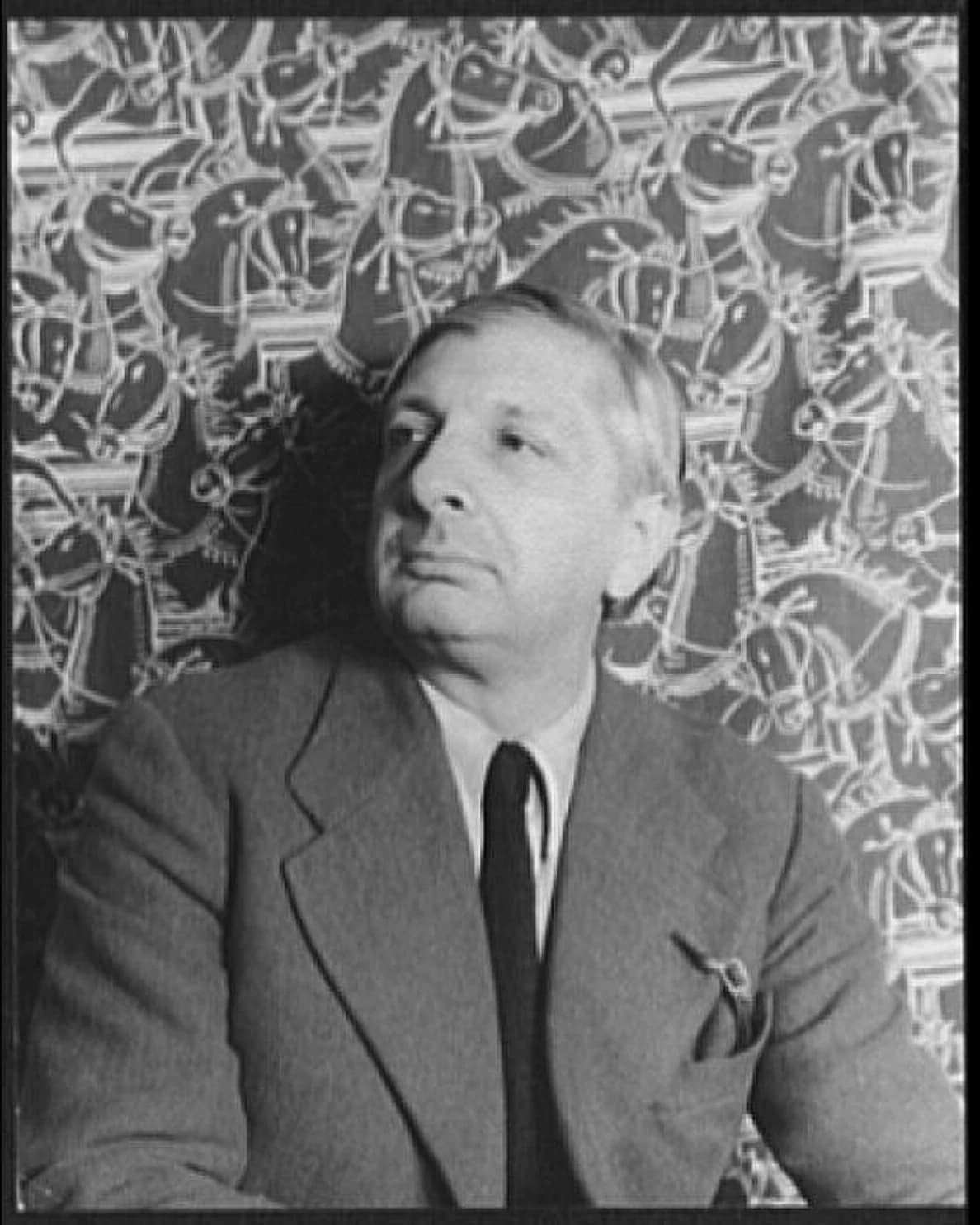
Carl Van Vechten; Wikimedia Commons; Public domain.
