
23 декабря 1819–4 февраля 1902
George N. Barnard
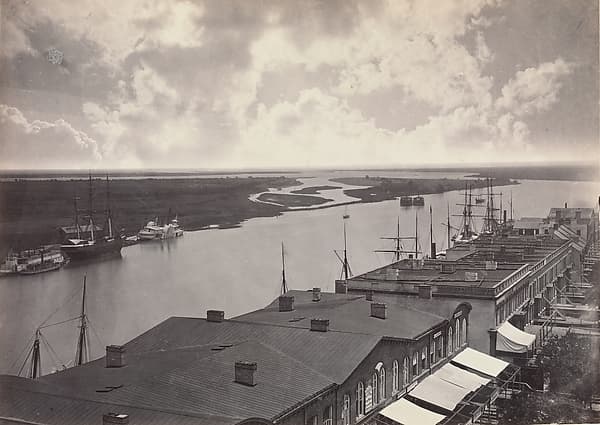
George N. Barnard (1819–1902) photographed the burning of the grain elevators in Oswego in 1853, pictures regarded as some of the first news photographs. During the Civil War he worked with General Sherman’s army, and in 1866 he published an album of 61 albumen prints, “Photographic Views of Sherman’s Campaign”.
Biography
On 5 July 1853, the grain elevators in Oswego, New York, caught fire. The photographer George Barnard managed to photograph the blaze, and these pictures are now regarded as some of the first news photographs in the United States.
He did not become a photographer straight away. George Norman Barnard was born on 23 December 1819 in Coventry, Connecticut, into a farming family. His father died in 1826, and the boy grew up with relatives and learned trades in family businesses; by one account the family moved to New York City, by another he lived with relatives in a nearby town. In 1843 he married and settled in Oswego, where he first worked in the hotel business. Where exactly he learned photography is not known: he was not apprenticed to a photographer. He opened his own daguerreotype studio in Oswego in the mid-1840s; the exact date varies, and both 1845 and 1846 are given.
In 1853 Barnard opened a studio in Syracuse and, alongside the daguerreotype, began to use the ambrotype and the ferrotype. He sold the studio in 1857 and for a time worked in cartography, compiling a gazetteer of places in New York State. Two years later he returned to photography: he worked for Edward Anthony, then became an assistant to Mathew Brady, who at that time also employed Timothy O’Sullivan and Alexander Gardner. On the eve of the war Brady’s studio was asked for a great many portraits of soldiers, and Barnard photographed those as well. In 1861 he photographed the inauguration of Abraham Lincoln.
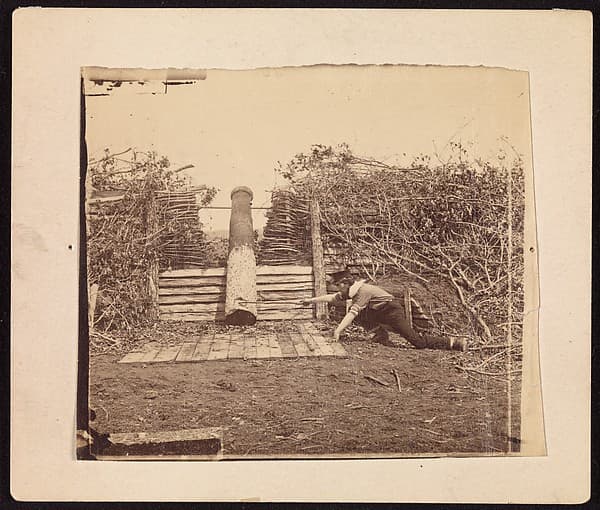
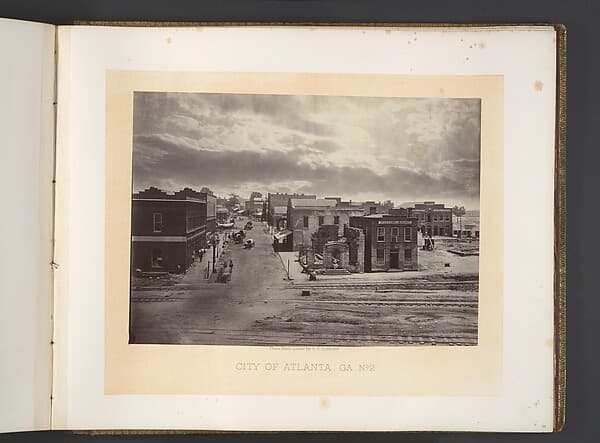
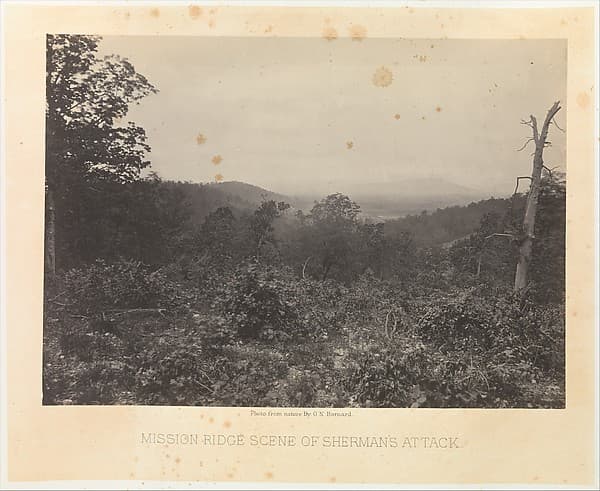
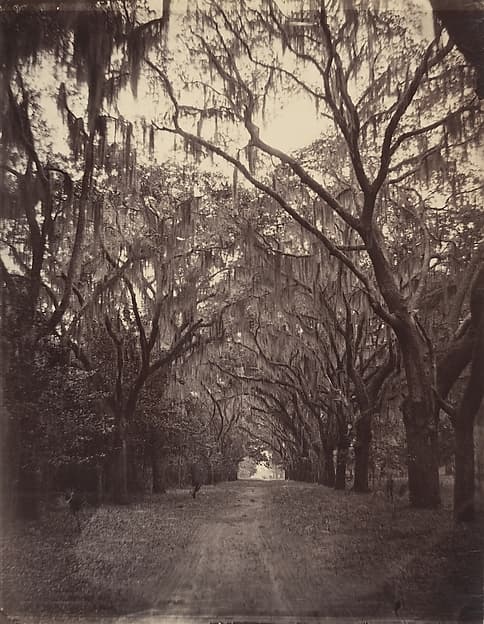
During the war he was present at sites of events in Virginia: Manassas, Harpers Ferry, Yorktown. In 1863 the Army of the Cumberland hired him in Nashville to copy maps and document the terrain. From 1864 he was the official photographer of the Military Division of the Mississippi under General William Tecumseh Sherman. The work consisted mostly of photographing fortifications, bridges and documents, and his pictures also served in making topographic maps. He accompanied the campaign from Chattanooga to Atlanta, then the march to the sea, as far as Savannah, and the wartime series ended with views of Columbia and Charleston in South Carolina. He could not photograph everything he wanted along the way, and after the Union victory he went back to battlefields he had missed. Among these pictures is said to be one of the spot where General James McPherson was killed, with the bones of a horse skeleton showing white in the foreground. I have not been able to check this picture against the photograph itself.
In 1866 the album “Photographic Views of Sherman’s Campaign” was published in New York, in an edition that by some accounts numbered 150 copies. It contains 61 albumen prints: Nashville, the Chattanooga Valley, Atlanta, Savannah, and a studio portrait of Sherman with his generals. Harper’s Weekly noted the delicacy of the execution and the fidelity of the prints.
After the war Barnard worked again in Syracuse, opened a studio in Charleston, then moved to Chicago. In October 1871 his studio burned down in the great fire of the city, and he photographed that too. From 1873 to 1880 he again lived in Charleston, then in Henrietta, New York, where he married for a second time in 1881. He worked briefly for Eastman Kodak in Rochester, demonstrating the new gelatin dry-plate process; by one account he worked there with George Eastman himself.
The following years were spent moving from place to place: Painesville in Ohio, Gadsden in Alabama. In 1893 Barnard settled on a farm in Cedarville, New York, and went on taking portraits to earn a living. He died on 4 February 1902 and was buried in a cemetery near Syracuse.
Barnard’s album was shown at the Museum of Modern Art in New York in 1970, and his photographs appeared in the exhibition “Photography and the American Civil War” at the Metropolitan Museum of Art in 2013.
Artist works
Works by the artist
Works by George N. Barnard available in this edition of NEOARCA.
Related context
Associations
Works connected through artistic movements, cultural context and period. Priced works available in this market appear first.
Profile notes