
1755–11.11.1824
Fyodor Alekseyev
Fyodor Alekseyev (1753 or 1755 – 1824) was trained at the Academy of Arts as a theatre decorator but made his name with views of St Petersburg and Moscow; his contemporaries called him the Russian Canaletto. He became an academician in 1794 for his “View of the Palace Embankment from the Peter and Paul Fortress”. From 1803 until his death he taught perspective painting; his pupils included Maxim Vorobiev and Sylvester Shchedrin.
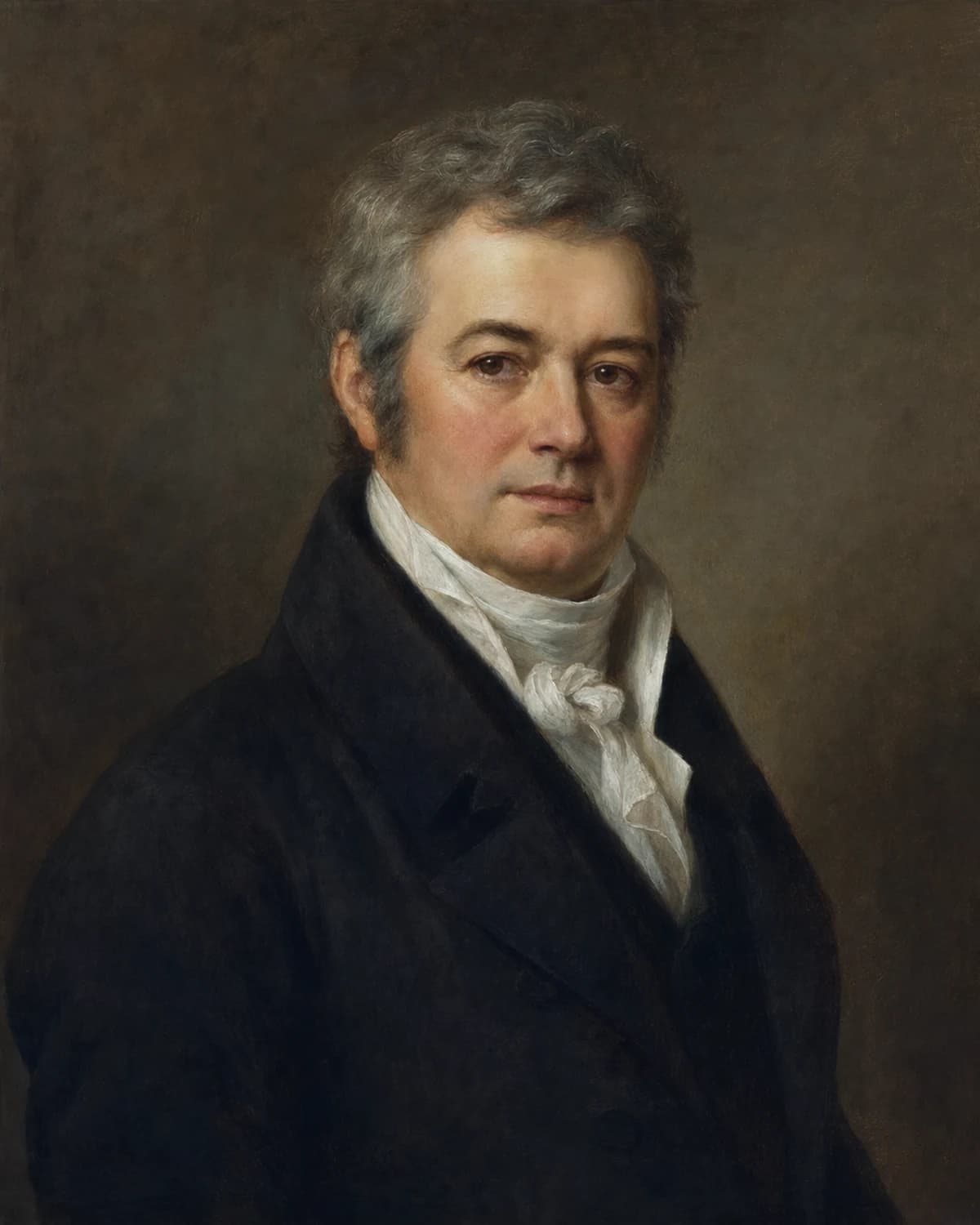
Biography
Fyodor Alekseyev’s last drawing shows the St Petersburg flood by the Bolshoi Theatre. Three days later, on 11 (23) November 1824, the artist died. He had once been called the Russian Canaletto, but in old age his fame faded, and he died poor.
Alekseyev was born in St Petersburg in 1753 or, according to other accounts, in 1755. His father was a watchman at the Academy of Sciences. The boy attended the garrison school, and in 1764, on his father’s petition, he was admitted to the Academy of Arts. From 1767 he studied in the class of ornamental sculpture under Louis Rollin, then in the “painting class” under Heinrich Fondermint and Antonio Peresinotti, a master of theatre painting. In 1771 he received the small silver medal, and in 1773 the small gold medal, and he graduated from the Academy with a first-class certificate and a sword. The graduate was entitled to a period abroad.
From 1773 to 1777 he lived in Venice, where he was meant to perfect himself as a theatre artist. Stage sets, it seems, did not appeal to him: more of his time went into landscapes and copies of the old masters. His known Venetian works include “The Riva degli Schiavoni in Venice” (1775), now in the Minsk Art Museum, and “Inner Courtyard with a Garden. A Loggia in Venice” (1776).
The Academy authorities were displeased with him. On his return he served from 1779 to 1786 as a decorator for the Imperial Theatres, and he was not allowed to continue his academic studies. Alekseyev spent his free hours in the Hermitage, copying the city views of Canaletto, Bellotto and Vernet. These copies brought him success and a name, and he was at last able to move away from stage sets to landscape. I think it was in the Hermitage, working from other men’s canvases, that he learned to look at a city the way he would later look at St Petersburg.
In the 1790s he came forward with views of St Petersburg. The “View of the Palace Embankment from the Peter and Paul Fortress” (1794, Tretyakov Gallery) earned him the title of academician. In 1795 he travelled “to take views” to Kherson, Nikolaev and Bakhchisarai, and visited Poltava, Voronezh and Oryol, making watercolour studies from life and painting pictures from them, for example “Square in the Town of Nikolaev” (Russian Museum).
A whole cycle of his works is connected with Moscow. In 1800 Paul I commissioned him to paint views of the old capital, and Alekseyev spent two years there, from 1800 to 1802. From life he painted “Red Square with St Basil’s Cathedral” (now in the museum of the Institute of Russian Literature in St Petersburg) and a “View of the Military Hospital”, which has not survived, as well as many watercolours. The Moscow theme stayed with him after his return. “Red Square in Moscow” is dated 1801 and “View of the Resurrection and St Nicholas Gates and the Neglinny Bridge from Tverskaya Street in Moscow” 1811; both are in the Tretyakov Gallery. The State Historical Museum holds “View in the Kremlin by the Spassky Gate” and “View of the Moscow Kremlin from the Stone Bridge” (1815), of which a first version is in the Russian Museum. In these pictures the whole city can be seen with its squares, gates and bridges, and with them a good deal of ordinary street life.
From 1803 to the end of his days Alekseyev taught perspective painting in the landscape class of the Academy. The best known of his pupils were Maxim Vorobiev and Sylvester Shchedrin.
In the 1810s he returned to St Petersburg and painted a new series: “View of the Spit of Vasilievsky Island from the Peter and Paul Fortress” (1810) and “View of the English Embankment” (Russian Museum). He is regarded as the first master of the cityscape in Russian painting.
Fyodor Alekseyev was buried in the Smolensky Orthodox Cemetery. The Academy of Arts paid for the funeral and also helped his large family.
Related context
Associations
Works connected through artistic movements, cultural context and period. Priced works available in this market appear first.








Profile notes
Profile and sources
Image
Artist image
На основе открытого изображения: Mikhail Ivanovich Terebenyov; Wikimedia Commons; Public domain.
