
10.05.1823–14.05.1869
Francisco Laso
The Peruvian painter Francisco Laso twice studied in Paris with Charles Gleyre, and in the 1850s was one of the first in Peru to make the people of the Andes the subjects of his pictures: “Indian Potter”, “The Laundress”, “The Three Races, or Equality before the Law”. In his lifetime he was valued above all as a portraitist; in 1867 he was elected a deputy to the Constituent Congress.
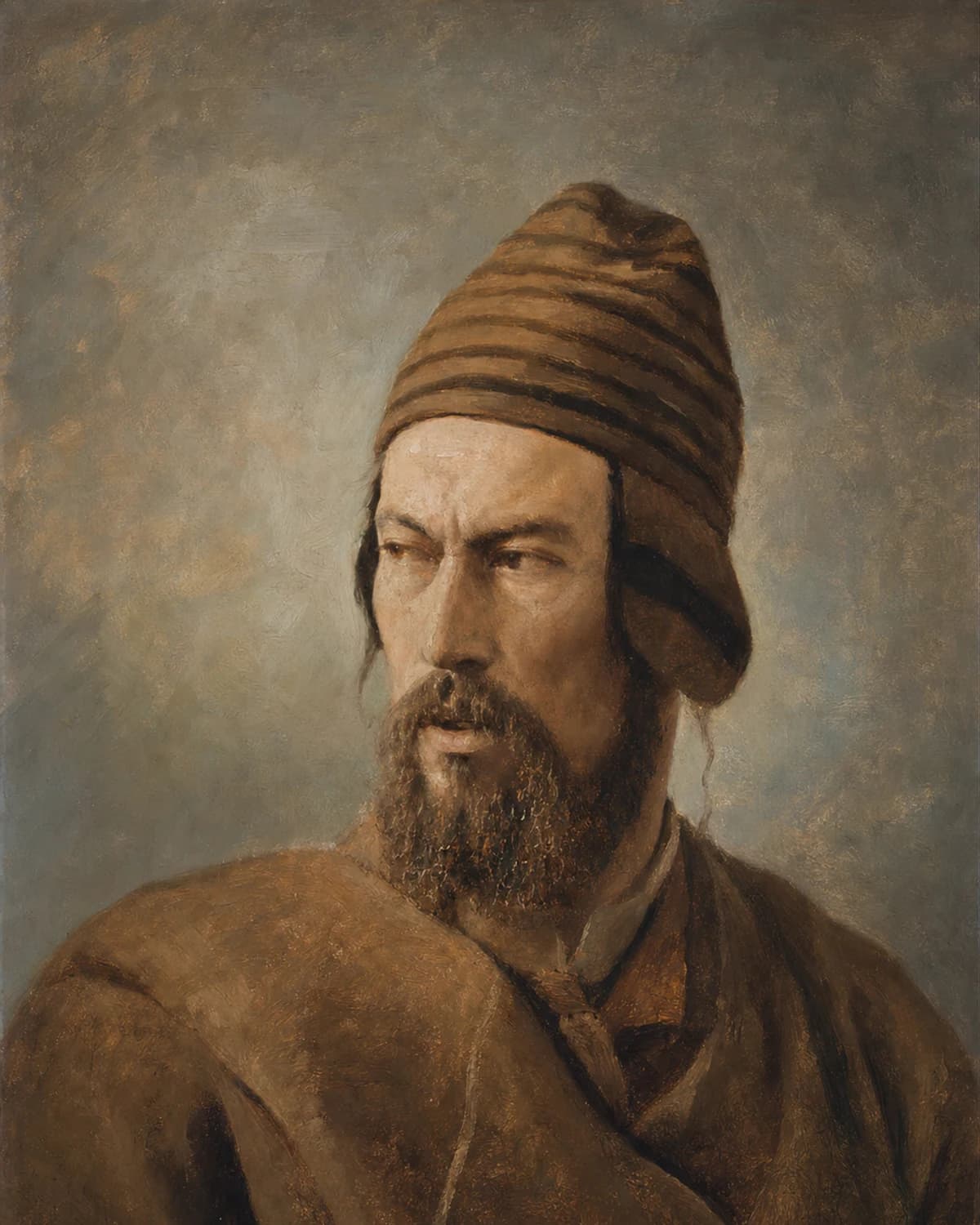
Biography
Once he had become a deputy to the Constituent Congress, Francisco Laso faced anonymous accusations: he had supposedly profited from the government grants that had paid for his studies in Europe. To silence his critics, he presented the state with three paintings: “Saint Rose of Lima”, “Justice” and “Plainchant”. How fair the accusations were is hard to judge.
He was over forty by then, and had about two years left to live.
José Francisco Domingo Laso de la Vega y de los Ríos was born in May 1823 in Tacna, in the south of Peru; according to some sources on the 8th, according to others on the 10th. The family belonged to the colonial aristocracy. His father, Benito Laso, was one of the founding fathers of independent Peru and later a minister; his mother was a sister of the Marquis de Villahermosa de San José. From 1830 the family lived in Arequipa. In Lima Francisco began to study law, but soon gave it up and entered the Academy of Drawing and Painting, where he studied with Francisco Javier Cortés. There too he met the painter Ignacio Merino, who advised him to continue his studies in Europe.
In 1843 Laso arrived in Paris and joined the studio of the Swiss painter Charles Gleyre. In 1847 he went to Italy, visiting Rome, Florence and Venice, and what interested him most were Titian and Veronese. In 1849 he returned to Lima, opened a studio and travelled widely in the highlands and along the coast, recording the life and customs of the people there. His second trip to Europe, in 1851, was paid for by a government grant; the country was then governed by José Rufino Echenique. Laso again worked with Gleyre, painted Indian subjects and exhibited at the Exposition Universelle of 1855. To these years belong “The Spinner” (1849), “Inhabitant of the Peruvian Cordilleras”, known as “Indian Potter” (1855), “Plainchant” (around 1855–1856), “The Laundress” (around 1858) and “The Three Races, or Equality before the Law” (around 1859), which is in the Museo de Arte de Lima. His manner is described as simple and plastic, with assured chiaroscuro and natural colours. It seems to me that this is why he is now remembered above all for these canvases, rather than for the portraits that made his name in his lifetime.
In 1855 he returned to Peru, a year later settled in Arequipa, and at the request of the bishop, later archbishop, José Sebastián de Goyeneche y Barreda painted several religious pictures. He also painted portraits: of the poet Felipe Pardo y Aliaga, of Bartolomé Herrera, of Juan Norberto Eléspuru, of his wife Manuela Enríquez. Laso also took up the pen: his essays survive, along with a work titled “A Christmas Gift for the Ladies of Peru”.
In 1863 he married and went to Europe again, for three years. Soon after his return, on 2 May 1866, he took part in the Battle of Callao, where he served as a firefighter. In 1867 the province of Lima elected him to the Constituent Congress, which adopted the country’s eighth constitution; it lasted only five months. That was when the episode of the three donated paintings took place.
In 1868 he painted a self-portrait in Indian dress. That same year an epidemic of yellow fever broke out in Lima, and Laso worked with the Red Cross. He died on 14 May 1869 in the village of San Mateo in the province of Huarochirí, at the age of forty-six, and was buried in Lima’s Presbítero Maestro cemetery.
Related context
Associations
Works connected through artistic movements, cultural context and period. Priced works available in this market appear first.








Profile notes
Profile and sources
Image
Artist image
На основе открытого изображения: Francisco Laso (Lima, 1807 - Lima, 1879) – photographer (Peruvian) Born in Lima. Died in Lima. Details on Google Art Project; Wikimedia Commons; Public domain.
