
30.03.1746–16.04.1828
Francisco Goya
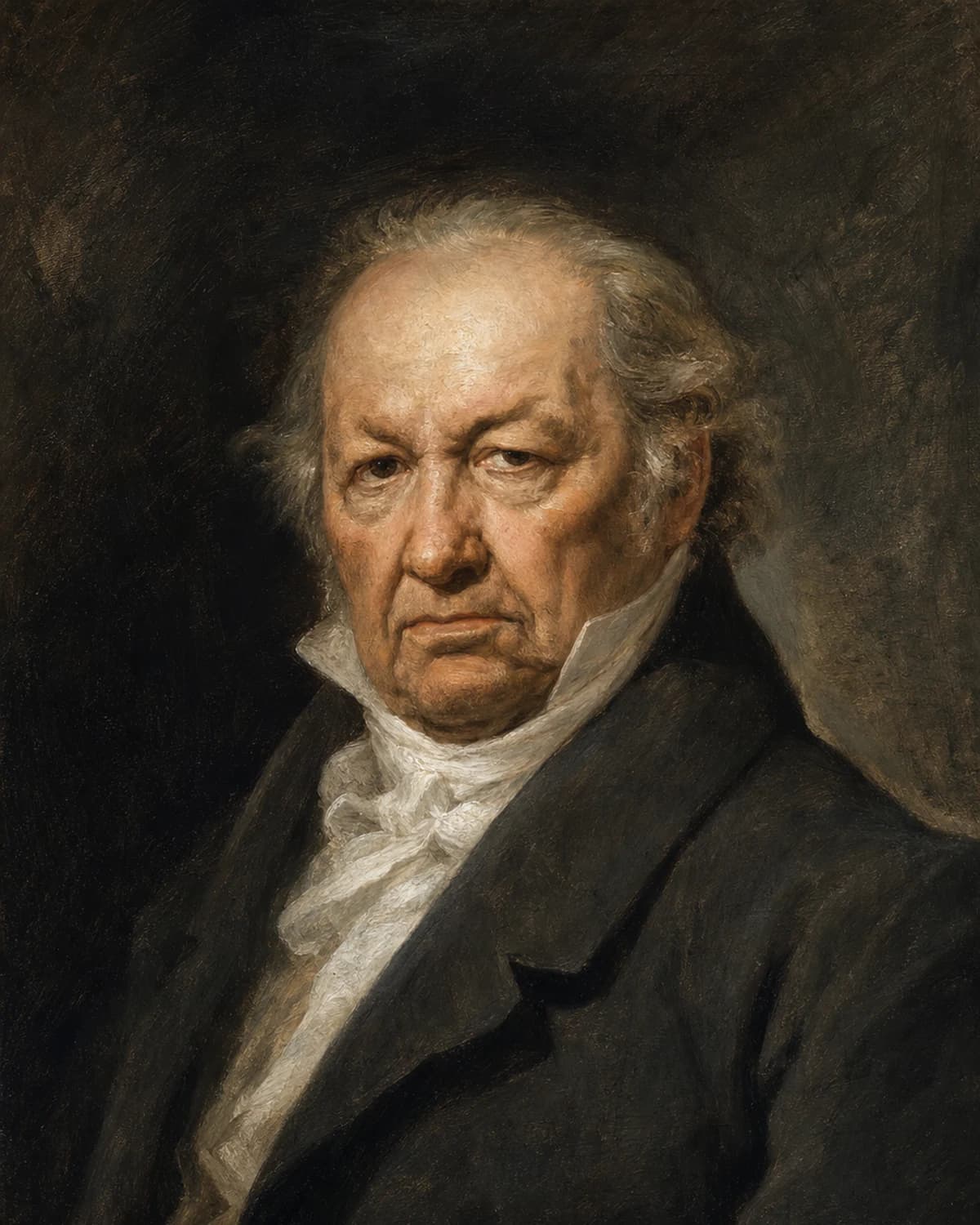
Francisco Goya (1746–1828) started out with cartoons for royal tapestries and rose to be first court painter to Charles IV. After a grave illness in the early 1790s he went deaf, and witches, executions and a starving Madrid entered his etchings, “Los Caprichos” and “The Disasters of War”. He spent his last years in France, in Bordeaux, and the “Black Paintings” from his walls are now in the Prado.
Biography
In February 1799 eighty etchings under the collective title “Los Caprichos” were advertised for sale in Madrid. They were sold in a perfume shop on the Calle del Desengaño; “desengaño” is Spanish for “disillusionment”, and the coincidence looks made up. Twenty-seven sets were sold, after which the sale petered out, and biographers connect this with the Inquisition. Goya himself explained that he was mocking the failings and follies to be found in any civilised society. The best-known plate of the series bears the inscription “The Sleep of Reason Produces Monsters”.
He was born on 30 March 1746 in Fuendetodos, an Aragonese village some forty kilometres from Zaragoza; around 1749 the family returned to the city. His father, José Goya, was a gilder and worked on the rebuilding of the cathedral of Nuestra Señora del Pilar. The boy did not get much schooling and, as biographers point out, spelled badly all his life. At school, though, he made friends with Martín Zapater, and the more than a hundred letters he sent him from Madrid from 1775 onwards remain the main source for Goya’s first years at court.
From the age of fourteen he studied with the Zaragoza painter José Luzán. Then came the failures. In a competition whose results were announced on 15 January 1764 he did not receive a single vote. In 1766, at the Academy of San Fernando in Madrid, he lost again: first prize went to the twenty-year-old Ramón Bayeu, younger brother of Francisco Bayeu, who sat on the jury. Goya then went to Italy at his own expense. Very little is known about his Roman years. There is a single document: in the spring of 1771 he sent a picture to a competition of the Parma Academy, describing himself as a Roman and a pupil of Bayeu, and won second prize. The jury reproached him for harsh tones but noted the sweep of his figure of Hannibal.
In Zaragoza the chapter of the Pilar commissioned from him the ceiling painting “The Adoration of the Name of God”, finished on 1 July 1772, and at the Carthusian monastery of Aula Dei he painted eleven scenes from the life of the Virgin (seven survive). In July 1773 Goya married Josefa Bayeu, Francisco’s sister.
From 1775 he lived in Madrid and worked for the Royal Tapestry Factory: hunting scenes for the Escorial, then cartoons for the palace of El Pardo, among them “The Parasol” (1777), and later “The Crockery Vendor” and “Blind Man’s Buff”. Scenes of popular life were a new subject for such commissions, and the court liked them. In 1778 he obtained permission to engrave paintings by Velázquez in the royal collection, and with that, to my mind, Goya the etcher begins. In 1781, in “The Sermon of Saint Bernardino of Siena” for the church of San Francisco el Grande, he put himself into the crowd to the left of the saint. Then came the Count of Floridablanca (1783), the family of the Infante Don Luis, the Duke and Duchess of Osuna. In 1786 Goya became painter to the king, in 1789, under Charles IV, court painter, and on 31 October 1799 first court painter.
In early 1793, as we know from his letters, he fell gravely ill in Cádiz and went deaf for good.
While recovering he painted a series of small pictures on subjects that had no place in commissions, among them “Yard with Lunatics”. These pictures, he wrote, gave occupation to an imagination tormented by thoughts of his own sufferings. In 1797 came the Duchess of Alba in a black mantilla, dressed as a maja; in the sand at her feet is the inscription “Solo Goya” (“Only Goya”). There are no documents of a love affair between them. In 1798 he painted the dome of the church of San Antonio de la Florida, and there the miracle of Saint Anthony of Padua plays out among ordinary people of Madrid, without the customary angels. “The Nude Maja” was seen in Manuel Godoy’s palace in November 1800; in 1813 the Inquisition confiscated it, together with “The Clothed Maja”, as indecent. By June 1801 “The Family of Charles IV” was ready: Queen María Luisa at the centre, and in the shadow at the left edge Goya himself, standing at his canvas.
In 1808 the French entered Spain. Goya stayed in Madrid and worked for French patrons too, and after the return of Ferdinand VII he was cleared of suspicion of collaboration, although the king was hostile to him. In 1812 Josefa died. At the same time “The Disasters of War” was taking shape: first scenes of war, then the Madrid famine of 1811–1812, and at the end the disillusionment of the liberals after the Bourbon restoration. The Academy of San Fernando published the series only in 1863. “The Second of May 1808” and “The Third of May 1808” were painted around 1814.
On 19 February 1819 Goya bought a country house beyond the bridge on the road to Segovia. Its nickname, “House of the Deaf Man”, came from a neighbouring estate whose owner was also deaf. Directly on the plaster Goya painted, in oil, fourteen “Black Paintings”, and by all appearances he did not mean to show them to anyone. Around 1874, under Baron Frédéric Émile d’Erlanger, the murals were taken off the walls and transferred to canvas, and badly damaged in the process. They are now in the Prado.
In 1824 he obtained leave to take the waters at Plombières, but went instead to Bordeaux, where many of his friends had found refuge. With him were his housekeeper Leocadia Weiss and her small daughter Rosario. In Bordeaux he took up lithography (“The Bulls of Bordeaux”) and painted miniatures on ivory. In 1827 he made a last trip to Madrid, where he painted his grandson Mariano.
Goya died on 16 April 1828 in Bordeaux. In 1919 his remains were moved to San Antonio de la Florida, beneath the dome he had painted. At the reburial the skull was missing.
Artist works
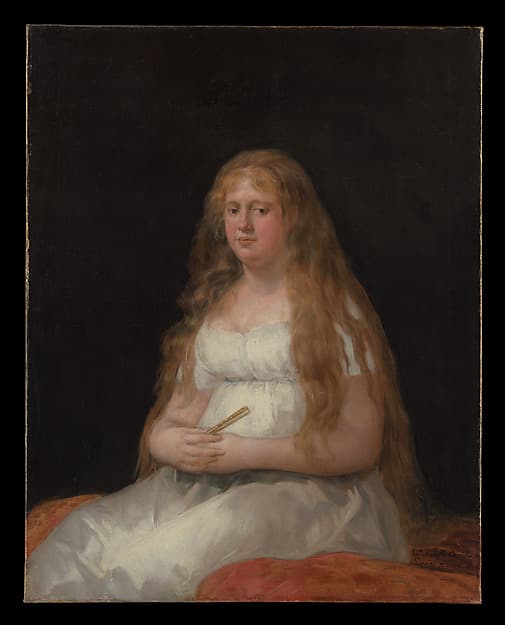
Works by the artist
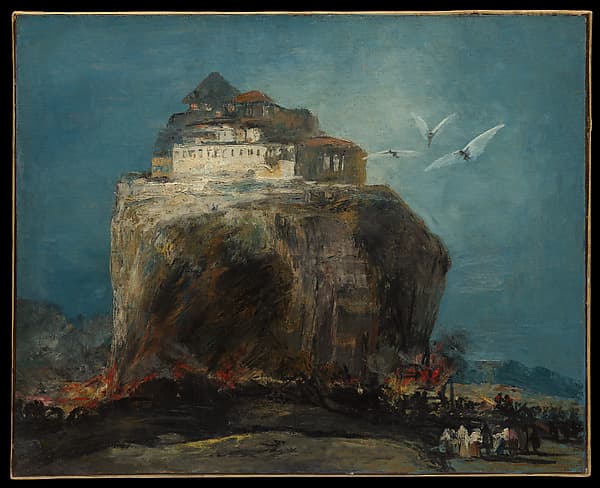
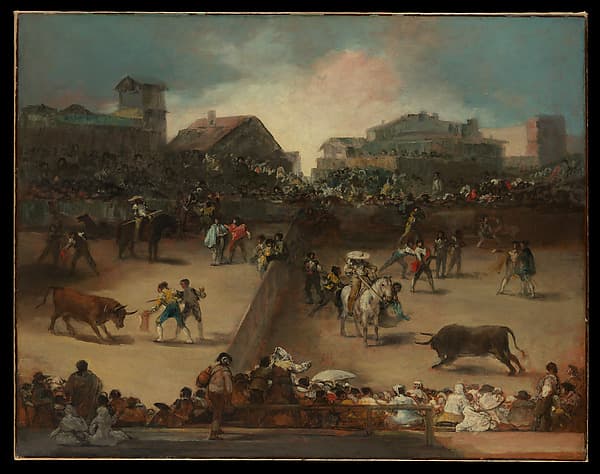
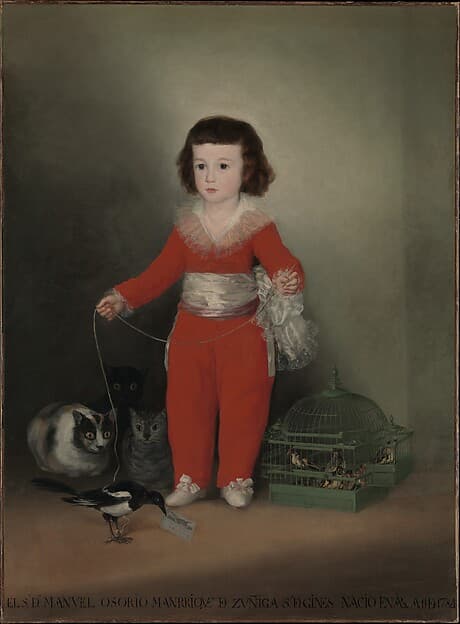
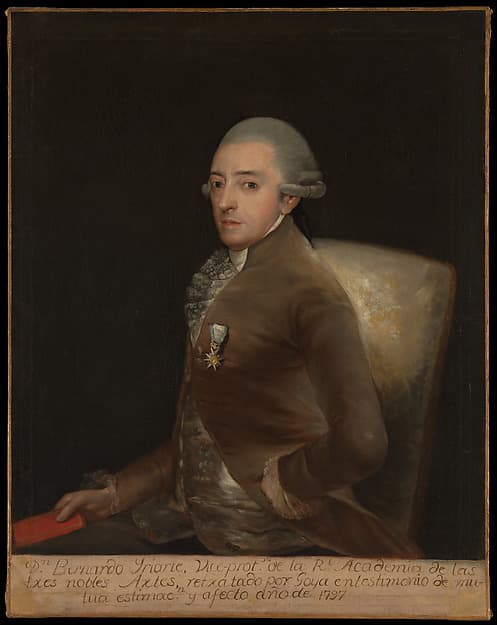
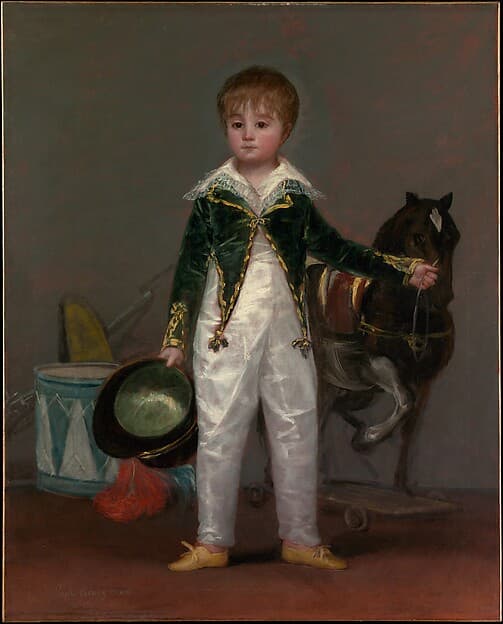
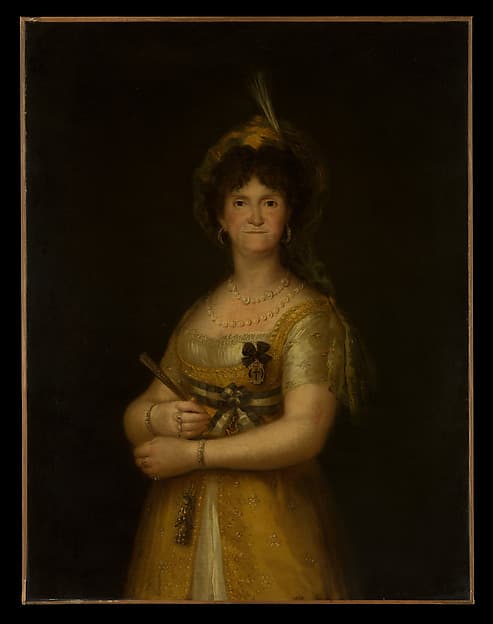
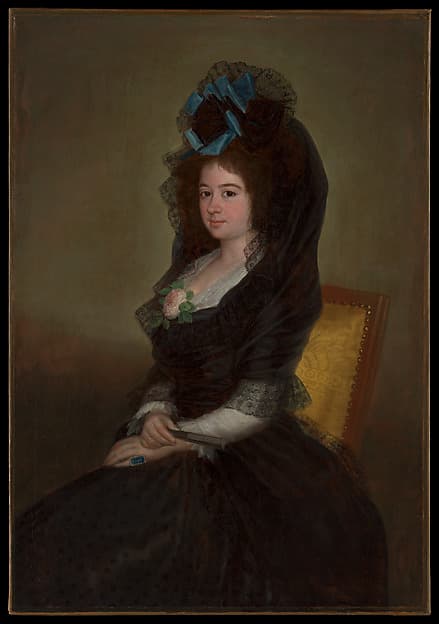
Works by Francisco Goya available in this edition of NEOARCA.
Related context
Associations
Works connected through artistic movements, cultural context and period. Priced works available in this market appear first.








Profile notes
Profile and sources
Image
Artist image
На основе открытого изображения: Vicente López Portaña; Wikimedia Commons; Public domain.
