
1400–18.02.1455
Fra Angelico
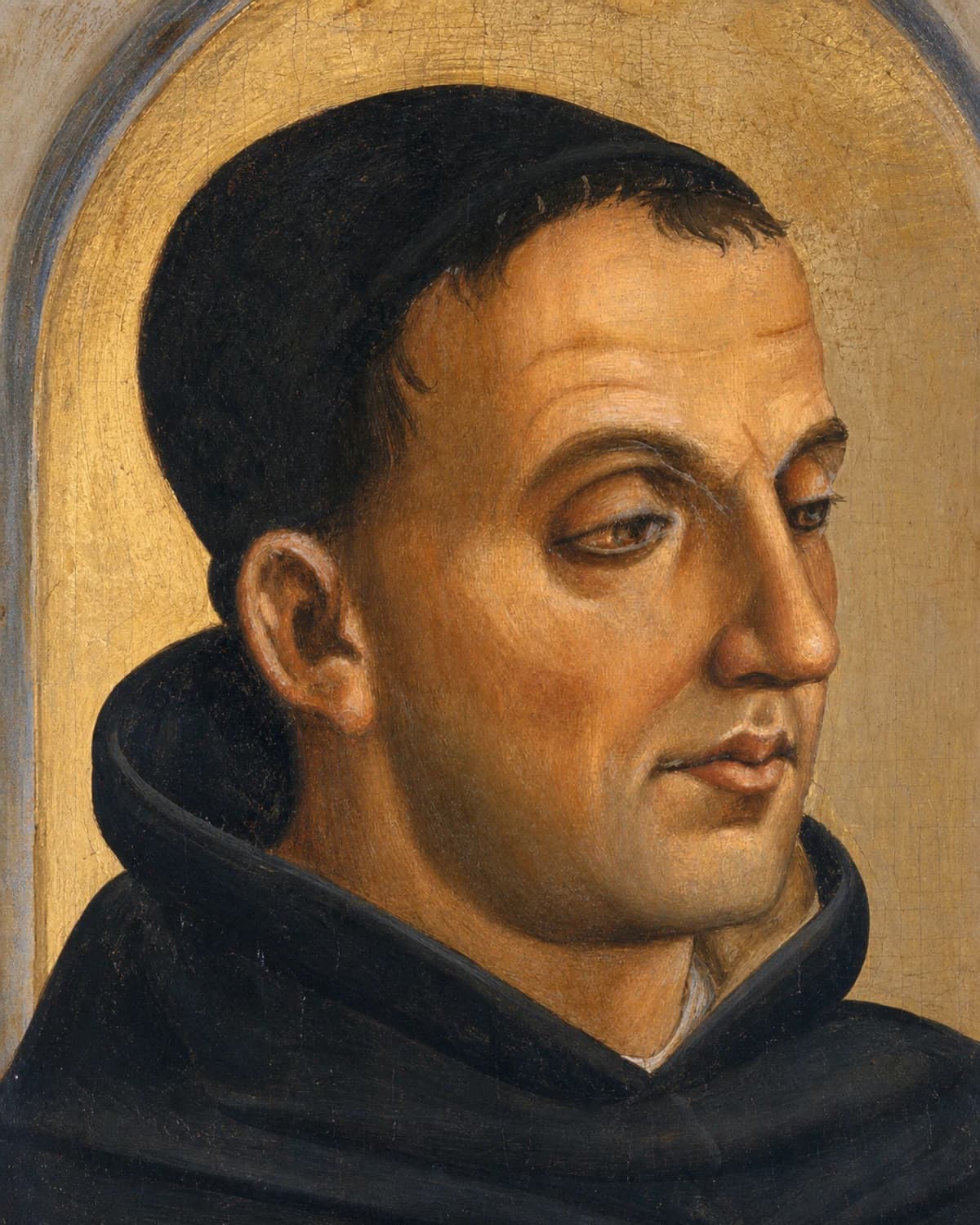
Guido di Pietro of Vicchio became a painter before he became a friar: the first payments for his work date from 1418, and he entered the Dominican convent at Fiesole later, taking the name Fra Giovanni. The frescoes in the cells of San Marco in Florence, the San Marco Altarpiece and the chapel of Nicholas V in the Vatican made him the order’s principal painter; Vasari fixed the name “Angelico”, and in 1982 John Paul II beatified him.
Biography
The tomb slab in the Roman church of Santa Maria sopra Minerva shows a friar in the Dominican habit, lying with his hands folded. The inscription above it asks that the dead man be praised not for having been a second Apelles, but for having given all he had to Christ and the poor; it ends with words about Florence, “the flower of Etruria”, which bore him. Who composed these Latin lines is not known for certain: both Pope Nicholas V and the humanist Lorenzo Valla have been named. Beneath the slab lies Fra Giovanni da Fiesole, who died in Rome on 18 February 1455.
It was Giorgio Vasari who called him “Angelico”, the Angelic, in the “Lives” of 1550; his contemporaries knew him as Fra Giovanni da Fiesole.
He was born around 1395 in Vicchio, in the Mugello valley, and was baptised Guido di Pietro; his younger brother Benedetto later joined the Dominicans too. The earliest record of him is dated 17 October 1417: the layman Guido di Pietro was received into a confraternity at the Carmelite church. In January and February 1418 he was paid for work at the church of Santo Stefano al Ponte, which means he was already a painter before he took the habit. When he entered the convent of San Domenico at Fiesole the documents do not say: by scholars’ reckoning he made his vows between 1418 and 1421, because novices were not allowed to paint during their first year; the next notice of his work dates from 1423. In 1429 the convent papers list him as “brother Iohannes Petri de Muscello” (frate Johannes petri de Muscello). The convent belonged to the Observants, the strict branch of the order with its demand of complete poverty. Angelico began as an illuminator of manuscripts, possibly together with his brother; the manuscripts attributed to him are still disputed. There is no direct evidence about his teachers: in the early works people see the lessons of Lorenzo Monaco, with his pure colours and even light that cancels shadow, and of Gherardo Starnina.
For San Domenico he painted three altarpieces. The first, of about 1424–1425, with the Madonna and Saints Thomas Aquinas, Barnabas, Dominic and Peter Martyr, was repainted by Lorenzo di Credi in 1501; from its predella survives the panel “Christ in Glory” with more than two hundred figures, among them Dominican blesseds, now in the National Gallery in London. The “Coronation of the Virgin” stayed at Fiesole until 1812, when Vivant Denon took it to the Louvre. The “Annunciation” painted for the same convent in the early 1430s is in the Prado. The “Coronation of the Virgin” in the Uffizi, of about 1432, is assigned to the same years.
In 1436 he and other friars from Fiesole moved to the Florentine convent of San Marco, just rebuilt by Michelozzo, which Cosimo de’ Medici had handed to the Dominicans. According to Vasari, Cosimo commissioned the decoration of the whole convent and kept a cell there for himself. In the three corridors of the dormitory there are thirty-eight cells, and in each a single fresco whose outline repeats the arched window beside it; the cells have no other decoration. At the top of the stairs leading to the cells is the “Annunciation”, the most reproduced of all his works; in the chapter house a large “Crucifixion” with a crowd of saints; in many cells Dominican saints stand as witnesses to the scene in one of the nine postures of prayer. To my mind, nowhere is it so clear that these paintings were made for a single viewer, a friar on his knees, with no thought of a patron: no gold, no costly blue, a few figures and a great deal of light. Cosimo commissioned the high altarpiece of the church of San Marco in 1438, and it was finished in 1439: the Virgin enthroned, at her sides Cosmas and Damian, the patron saints of the Medici, with them Dominic, Peter, Francis, Mark, John the Evangelist and Stephen. The saints stand on the floor, in the same space as the Virgin, and seem to be conversing: this arrangement, the “sacra conversazione”, would later be taken up by Bellini, Perugino, Raphael and Titian. In the seventeenth century the altarpiece was dismantled when the church was rebuilt. Of the nine predella panels two remained at San Marco, seven are scattered between Washington, Munich, Dublin and Paris, and the two side panels with Dominican saints were thought lost until they turned up in the 2000s in a private house in Oxford; in 2007 they were bought for Florence, and they are now in the Museo di San Marco.
In 1445 Pope Eugene IV summoned him to Rome to fresco the Chapel of the Holy Sacrament in St Peter’s; under Paul III it was demolished. Vasari relates that Nicholas V offered him the archbishopric of Florence and that he declined. This does not square with the chronology: Nicholas was elected only in March 1447, and the see in 1446–1459 was held by the Dominican Antoninus. In 1447 Angelico, with his pupil Benozzo Gozzoli, painted three sections of the vault of the Cappella Nuova in Orvieto Cathedral, then in 1447–1449 worked in the Vatican on the chapel of Nicholas V: the life of Saint Stephen and the life of Saint Lawrence, gold along the hems of the garments, blue from lapis lazuli; a substantial part was probably painted by assistants from his designs.
From 1449 to 1452 he was back at Fiesole, as prior of San Domenico. In 1452 Nicholas V called him back to Rome, and there, in a Dominican convent, he died.
On 3 October 1982 Pope John Paul II beatified him, and in 1984 declared him the patron of artists; his memorial falls on 18 February, the day of his death. In Russia the poets argued over him. Salomon Reinach wrote in 1904–1905 of his madonnas and angels that “this pious sheepfold lacks a wolf”. Nikolai Gumilev in 1912 dedicated to him the poem “Fra Beato Angelico”, setting him above Raphael, Michelangelo and Leonardo: “On all my master made there lies the seal / of earthly love and humble simplicity.” Sergei Gorodetsky, Gumilev’s fellow in the Guild of Poets, replied in verse that called Angelico “a corpse in a modest tomb”.
Artist works
Works by the artist
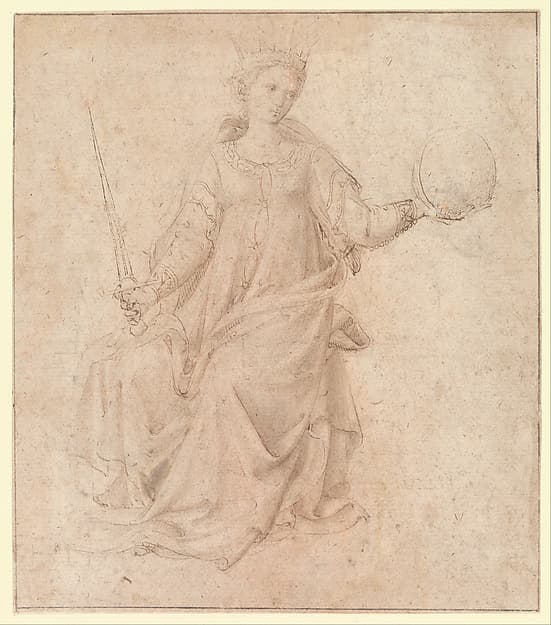
Works by Fra Angelico available in this edition of NEOARCA.
Related context
Associations
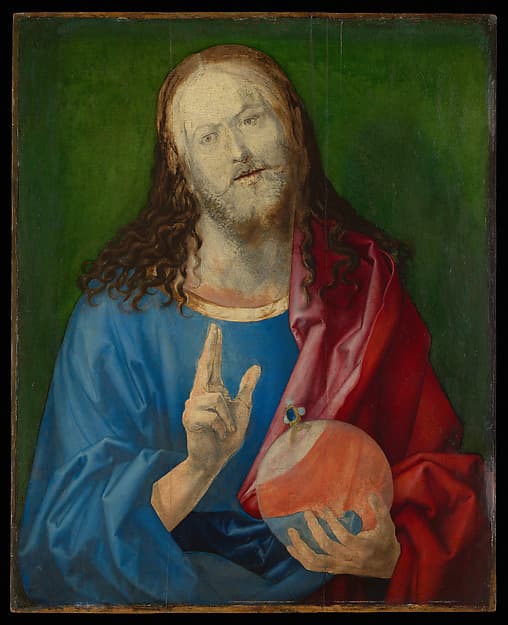
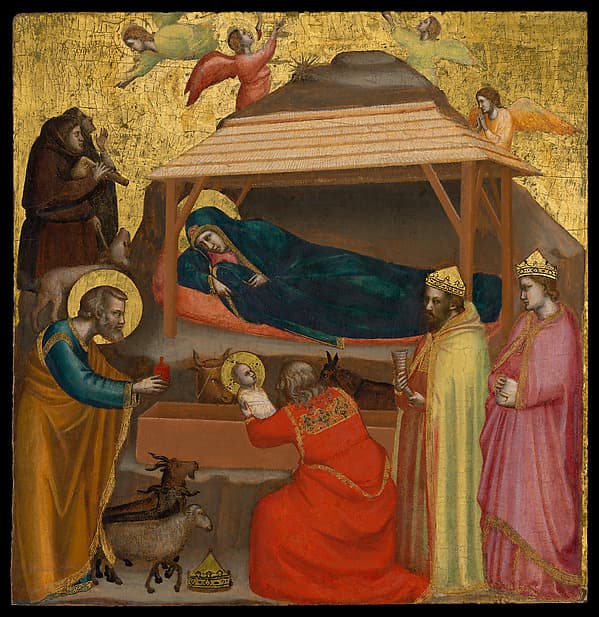
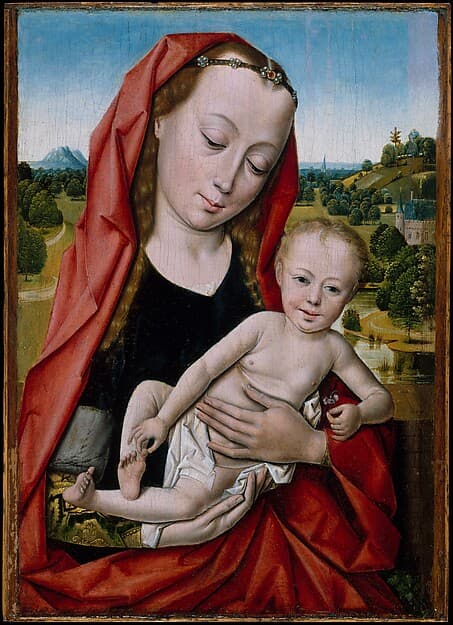
Works connected through artistic movements, cultural context and period. Priced works available in this market appear first.
Profile notes
Profile and sources
Image
Artist image
На основе открытого изображения: Luca Signorelli; Wikimedia Commons; Public domain.
