
11.04.1882–28.02.1935
Fernando Fader
Fernando Fader was born in Bordeaux, was taken to Argentina as a two-year-old, studied in Munich and in 1906 showed his work for the first time in Buenos Aires. In 1915 he won a gold medal in San Francisco, and in Córdoba he painted his best-known landscapes of country life. In 1932 the galleries of Buenos Aires mounted a retrospective of 119 of his works.
Biography
In 1932, for Fernando Fader’s fiftieth birthday, an association of Buenos Aires galleries showed 119 of his works. The artist did not come to the opening: he lived far from the capital, in Córdoba Province, and because of his health could hardly leave the house.
He was born in Bordeaux on 11 April 1882. His father, of Prussian descent, took the family to Argentina in 1884, to Mendoza, but a few years later they returned to France. The boy attended primary school and then a secondary school in Germany. According to some accounts, after finishing school, in 1898, he found himself in Mendoza again and painted urban landscapes there; other sources do not mention this. In 1900 Fader arrived in Munich. He first studied at a local vocational school, then entered the Academy of Fine Arts, where his mentor was Heinrich von Zügel, a painter associated with the Naturalists and the Barbizon tradition. Sources give the years of his study differently, most often 1900–1904. In 1906 he made a brief visit to Buenos Aires, and his work was shown to the public for the first time then, at the Costa Salon. His landscapes won him a reputation as a Post-Impressionist, while local critics still preferred Impressionism.
Fader grew close to other artists who had fallen out of favour with a conservative public: Cesáreo Bernaldo de Quirós, the sculptor Rogelio Yrurtia and Martín Malharro, whose early Impressionist works had established the genre in the country as early as 1902. Together they formed the Nexus group. It lasted until about 1910, when Malharro’s studio became the most influential in Argentina, and soon afterwards Malharro died suddenly.
In 1914 Fader settled in Buenos Aires and won first prize at the Fourth National Art Biennale. He toured galleries in Spain and Germany, and in 1915 won a gold medal at the Panama-Pacific International Exposition in San Francisco. Around then tuberculosis set in, and doctors sent him to the dry climate of the Andean foothills. Sources date this differently, but from 1915 he lived in Córdoba Province. There the second period of his work began: more contrasts of sunlight, closer to Impressionism. His best-known works, largely romantic scenes of farm life, were apparently painted here. I would not vouch for that judgement without a catalogue of his works, but everyone who has written about him repeats it.
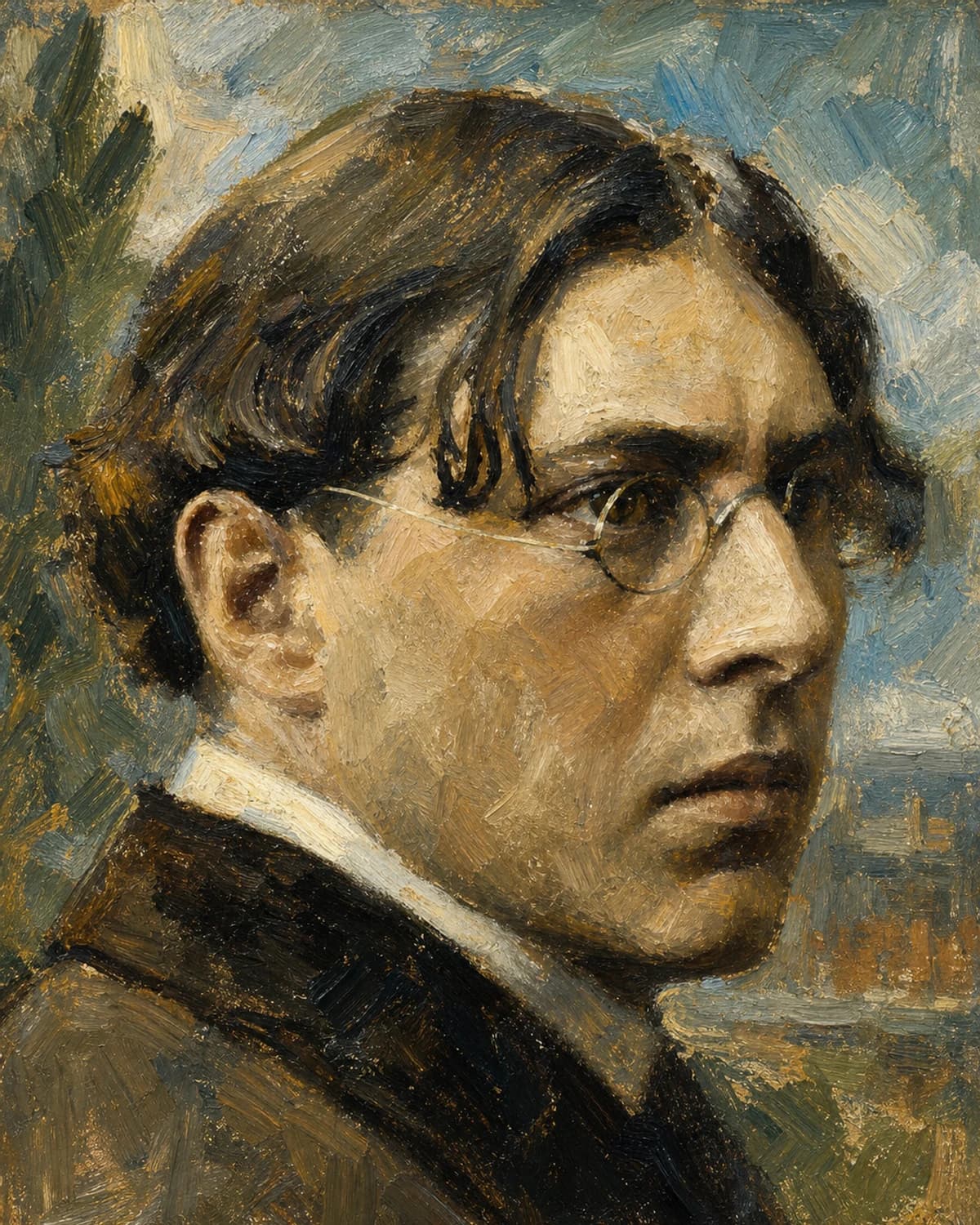
Around 1921 his breathing worsened and eventually became chronic asthma, which made it impossible to work outdoors. Fader turned to still lifes, nudes and self-portraits; this is usually regarded as his third period. The following he had won around 1915 did not vanish: in 1924 the National Academy of Fine Arts organised a retrospective of his work.
Fader died on 28 February 1935 in Córdoba, in Ischilín Department. His former home in the hamlet of Loza Corral is now a museum.
Related context
Associations
Works connected through artistic movements, cultural context and period. Priced works available in this market appear first.








Profile notes
Profile and sources
Image
Artist image
На основе открытого изображения: Unknown author Unknown author; Wikimedia Commons; Public domain.
