
12.05.1857–07.06.1920
Emilio Boggio
Emilio Boggio (1857–1920) grew up in Paris, where he was brought as a child, studied with Jean-Paul Laurens and won a bronze medal at the 1889 Exposition Universelle. Around 1900 he turned to Impressionism, and in 1910 he settled in Auvers-sur-Oise, where Van Gogh had lived, and died there. His 1919 exhibition in Caracas influenced Venezuelan painters, among them Armando Reverón.
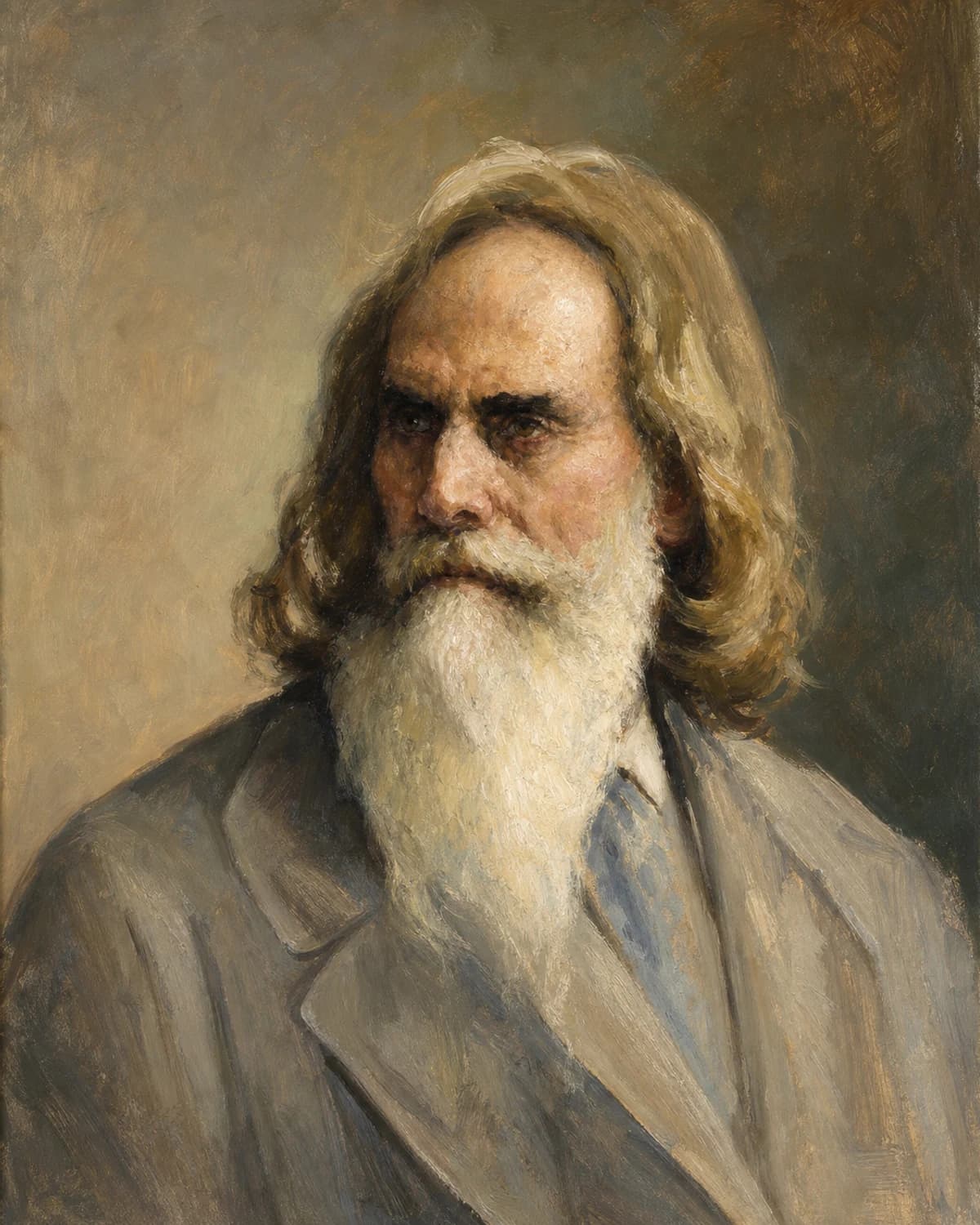
Biography
Boggio never met Van Gogh, who had died in Auvers in 1890. But in 1910 Boggio rented a house there, the Villa Rustique, and stayed in the town for the rest of his life. He is buried in the same cemetery as Van Gogh.
He was born on 12 or 21 May 1857 (sources disagree) in La Guaira, or according to other accounts in Caracas. His father, Juan Boggio, ran a trading business and came from an Italian family; his mother, née Dupuy, was from a family with French roots. In 1864 the boy was sent to France, and until 1870 he studied at the Lycée Michelet in Paris. In 1873 he returned to Venezuela and for four years worked in the family trading firm. The work did not appeal to him, and in 1877 he found himself in Paris again: his parents expected him to go on studying commerce.
Instead he enrolled at the Académie Julian, under the history painter Jean-Paul Laurens. The Venezuelans Cristóbal Rojas and Arturo Michelena studied there too, and Boggio was friends with them. Around 1883 he met Henri Martin, and the friendship lasted all their lives: in 1885 they travelled to Italy together. It is sometimes said that he decided to become a painter after the 1878 Exposition Universelle, but this is hard to confirm.
From 1887 Boggio exhibited every year at the Salon of the Société des Artistes Français. His debut piece was “Portrait of a Woman”. In 1888 he was given an honourable mention, and in 1889 he won a bronze medal at the Exposition Universelle in Paris. In 1892 he took part in an exhibition of caricaturists at the Salon Blanc et Noir. His early work is academic, on the model of Laurens, and its subjects include biblical ones, for example “The Death of Saint Elizabeth”, shown in 1894. At the Salon of 1899 he received a second-class medal and hors concours status, meaning he could exhibit without being judged. This opened the way to the exhibition “A Hundred Years of French Art” in 1900, where he received a silver medal.
Around 1900 he became close to Claude Monet and Camille Pissarro, and under their influence his painting turned Impressionist: light, landscape painted outdoors, flowers. In the early years of the century there were also gloomy canvases with titles such as “Evening Before the Storm”, “The Snow Is Sad” and “Heavy Weather”. From 1903 to 1918 he took part every year in the Salon d’Automne. For a time he lived in Enghien, near Paris, where Raymond Thibesart was his pupil.
In 1907 Boggio went to Italy with Martin and Thibesart and stayed until 1909. A series of seascapes came out of the trip. After his return he looked more and more to Van Gogh: “End of the Day” (1912), painted on the Oise, clearly echoes the Arles views of the Rhône in its composition. To my mind, the move to Auvers was not an admirer’s gesture but a way of working where someone had already painted this light.
In 1919 he came to Caracas for a few months. The exhibition of 53 works (according to other accounts, up to sixty) introduced local painters to Impressionism, which they had known only from descriptions. Armando Reverón, Federico Brandt and Manuel Cabré worked under its impression.
Boggio went back to France.
He died in Auvers-sur-Oise on 7 June 1920. In 1925 the gallery of Georges Petit held a retrospective of his work in Paris. After that his name dropped from view for almost sixty years. In 1973 the municipal council of the Federal District of Caracas bought the Baptistin Rinaldi collection, from which the Emilio Boggio Museum grew.
Related context
Associations
Works connected through artistic movements, cultural context and period. Priced works available in this market appear first.








Profile notes
Profile and sources
Image
Artist image
На основе открытого изображения: Emilio Boggio; Wikimedia Commons; Public domain.
