
01.10.1541–07.04.1614
El Greco
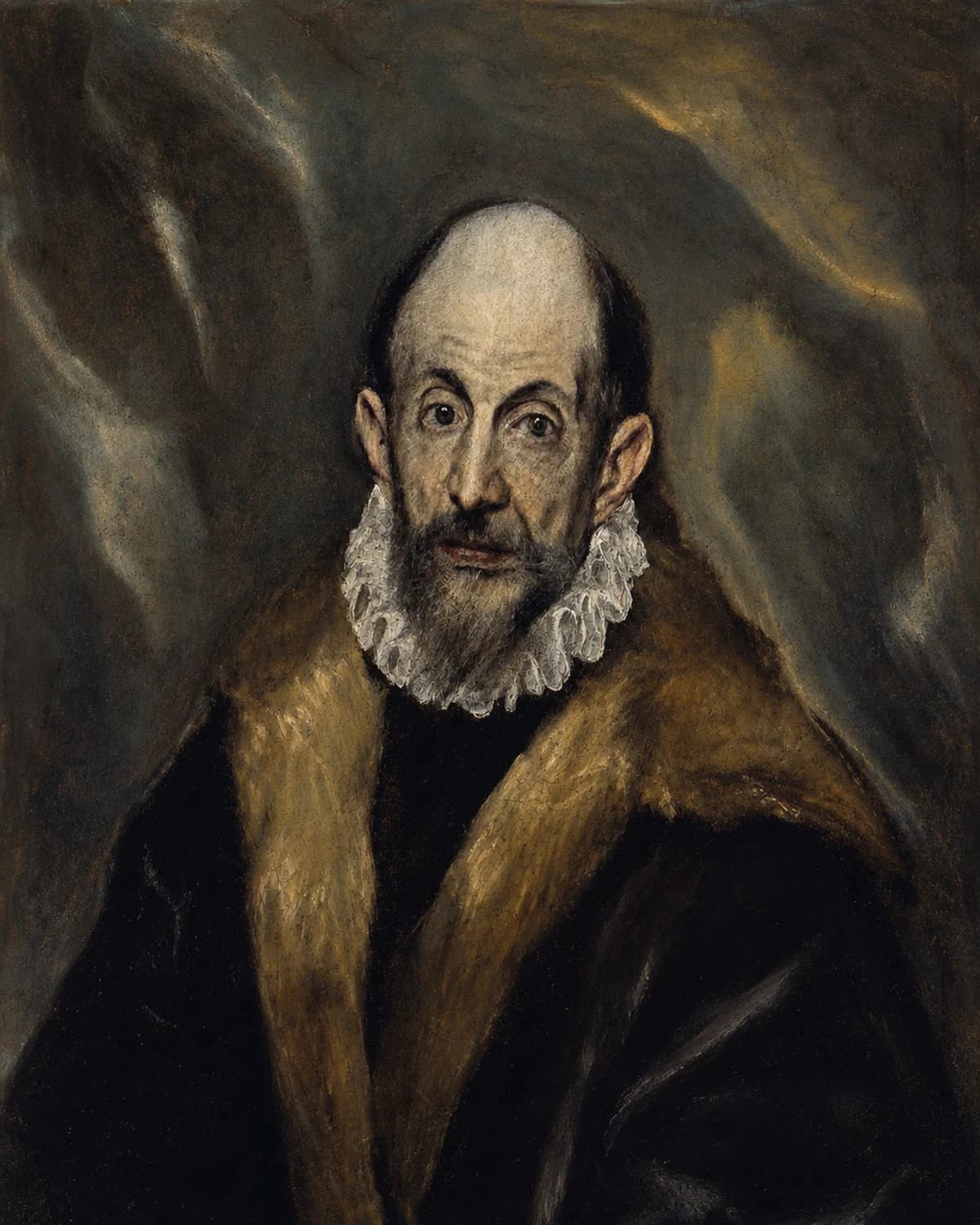
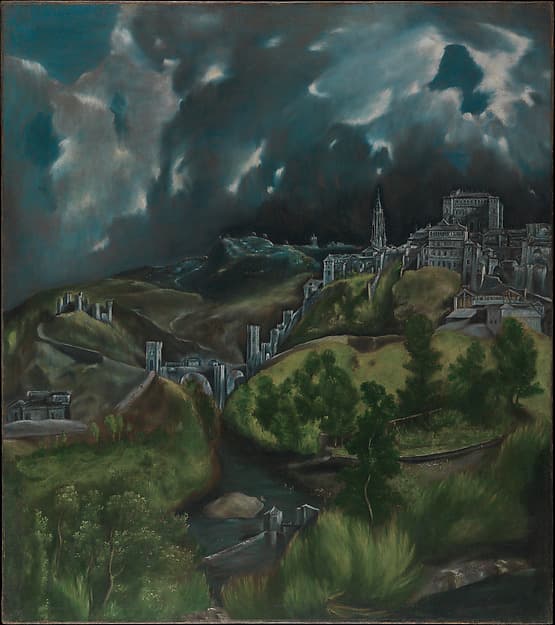
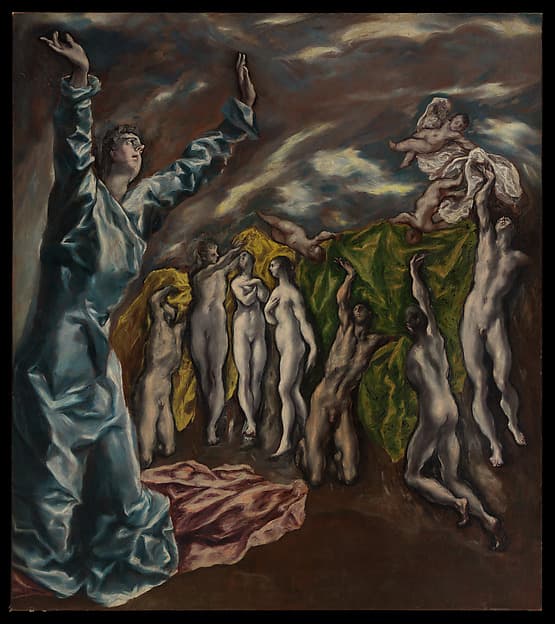
Doménikos Theotokópoulos, known as El Greco (1541–1614), began as an icon painter on Crete, learned from the Venetians, worked in Rome and from 1577 until his death lived in Toledo. There he painted “The Burial of the Count of Orgaz”, “View of Toledo” and “Opening of the Fifth Seal”. He signed in Greek letters, often adding the word “Cretan”; in the twentieth century he was seen as a forerunner of Expressionism and Cubism.
Biography
One summer day the miniaturist Giulio Clovio called on El Greco in Rome and found him in a darkened room. The painter explained that he thought better in the dark, and that daylight disturbed his “inner light”. Clovio, for his part, described the young Greek as a painter of rare talent.
This was in the early 1570s, and Spain was still a few years away.
Doménikos Theotokópoulos was born in 1541 on Crete, then a possession of Venice, in the village of Fodele or in the town of Candia (present-day Heraklion). The family was well off; his father, Geórgios, was a merchant and tax collector and died in 1556, and his elder brother Manoússos also became a merchant. Doménikos trained in the Cretan school of icon painting. In the sixteenth century about two hundred painters worked in Candia, with a guild on the Italian model, and in 1563, aged twenty-two, he already appears in a document as “master Domenigo”. He probably knew the classical authors as well: at his death he left a “working library” of 130 volumes, including a Bible in Greek and a Vasari with his own annotations. Shortly before leaving, apparently before 1567, he painted in tempera and gold on panel the “Dormition of the Virgin” later found on the island of Syros. In it Orthodox iconography already sits alongside Venetian devices.
Around 1567 he moved to Venice and lived there until 1570. He was counted among the “followers” of Titian; whether he worked in the old master’s studio is not known. From Tintoretto he took the elongated figures, from Titian colour, and from the Venetians in general the ability to build a crowded scene in bright light. In 1570, on Clovio’s recommendation, he was received in Rome at the Palazzo Farnese and met the scholar Fulvio Orsini (who later owned seven of his paintings, among them the “View of Mount Sinai” and a portrait of Clovio). Raphael and Michelangelo were already dead. El Greco praised Correggio and Parmigianino, but he criticised the “Last Judgement” in the Sistine Chapel and even offered Pope Pius V to repaint the fresco in keeping with the new, stricter demands of the Church; of Michelangelo himself he is said to have remarked later that he was a good man but did not know how to paint. This won him no friends. The architect Pirro Ligorio called him a “foolish foreigner”, there was a quarrel with Cardinal Farnese, and he was turned out of the palace. On 18 September 1572 he paid his dues to the Roman Guild of St Luke as a miniaturist and opened a workshop of his own.
In 1577 he left for Spain, first for Madrid, then for Toledo. King Philip II was looking for painters for the Escorial: Titian had died, and Tintoretto, Veronese and Anthonis Mor had refused to come. Through Clovio and Orsini, El Greco met Benito Arias Montano and Luis de Castilla, son of the dean of Toledo Cathedral, and by July 1577 he had commissions for altarpieces for the monastery of Santo Domingo el Antiguo and for “The Disrobing of Christ” for the cathedral. By September 1579 the nine paintings for the monastery, among them “The Trinity” and “The Assumption of the Virgin”, were finished, and they made his name in Toledo. From the king he received two commissions, the “Allegory of the Holy League” and “The Martyrdom of St Maurice”. Philip liked neither, the “St Maurice” was hung in the chapter house instead of the chapel, and the king commissioned nothing more from him. Exactly why is not known.
He had to stay in Toledo. From 1585 he rented a complex of twenty-four rooms, where he lived and worked for the rest of his life, and, it is said, hired musicians to play while he dined. His workshop, with the Italian assistant Francisco Preboste, produced altar frames and statues as well as paintings; El Greco himself designed whole altarpieces as architect and sculptor. On 12 March 1586 he received the commission for “The Burial of the Count of Orgaz”. His only son, Jorge Manuel, born in 1578, also became a painter, assisted his father and later inherited the workshop.
The decade from 1597 to 1607 was his busiest: three altarpieces for the Chapel of San José in Toledo, paintings for the College of Doña María de Aragón in Madrid, altarpieces for the Hospital of Charity in Illescas. A lawsuit over payment for the last dragged on in 1607–1608, and in old age he ran into money troubles. For “The Immaculate Conception” (1607–1613) he asked for the space for the painting to be lengthened by 46 centimetres so that the figure would not be cut short, which, in his words, was the worst thing that could happen to a figure. In 1608 came his last major commission, for the Hospital de Tavera in Toledo.
The painter and theorist Francisco Pacheco, who visited him in 1611, recorded that El Greco laid on his colours in crude, unmixed blots and repainted endlessly. He placed colour above form. To my mind, this visit explains better than many treatises why the following generations found him strange.
While working for the Hospital de Tavera, El Greco fell seriously ill, and a month later, on 7 April 1614, he died. A few days earlier, on 31 March, he had empowered his son to draw up his will; two Greek friends of his were the witnesses. He was buried in the church of Santo Domingo el Antiguo. The generations that came next disdained him, and he was rediscovered only at the turn of the nineteenth and twentieth centuries. While working on “Les Demoiselles d’Avignon”, Picasso studied the “Opening of the Fifth Seal” in Ignacio Zuloaga’s Paris studio, and on 22 February 1950 he began his series of variations on old masters with “Portrait of a Painter after El Greco”.
Artist works
Works by the artist
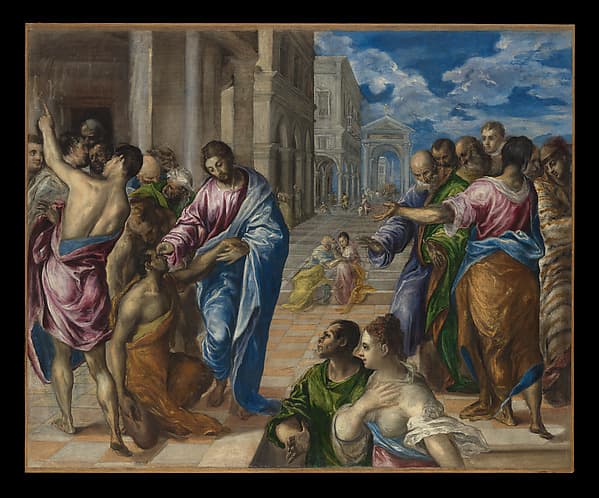
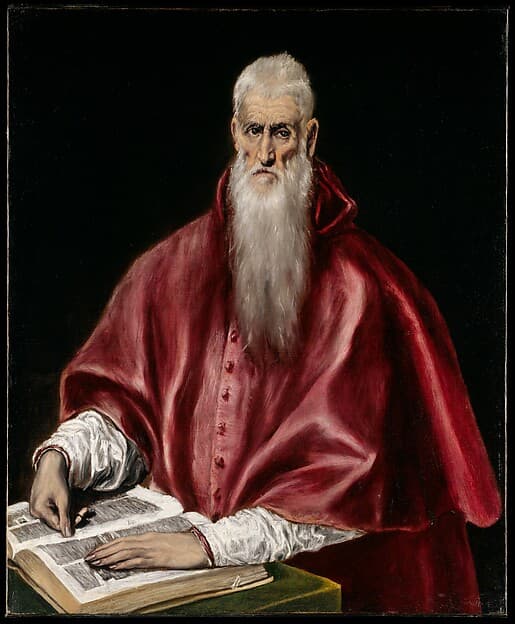
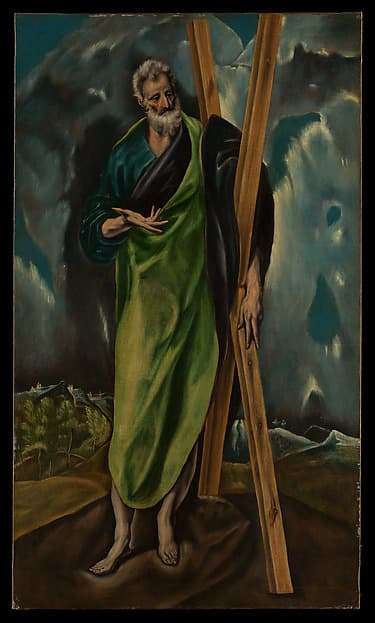
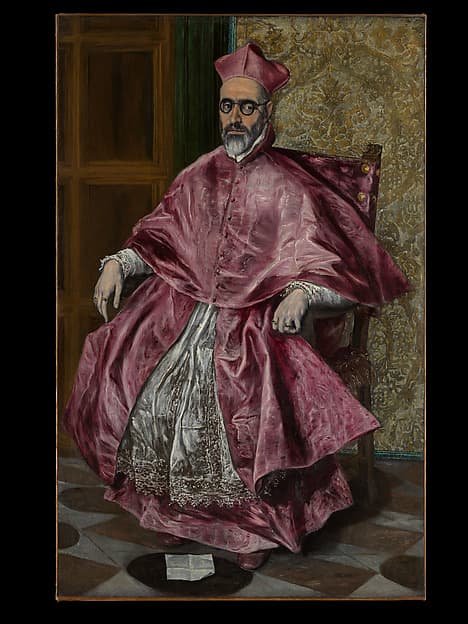
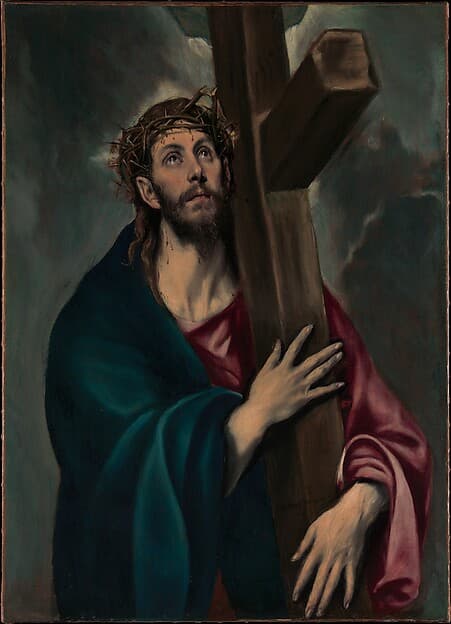
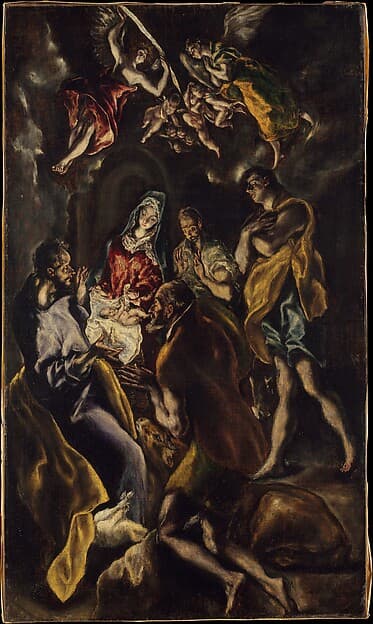
Works by El Greco available in this edition of NEOARCA.
Related context
Associations
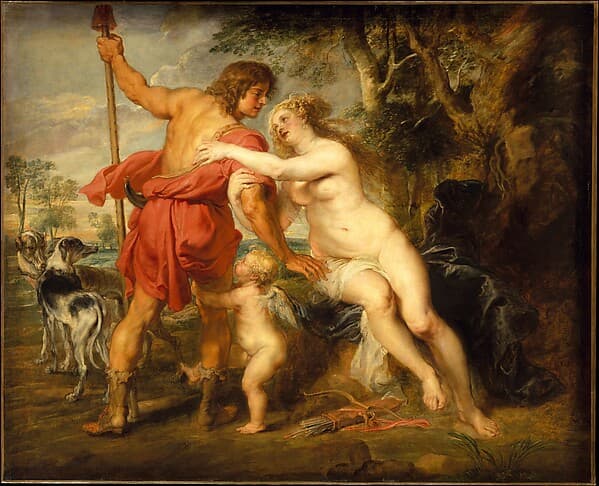
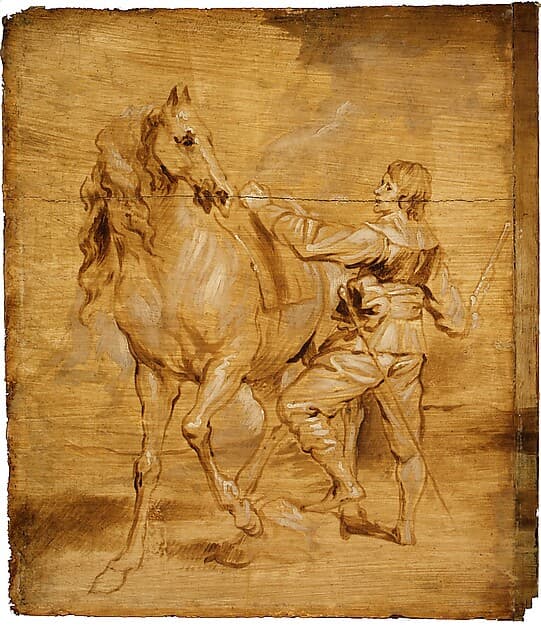
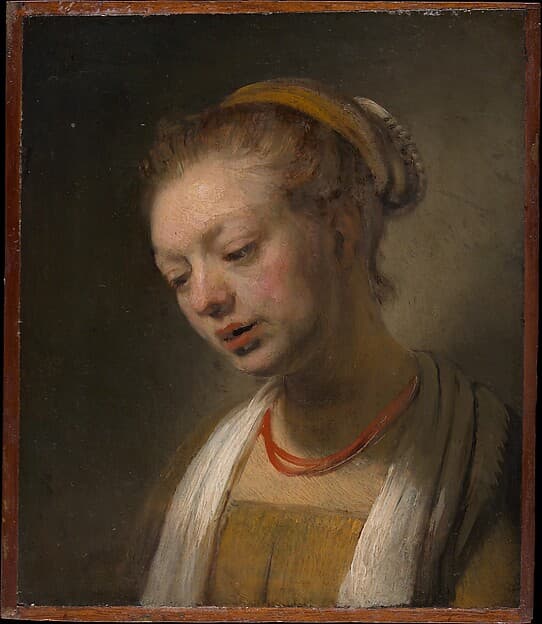
Works connected through artistic movements, cultural context and period. Priced works available in this market appear first.
Profile notes
Profile and sources
Image
Artist image
На основе открытого изображения: El Greco; Wikimedia Commons; Public domain.
