
23.01.1832–30.04.1883
Édouard Manet
Édouard Manet was among the first to make modern Paris the subject of large paintings: gardens, cafés, a railway station, a bar. His “Le Déjeuner sur l'herbe” (1863) and “Olympia” (1865) caused loud scandals, and although he was friends with the Impressionists and influenced them, he never took part in their exhibitions and to the end sought recognition at the Salon.
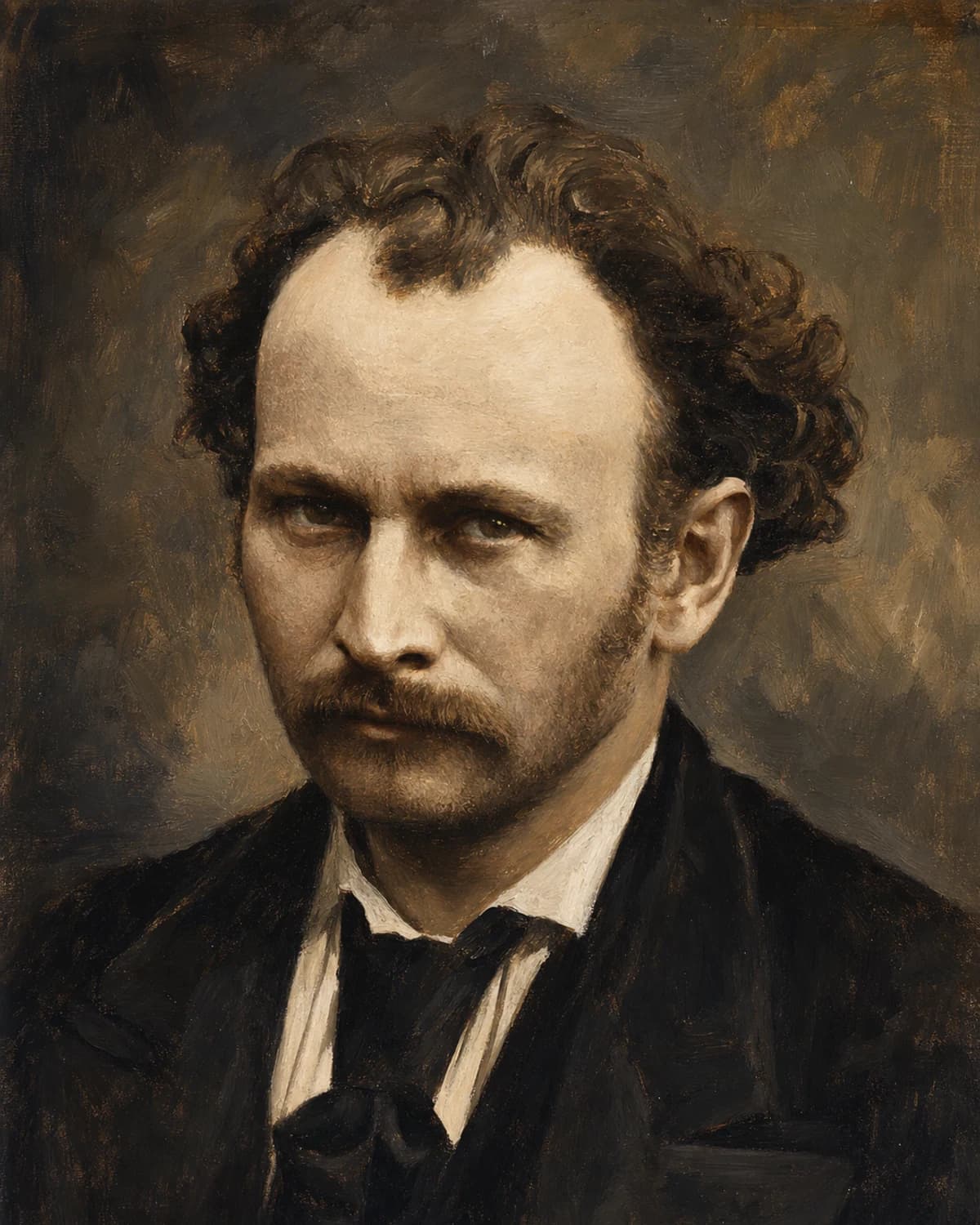
Biography
In 1848 a sixteen-year-old fresh from school sailed as an apprentice on the sailing ship “Havre et Guadeloupe” to Rio de Janeiro. His father wanted him to be a lawyer, the son wanted to be a painter, and the naval school was a compromise. From the voyage he brought back a sheaf of drawings for which sailors had posed, and letters home about the carnival in Rio. He failed the entrance examination for the Naval School twice, and his father, after looking at the drawings, gave in.
Édouard Manet was born on 23 January 1832 in Paris, in the family house on the rue des Petits-Augustins (now rue Bonaparte) in the Saint-Germain-des-Prés quarter. His father, Auguste Manet, was a senior official at the Ministry of Justice; his mother, Eugénie-Désirée Fournier, was the daughter of a diplomat. At the Collège Rollin he did badly and was bored. He caught painting from his uncle, Edmond Fournier, who took him to the Louvre and enrolled him in a special drawing course, where Édouard met Antonin Proust, the future minister of fine arts and his friend for life.
From 1850 to 1856 Manet worked in the studio of Thomas Couture, the fashionable author of “Romans of the Decadence”. Couture himself advised his pupils to paint modern life, but what Manet chose horrified him. When “The Absinthe Drinker” was rejected by the Salon in 1859 (only Delacroix, it is said, voted for it on the jury), teacher and pupil parted for good. In between, Manet travelled to see the old masters: Frans Hals in the Netherlands, Venice and Florence in 1853, the museums of Dresden, Prague, Vienna and Munich. His chief discovery remained the Spaniards, Velázquez and Goya.
In 1861 the Salon accepted two of his works at once, a portrait of his parents and “The Spanish Singer”, which Théophile Gautier praised. A year later Manet showed “Music in the Tuileries”: a crowd in the city garden, with Baudelaire, Offenbach and the painter himself among the strollers. The public, used to a licked surface, saw slovenliness in the thick brushstrokes, and some threatened to damage the picture. But Paris learned his name.
In 1863 the Salon jury rejected more than half of the works submitted, and Napoleon III allowed a Salon des Refusés to be held alongside. Its main scandal was “Le Déjeuner sur l'herbe”, originally called “Le Bain”: clothed men and a naked woman at a picnic, painted almost like a sketch. One critic claimed it had been done with a floor mop. Yet the arrangement of the main figures was taken from Marcantonio Raimondi's engraving after Raphael's design “The Judgement of Paris”. To my mind, the whole of Manet is in this combination: he started from Raphael and Titian, and the viewers saw only impudence. Two years later the Salon accepted “Olympia”, painted back in 1863. The pose is borrowed from Titian's “Venus of Urbino”, but in place of the sleeping little dog at the goddess's feet sits a wary black cat, and the model, Victorine Meurent, the same as in “Le Déjeuner sur l'herbe”, looks straight at the viewer. According to Antonin Proust, the canvas survived only thanks to precautions taken by the exhibition's administration. After that Manet left for Spain, to Velázquez and Goya.
In 1863, a year after his father's death, he married Suzanne Leenhoff, a Dutch music teacher with whom he had been close for about ten years. Her son Léon posed for Manet eighteen times, including for “Soap Bubbles” and for the figure with a tray in the background of “The Balcony”.
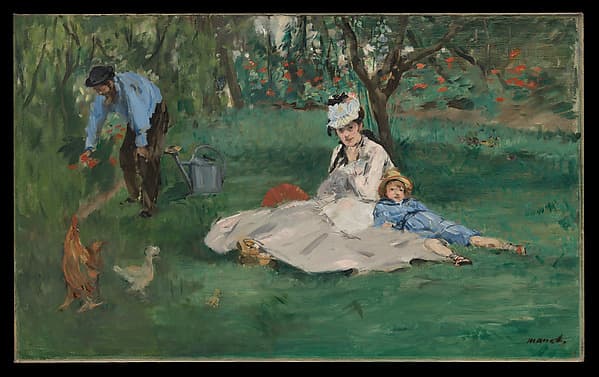
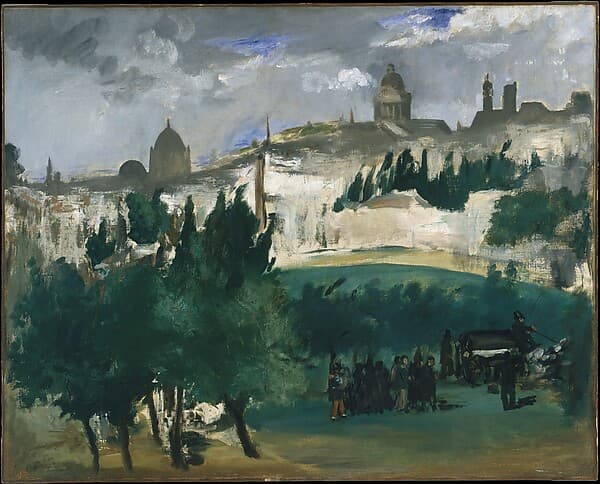
When he was not admitted to the Exposition Universelle of 1867, Manet built a pavilion at his own expense near the Pont de l'Alma and showed about fifty paintings there. In the same years he painted “The Execution of Emperor Maximilian”, three large versions in 1867–1869; neither the paintings nor the lithograph of the subject were allowed to be shown in France. Around him at the Café Guerbois gathered Degas, Monet, Renoir, Pissarro, Fantin-Latour and Zola, who defended him in print. Once an argument with the critic Duranty went as far as a duel; his opponent was wounded, and afterwards they made peace. From 1868 Berthe Morisot was close by; she persuaded him to paint in the open air and in 1874 married his brother Eugène. Eva Gonzalès became his only pupil.
During the siege of Paris in 1870–1871 he served in the National Guard together with Degas. In 1873 “Le Bon Bock” brought him real success at the Salon, while “The Railway”, in which Victorine Meurent poses for him for the last time by the iron railings above the tracks of the Gare Saint-Lazare, was mocked by caricaturists in 1874. That same year he painted with Monet at Argenteuil, but he never took part in the Impressionist exhibitions, believing that a modern painter had to win at the Salon. In 1875 Mallarmé's French translation of Edgar Allan Poe's “The Raven” came out with his lithographs. In December 1881, at the insistence of Proust, by then a minister, Manet received the Legion of Honour.
By the end of the 1870s walking had become difficult for him. The pictures grew smaller: a bunch of asparagus, a lemon, flowers. His last large work was “A Bar at the Folies-Bergère”, exhibited at the Salon of 1882. After that he painted only small canvases, and the last of them, about twenty, show flowers in glass vases; the latest is dated March 1883.
Manet died in Paris on 30 April 1883 and is buried in the Passy cemetery. In 1889 friends bought “Olympia” by public subscription and gave it to the state.
Artist works
Works by the artist
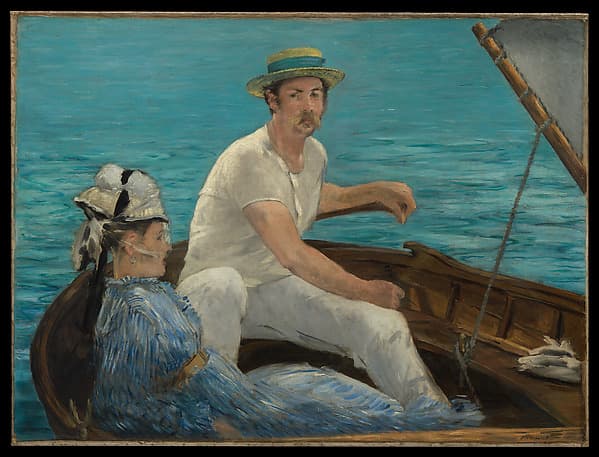
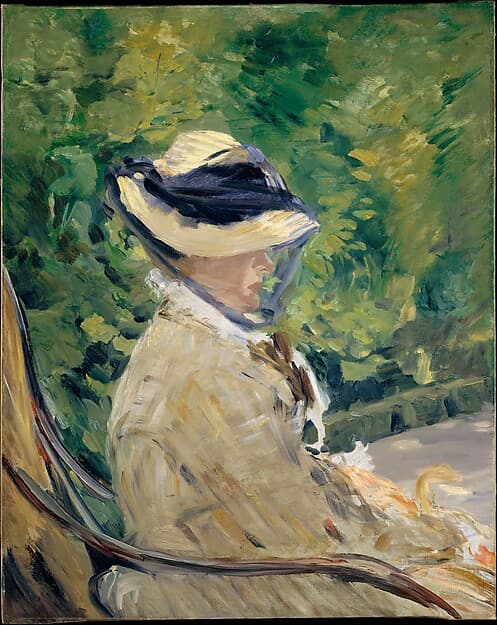
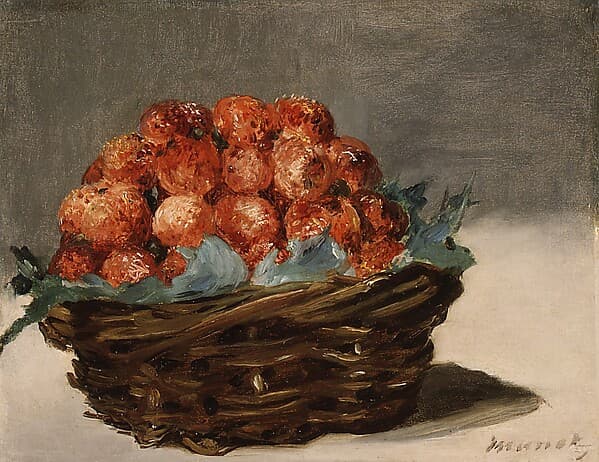
Works by Édouard Manet available in this edition of NEOARCA.
Related context
Associations
Works connected through artistic movements, cultural context and period. Priced works available in this market appear first.








Profile notes
Profile and sources
Image
Artist image
На основе открытого изображения: Nadar / Adam Cuerden; Wikimedia Commons; Public domain.
