
24.08.1866–09.02.1943
Dmitry Kardovsky
Dmitry Kardovsky (1866–1943) studied law at Moscow University for five years, then trained under Chistyakov and Repin in St Petersburg and under Anton Ažbe in Munich. He illustrated Chekhov, Gogol, Griboyedov and Nekrasov, designed productions for the Maly Theatre and often painted the age of Peter the Great and the Decembrists. He taught for about thirty years at the Academy of Arts and at Vkhutemas, and spent his last years on his estate near Pereslavl-Zalessky.
Biography
In 1898 Dmitry Kardovsky, then a student at Anton Ažbe’s school in Munich, designed the sets for a production of Leo Tolstoy’s “The Power of Darkness” at a German theatre. Besides the settings, he drew detailed sketches of the make-up and costume for every character. Which theatre it was has not been established.
He had come to Munich at thirty, after a law faculty and four years at the Academy of Arts.
Kardovsky came from the gentry. He was born on 24 August (5 September) 1866 in the village of Osurovo in Vladimir Governorate, now in the Pereslavl district of Yaroslavl Oblast. From 1875 to 1886 he attended the Vladimir gymnasium, then spent five years at the law faculty of Moscow University, at the same time attending the fine-art classes of the architect Gunst. In 1892 he entered the Academy of Arts under Pavel Chistyakov and Ilya Repin, also worked in Gausch’s studio, and in 1893 received two silver medals. In 1896 he left for Munich together with Igor Grabar and spent four years with Ažbe. In April 1899 he married the painter Olga Della-Vos. After his return he studied with Repin again in 1901, and in 1902 received the title of artist for the painting “Samson and Delilah”.
From 1903 he taught at the Higher Art School of the Academy himself and assisted Repin in his studio. That same year he painted the interior of the Ascension Cathedral in Novocherkassk, strictly and pedantically, in a historicist spirit. Around the same time he became one of the founders of the New Society of Artists and chaired it until 1917; he also exhibited with the World of Art. In 1905–1906 he drew political cartoons for the journals “Zhupel” and “Adskaya Pochta”. From 1907 he was a professor with his own studio; in 1911 he became a full member of the Academy, and in 1915 an academician. Among his pupils were the Latvian painter Frédéric Fiebig (in 1906) and Serafima Ryangina. In 1912 Kardovsky organised the posthumous exhibition of Mikhail Vrubel, whom he admired.
The book became his main work. In 1903 Chekhov’s “Kashtanka” came out with his drawings in charcoal and ink, and in 1904 Gogol’s “Nevsky Prospect”: twenty-four illustrations in black chalk, a colour frontispiece and a tailpiece. For five years, from 1907 to 1912, he worked on drawings for “Woe from Wit”. For Ostrogorsky’s anthology “The Living Word” he made eleven illustrations to Krylov, Ogarev, Tolstoy and Chekhov, and for Gumilev’s “Pearls” he drew the cover (1910). He tried his hand at Impressionism and at Art Nouveau, but valued accuracy of depiction above formal experiment. I think this is why his illustrations read so easily: the artist takes care not to stand in front of the author.
In 1918 he founded the association “Guild of Painters of St Luke”, and in 1919 he lived on his estate at Pereslavl-Zalessky and joined the local society for science and education. From 1920 Kardovsky was in Moscow: until 1930 he taught at Vkhutemas, later Vkhutein; from 1922 he worked in Ksavery Chemko’s studio; and in 1925–1928 he headed the department of decorative and applied art at the State Library of the Arts. For the Maly Theatre he designed “The Forest” (1921), “The Government Inspector” (1922), “Poverty Is No Vice” (1924), Turgenev’s “Lunch with the Marshal of the Nobility” and “The Hanger-On” (1924–1925), and “It’s a Family Affair” (1929). In 1922 he illustrated Nekrasov’s “Russian Women” and “The Government Inspector”, to which he returned once more in 1933.
His favourite periods were those of Peter the Great and of Pushkin, and much of his work dealt with the Decembrists. The watercolour “On Senate Square” (1927) is in the State Historical Museum, and his “Decembrists on Senate Square” and “Pushkin among His Decembrist Friends” were reproduced on postage stamps. In the summer of 1926 he rode out on a cart to the Gorki estate on the river Shakha to sketch the house for a painting of the young Lenin commissioned by the Pereslavl museum; it is still there. In 1927 he painted “A Meeting of the Council of People’s Commissars Chaired by V. I. Lenin”. He also left views of the Rybnaya Sloboda quarter in Pereslavl.
In 1929 Kardovsky was named Honoured Art Worker of the RSFSR, and an exhibition marking twenty-five years of his artistic and teaching work was held in Moscow. In 1932 he illustrated Aleksei Tolstoy’s “Peter the First”; in 1933–1934, at Isaak Brodsky’s invitation, he taught at the Leningrad Institute of Painting, Sculpture and Architecture; and in 1935 he made drawings for “Robinson Crusoe”.
In 1941, after the war began, he and his family moved once again to the Pereslavl estate, and he lived there to the end.
Dmitry Kardovsky died on 9 February 1943 in Pereslavl-Zalessky and was buried in the grounds of the Goritsky Monastery. His memoirs, articles and letters were collected and prepared for publication in 1960 by his daughter, Yekaterina Kardovskaya. Part of the main street of Pereslavl bears his name.
Related context
Associations
Works connected through artistic movements, cultural context and period. Priced works available in this market appear first.








Profile notes
Profile and sources
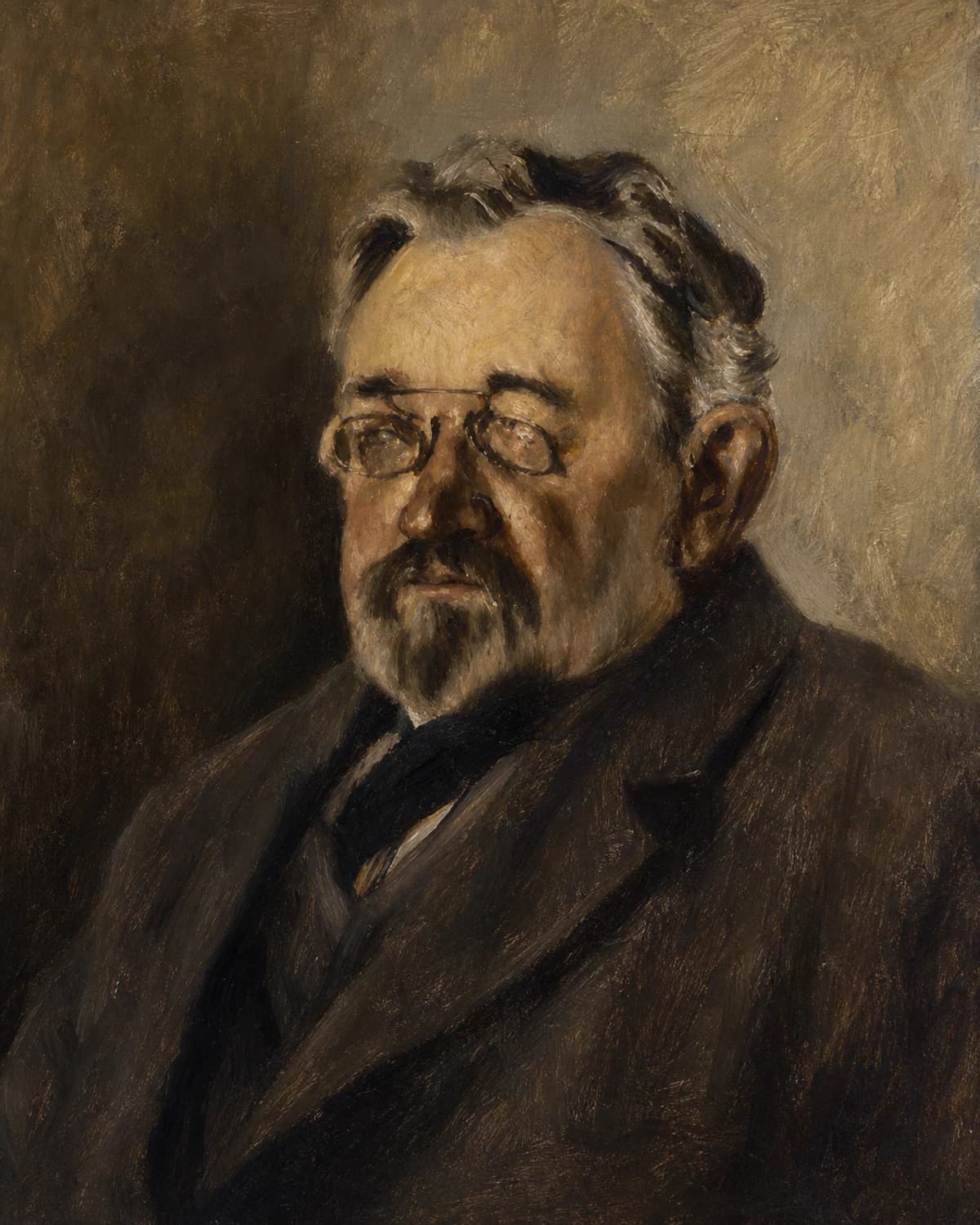
Image
Artist image
На основе открытого изображения: Dmitry Kardovsky; Wikimedia Commons; Public domain.
