
1444–1502
Dionisius
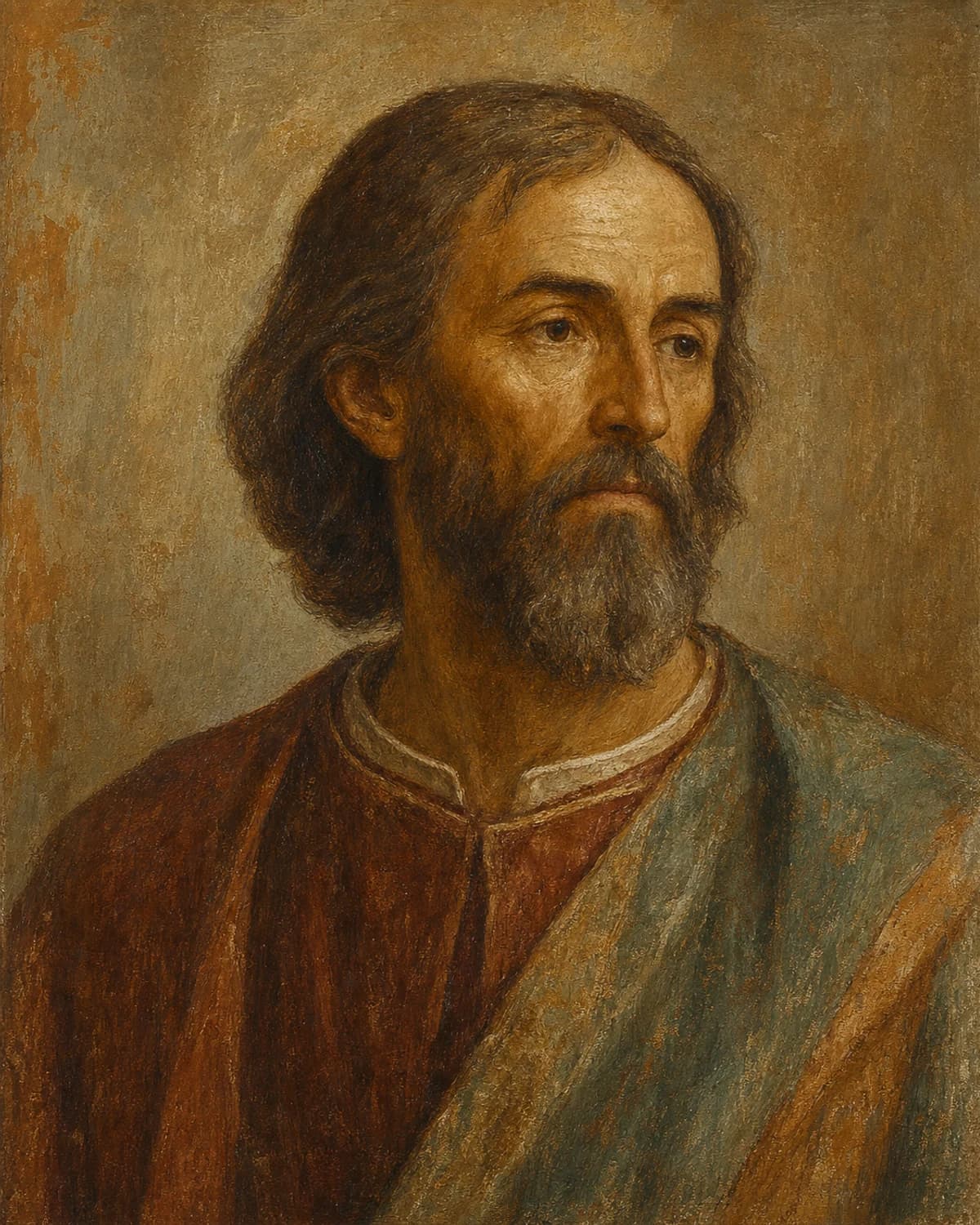
Dionisius (c. 1440 – between 1503 and 1508) led a team of painters that produced icons for the Cathedral of the Dormition in the Moscow Kremlin and for the Joseph-Volokolamsk and Pavlo-Obnorsky monasteries. His best-preserved work is the murals of the Cathedral of the Nativity of the Virgin at the Ferapontov Monastery (1502–1503), painted with his sons. He is the first Russian icon painter known from documents who was a layman.
Biography
In 1481, the chronicle reports, the icon painter Dionisius and his companions, “the priest Timofei, Yarets and Konya”, were commissioned to paint the Deesis, Feast and Prophet tiers of the iconostasis of the new Cathedral of the Dormition in the Moscow Kremlin, built by Aristotele Fioravanti. They were paid a hundred roubles, an enormous sum for the time. The iconostasis has not survived.
Little of Dionisius’s work has survived at all. Even his dates have to be deduced from a few lines in chronicles, saints’ lives and monastic synodicons.
He was born around 1440, perhaps in the 1440s or 1450s. Late synodicons of the Kirillo-Belozersky Monastery report that Dionisius regarded as his ancestor Peter, Tsarevich of the Horde, who was baptised and settled in Rostov; the only noble family that traced itself to Peter was the Chirikovs, so Dionisius was probably one of them. He was not a monk, and he is the first Russian icon painter known from documents who was a layman. He probably studied with the elder Mitrofan of the Simonov Monastery: in the synodicons the entries for “the family of the elder Mitrofan” and “the family of the icon painter Dionisius” stand side by side. Through Mitrofan he may also have received a training that went back to Andrei Rublev. Together they painted the Cathedral of the Nativity of the Virgin at the Pafnutyev-Borovsky Monastery and made icons for it; the murals were lost when the cathedral was rebuilt at the end of the sixteenth century. According to the Life of Paphnutius of Borovsk, they caught the interest of Ivan III, who probably visited the monastery in 1480, after the Great Stand on the Ugra River. Scholars also attribute to the workshop of Mitrofan and Dionisius the miniatures of two Gospel books from the turn of the 1460s and 1470s, now in the State Historical Museum and the library of Moscow University.
After the commission for the Cathedral of the Dormition the Moscow nobility took an interest in Dionisius, and his patrons came to include the most educated people of the time. Ivan III’s brother Andrei Vasilyevich the Younger commissioned Deesis icons from him around 1481 for the Spaso-Kamenny Monastery on Lake Kubenskoye. In 1482 Dionisius restored on its old panel a Byzantine icon of the Virgin Hodegetria whose paint layer had been destroyed by a fire in the cathedral of the Ascension Convent in the Kremlin; the icon is now in the Tretyakov Gallery. The large hagiographic icons of the metropolitans Peter and Alexius were probably also painted for the Cathedral of the Dormition, but they are dated differently: some scholars place them in the 1460s–1480s, others in the early sixteenth century. There are no documents that would settle the question.
No earlier than 1486 Dionisius began working at the Joseph-Volokolamsk Monastery and returned there more than once. For its stone Cathedral of the Dormition he painted three tiers of the iconostasis, the royal doors and the local icons; according to the Life of Joseph of Volokolamsk, he worked with his sons Vladimir and Feodosy, the elder Paisy and two of the abbot’s nephews, the elders Dosifei and Vassian. Judging by the monastery inventories, more than a hundred images were his own work. Of these only a badly damaged Virgin Hodegetria survives; it is in the Andrei Rublev Museum. Joseph may have been addressing Dionisius in his “Epistle to an Icon Painter”, which describes the ideal artist whose skill grows together with his spiritual perfection. For this monastery Dionisius painted a Last Judgement, a subject rare in the fifteenth century, and more than once painted the Hexaemeron. These themes are connected with the expectation of the end of the world in the year 7000 from the Creation, that is, in 1492, with disputes about the nature of Christ, and with the struggle against the heresy of the Judaizers. His principal image, though, was the Virgin. Her icons predominate in the inventories of the Volokolamsk monastery, and the intimate Eleousa, the “Tenderness” type painted by Theophanes the Greek and Rublev, gives way in Dionisius’s work to the solemn Hodegetria, She Who Shows the Way.
In the 1480s and 1490s, by then a known master, Dionisius worked for two or three years in the Beloozero region. For the Trinity Cathedral of the Pavlo-Obnorsky Monastery he painted the Deesis, Feast and Prophet tiers. An inscription on the back of the Saviour in Glory names Dionisius as the author of the whole iconostasis, although his sons evidently helped him. Of the fifty icons of the three tiers, four survive: the Crucifixion, the Saviour in Glory, the Incredulity of Thomas and the Dormition of the Virgin. At the same time the workshop made the tomb icon of St Cyril of Beloozero.
Dionisius painted the murals of the Cathedral of the Nativity of the Virgin at the Ferapontov Monastery (1502–1503) with his sons and pupils. This is the most complete of his surviving works and the last one recorded in documents. The scenes from the life of the Virgin are painted in pure, soft colours; the figures are elongated, the hands and feet small, the faces calm. To my mind it is by this calm that Dionisius is recognised.
At the end of 1503 he was in Moscow, painting for Ivan III a large icon of St Dimitry of Prilutsk with scenes from his life for the Spaso-Prilutsky Monastery; it is now in the Vologda Museum-Reserve. He may still have been working for the Joseph-Volokolamsk Monastery in 1506–1507. In 1508 his son Feodosy was painting the Cathedral of the Annunciation in the Kremlin without his father, and it is thought that by then Dionisius was no longer alive. The workshop, led by his sons, continued working into the 1520s.
Related context
Associations
Works connected through artistic movements, cultural context and period. Priced works available in this market appear first.
Profile notes
Profile and sources
Image
Artist image
На основе открытого изображения: Dionisius; Wikimedia Commons; Public domain.
