
06.06.1599–06.08.1660
Diego Velázquez
Diego Velázquez (1599–1660) began in Seville with bodegones, kitchen scenes, and from 1623 until the end of his life served Philip IV in Madrid as court painter. He travelled to Italy twice and painted “The Surrender of Breda”, the portrait of Pope Innocent X, “Las Meninas” and “The Spinners”. Most of his pictures stayed in the Spanish royal collection, and the finest group of them is now in the Prado.
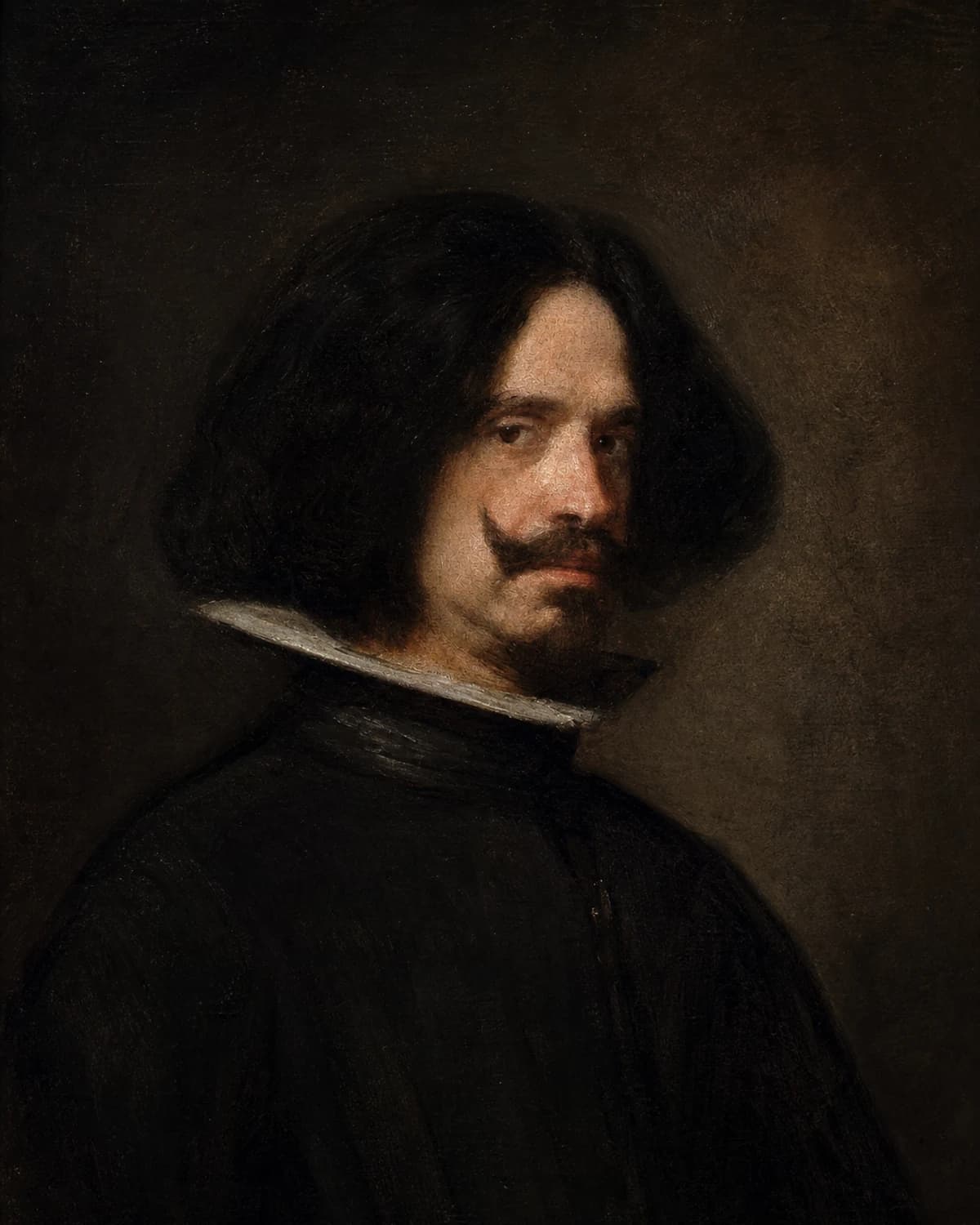
Biography
In “Las Meninas” Velázquez painted himself at work: he stands beside an enormous canvas with brush and palette, and on his chest is the red cross of the Order of Santiago. The picture dates from 1656, yet he became a knight only in 1659, and tradition has it that Philip IV himself later added the cross. Before the investiture a commission examined his ancestry many generations back: no Jewish or Moorish blood, no trade. The records of that inquiry later turned up in the order’s archive.
He was born in Seville; the day of his baptism, 6 June 1599, is known, and it is usually given as his date of birth. His father, the notary Juan Rodríguez de Silva, came from a Portuguese family, his mother was called Jerónima Velázquez, and, following Andalusian custom, the son took his mother’s surname. Under a contract of 1611 the boy entered the workshop of Francisco Pacheco for six years. Pacheco was a modest painter but a well-read man: he was writing a treatise on painting and served the Inquisition as censor of religious images. In 1617 Velázquez passed his examination and joined the painters’ guild of Seville, and on 23 April 1618 he married his master’s daughter, Juana.
His first works are known as bodegones: scenes in a kitchen or a tavern where the pots and the food take up almost more of the canvas than the people. In “Old Woman Frying Eggs” (around 1618, Edinburgh) a boy with a melon and a glass flask stands beside the cook. In “The Waterseller of Seville” an old man hands a youth a glass with a fig at the bottom, and drops of water run down a huge earthenware jug. In “Christ in the House of Martha and Mary” a young cook has stopped pounding at her mortar, an old woman points her towards a scene in the corner where Christ is talking with the sisters, and it is still undecided what that scene is: a picture on the wall, a window, or the girl’s own thought. The harsh light recalls Caravaggio, whom Velázquez may have known from copies.
In 1622 he made his first trip to Madrid, but was not admitted to the king. In December of that year the court painter Rodrigo de Villandrando died; in the summer of 1623 Velázquez was summoned to court on the orders of the Count-Duke of Olivares, and on 30 August Philip IV, six years younger than the painter, sat for him. Olivares declared that from then on only Velázquez would paint the king, and in October he became court painter with a salary of twenty ducats a month. That first portrait has not survived.
In 1627 he won a royal competition on the subject of the expulsion of the Moors; the picture burned in the palace fire of 1734.
The year 1629 brought “The Triumph of Bacchus”, more often called “The Drinkers”: a half-naked youth crowned with ivy sits on a barrel among common people in everyday clothes. That summer the king let him go to Italy. Genoa, Venice, Rome, Naples; the main work of the journey, “Apollo in the Forge of Vulcan” (1630), was painted on a light grey ground instead of the earlier red-brown one, and he kept to such a ground for the rest of his life.
He came back in January 1631, and the next eighteen years went to the court. For the Buen Retiro palace he painted equestrian portraits of the royal family and “The Surrender of Breda” (1634–1635, Prado). In such scenes the victor usually looks down from his horse at a kneeling enemy; in Velázquez the Spanish commander stands before the Dutchman as before an equal and lays a hand on his shoulder. He painted Olivares, the heir Baltasar Carlos, the poet Quevedo, court jesters and dwarfs. The jester Pablo de Valladolid (1635) stands in a grey space with no floor and no wall, and Manet later called this background perhaps the most surprising piece of painting ever made. The dwarf Don Diego de Acedo (1644) sits with a huge folio, an inkwell and a pen. To my mind, these portraits show best how he looked at people: without condescension and without mockery. Around the same time came “Venus at Her Mirror” (the Rokeby Venus), his only surviving nude (now in the National Gallery, London).
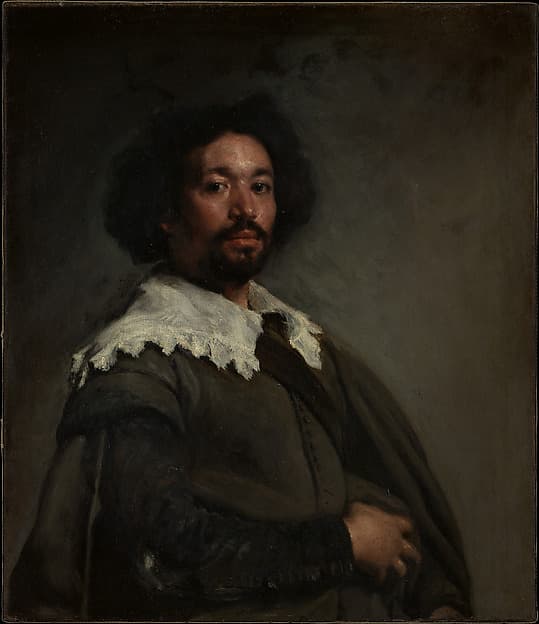
In 1649 the king sent him to Italy to buy paintings and antique sculpture. With him went his assistant Juan de Pareja, an enslaved man whom Velázquez had taught to paint. In Rome the portrait of Pareja won the painter election to the Academy of Saint Luke, and in November 1650 Pareja was given his freedom. Pope Innocent X was painted at the same time; the story goes that the pope called the portrait “too true”, yet hung it in his reception room and rewarded the painter with a gold chain. In 1651 Velázquez returned with paintings and some three hundred sculptures.
In 1652 he was appointed chief quartermaster of the court (aposentador mayor), and the post took up much of his time. And yet this is when “Las Meninas” (1656) and “The Spinners” (around 1657) were painted. In “Las Meninas” the Infanta Margarita is surrounded by maids of honour, dwarfs and a dog, while in the mirror on the back wall the king and queen can be seen, and it is unclear whether they stand where the viewer stands or whether the mirror reflects the painter’s canvas. Luca Giordano called the picture “the theology of painting”.
In June 1660 Philip IV married his daughter Maria Theresa to Louis XIV, and Velázquez decorated the Spanish pavilion on Pheasant Island in the middle of the river Bidasoa. On 26 June he returned to Madrid, on 31 July he took to his bed with a fever, and on 6 August 1660 he died. He was buried in the Madrid church of San Juan Bautista, and his wife was soon laid beside him. Around 1809 the French demolished the church, and where his grave is now nobody knows.
Artist works
Works by the artist
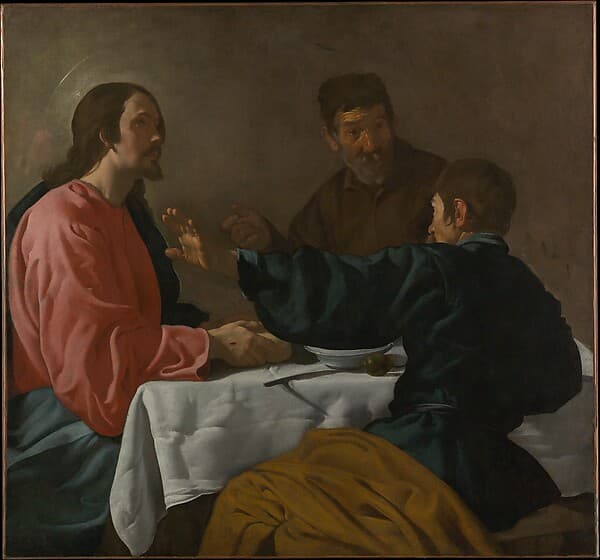
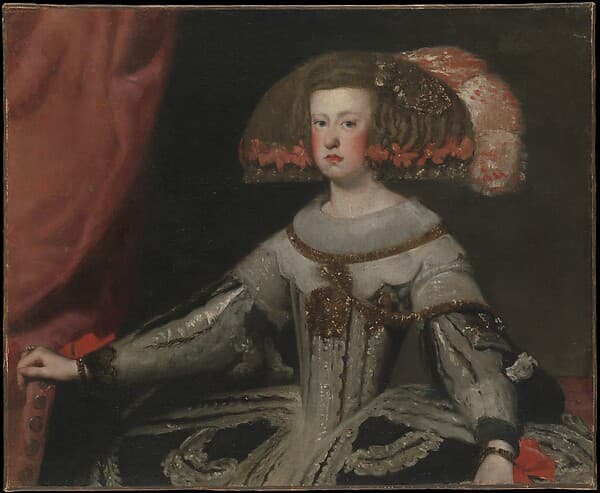
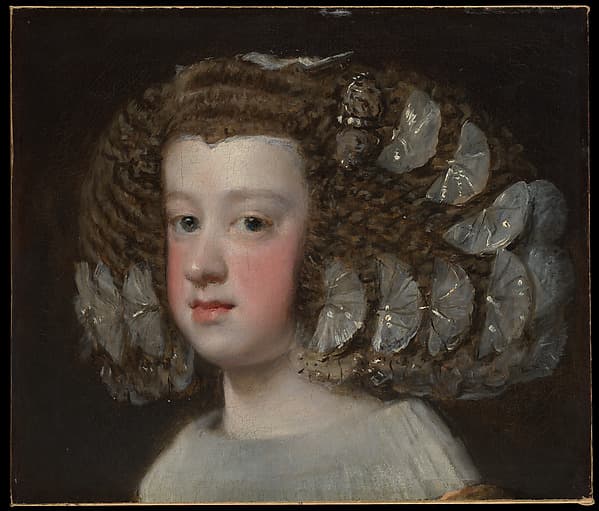
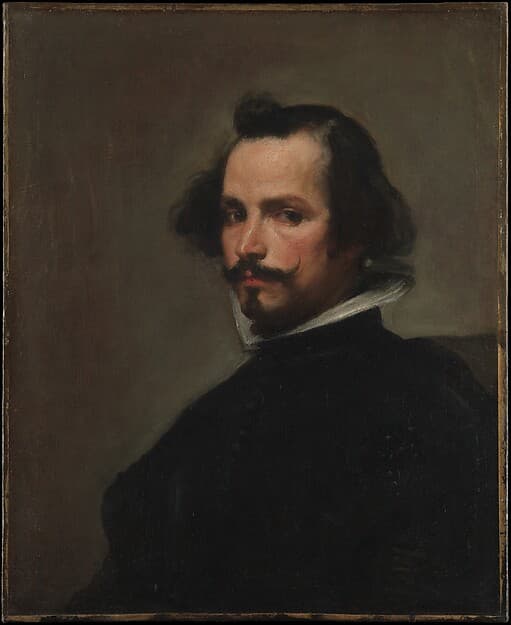
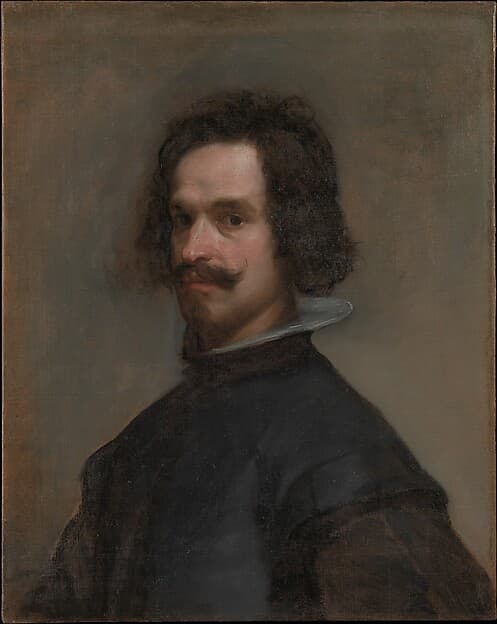
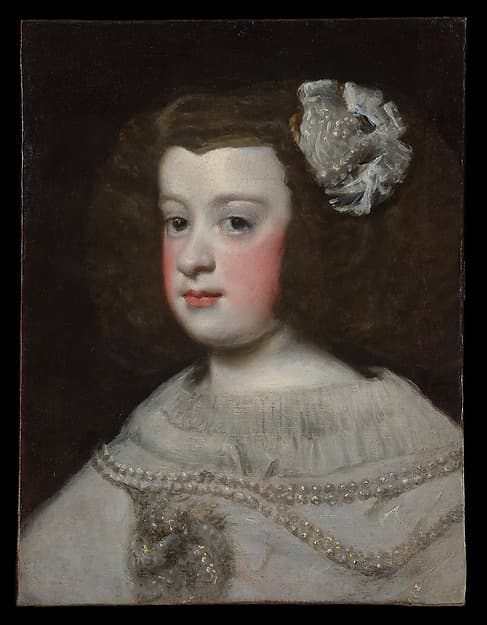
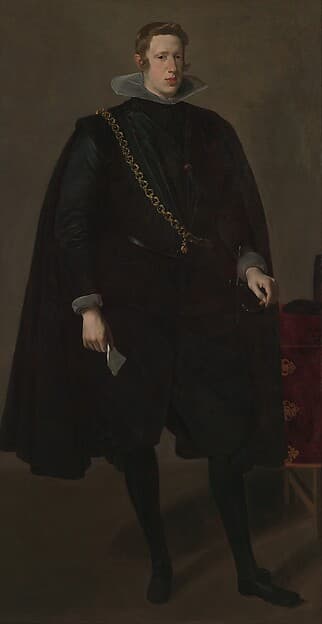
Works by Diego Velázquez available in this edition of NEOARCA.
Related context
Associations
Works connected through artistic movements, cultural context and period. Priced works available in this market appear first.
Profile notes
Profile and sources
Image
Artist image
На основе открытого изображения: Diego Velázquez; Wikimedia Commons; Public domain.
