
05.06.1938–30.06.2019
David Koloane
David Koloane had his first drawing lessons as a schoolboy in Soweto, and in 1977 he was one of the founders of the first gallery for black artists in South Africa. In oil pastel and acrylic he painted the life of the black population under apartheid and after it; he curated exhibitions, studied museology in London and in 1991 opened the Bag Factory studios in Johannesburg.
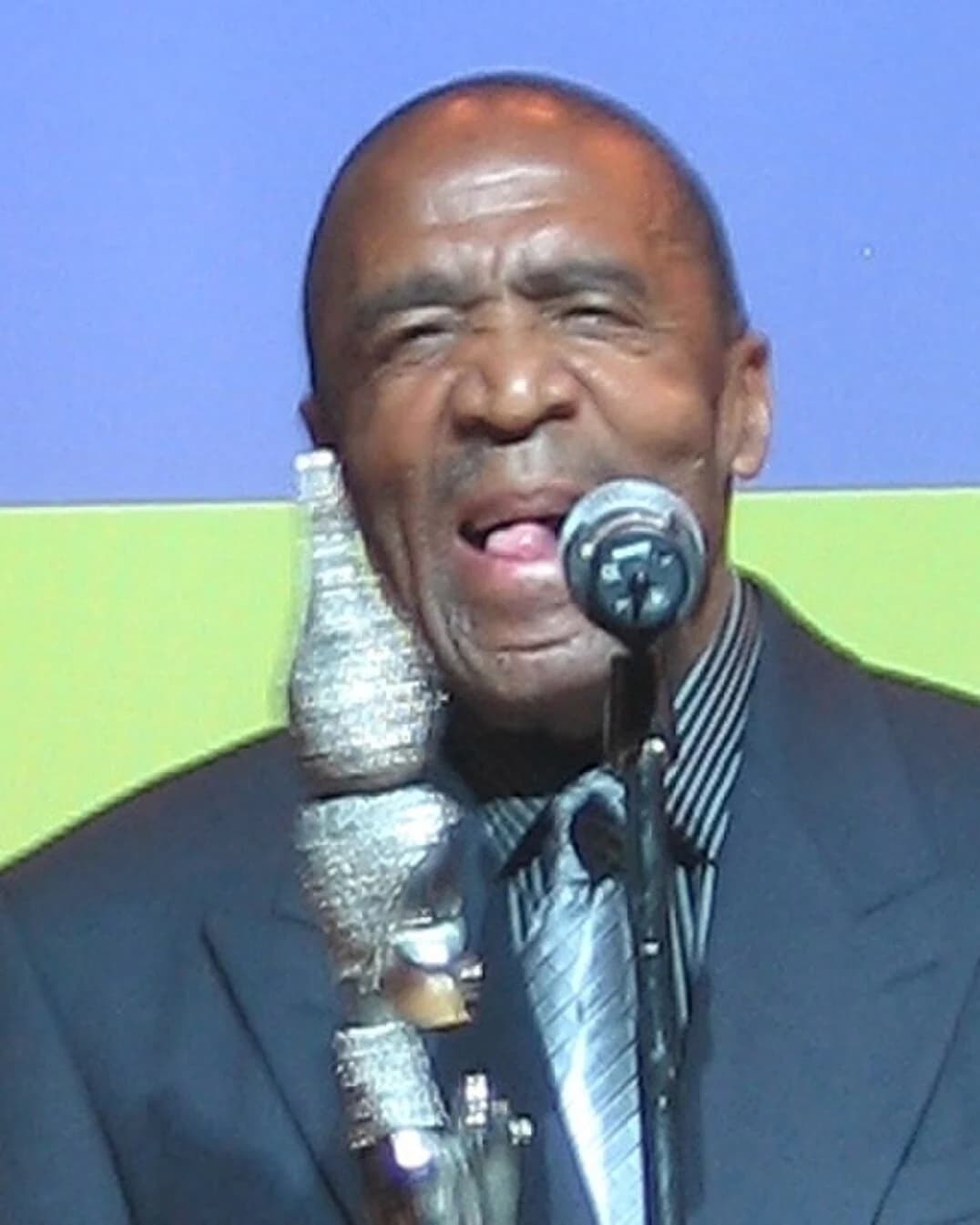
Biography
In 1991, while apartheid was still in force, David Koloane and the collector Robert Loder opened the Bag Factory artists’ studios in Johannesburg. They found a site in Fordsburg, near Newtown, in a district that under the segregation laws was neither strictly “white” nor strictly “black”. The first to move in were Sam Nhlengethwa and Kagiso Patrick Mautloa; later William Kentridge, Helen Sebidi, Penny Siopis, Deborah Bell and many others worked there.
Koloane himself was born on 5 June 1938 in Alexandra, a township of Johannesburg.
He began drawing in his last years at school in Soweto, where he met the artist Louis Maqhubela, who gave him his first lessons. He had to leave school to earn a living for his family, and for years art remained something for his spare hours. He was able to study systematically only in 1974–1977, at the Bill Ainslie Studios, which later became the Johannesburg Art Foundation. In 1977 Koloane was among the founders of the first gallery for black artists in South Africa, and that same year he exhibited in Johannesburg galleries. At the same time he taught at a school in a township, first part-time and then full-time. In 1982 he was one of the curators of the Culture and Resistance festival in Botswana. In 1984–1985 he studied at the University of London and took a diploma in museology. From 1986 to 1988 he was the first curator of the gallery of the Federated Union of Black Artists in Johannesburg.
The late 1980s were spent travelling and working with others. In 1989 he took part in the Pachipamwe II workshop at Cyrene Mission near Bulawayo, in Zimbabwe, together with Joram Mariga, Bernard Matemera, Bill Ainslie and Sokari Douglas Camp. That same year his work was in the exhibition “The Neglected Tradition” at the Johannesburg Art Gallery, and in 1990 in an exhibition of South African art at the Museum of Modern Art in Oxford. That year, in London, he coordinated the Zabalaza Festival and was one of its curators.
His canvases and sheets are dense and many-layered, with pastel and acrylic laid over each other thickly and sharply. He painted what he saw around him, the life of the country’s black population, without denouncing it and without prettifying it. Koloane himself said that the conditions created by apartheid had made the human condition the axis of all his work, and that the human figure had become “the icon of creative expression”. I admit that individual works are hard to judge: the lists of his exhibitions are long, but the available material contains almost no descriptions of particular pieces.
Work for others took up no less of his time. He wrote articles for South African and foreign publications, compiled catalogues, sat on juries, served on the advisory board of the National Arts Council, and organised workshops in South Africa and beyond. In his work with young artists his principle was the motto “each one teach one”, which originated on Robben Island, the prison island. In 1998 the government of the Netherlands gave him the Prince Claus Award for his contribution to the development of art in South Africa. In 2000 he was shown in the exhibition “Liberated Voices” at the Museum for African Art in New York; in 2001–2003 he had exhibitions at the Goodman Gallery in Johannesburg, and in 2002 the exhibition “Johannesburg Blues” in Cologne. For his seventieth birthday, in 2008, the museum of the German town of Goch held an exhibition of his works on paper. Since 2010 the Bag Factory has given young artists an award in his name: three months in a studio, materials, mentors and a solo exhibition. In 2015 Rhodes University made him an honorary Doctor of Fine Art.
Koloane’s works are held by the Johannesburg Art Gallery, the South African National Gallery in Cape Town, the Botswana National Museum and Jean Pigozzi’s collection of contemporary African art. He died on 30 June 2019 in Johannesburg.
Profile notes
Profile and sources
Image
Artist image
Fouadas; Wikimedia Commons; CC BY 4.0.
