
1796–1834
Damián Domingo
In 1821 Damián Domingo (Damián Domingo y Gabor) opened a school for artists in his own house in Tondo, regarded as the first official art academy in the Philippines. He painted miniature portraits, religious images and albums of local types, and served as director of the Academia de Dibujo. Few of his works survive.
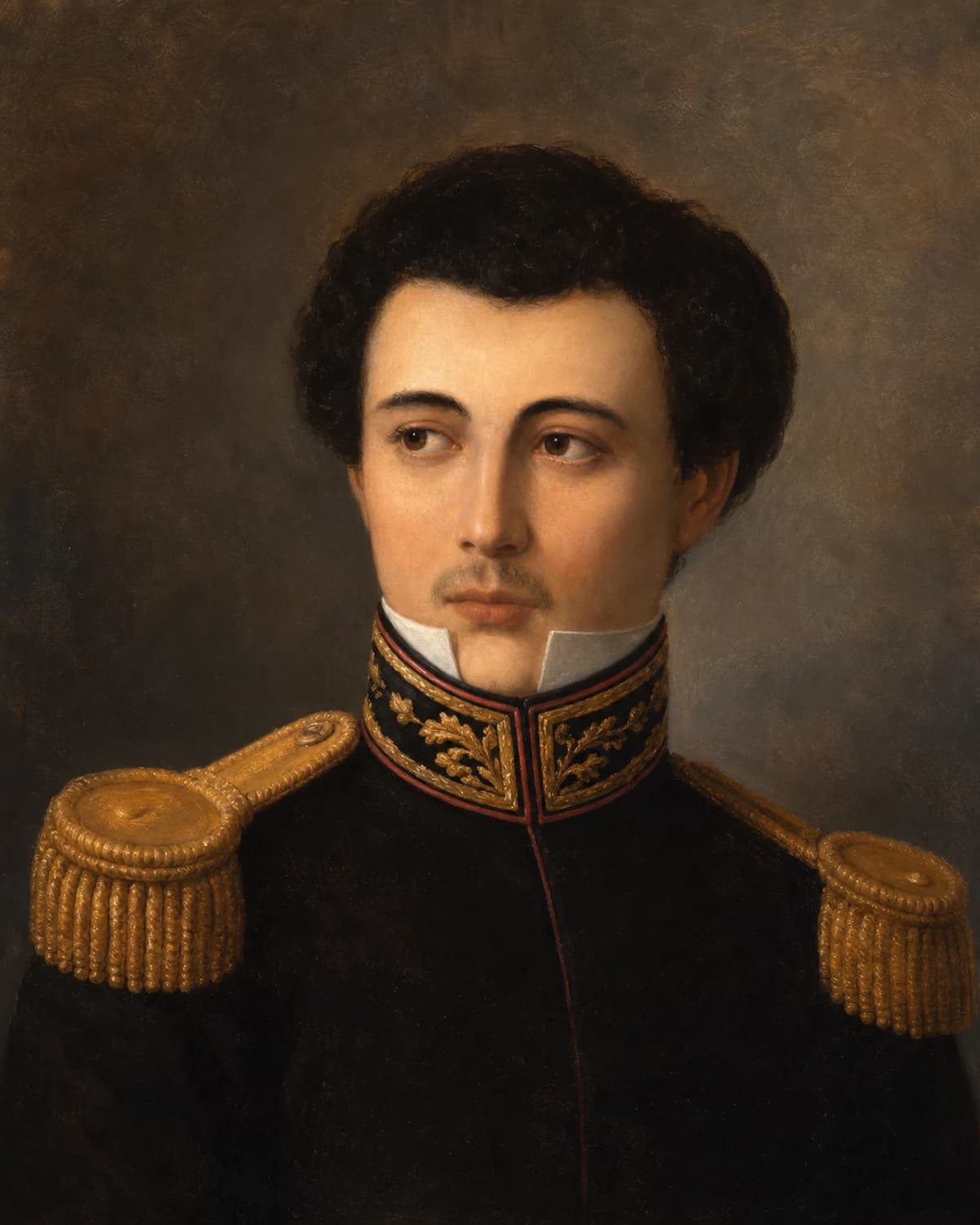
Biography
The school was in an ordinary dwelling house in Tondo, a district of Manila. Its owner, Damián Domingo, opened it in 1821.
He was born in Tondo, in Manila, into a family of Chinese Filipino mestizos. The sources give different dates of birth: most often 12 February 1796 is named, by other accounts about 1790. He began as a painter of miniature portraits and religious images. He also made albums of watercolour studies of local costumes and types (tipos del pais), intended first of all for collectors. His clients included high officials of the colony, among them the governor-general Mariano Ricafort. Secular subjects had rarely been taken up in Philippine painting before him, and in this he is considered one of the first. These works made him one of the best known and most sought-after artists in Manila of his day.
According to family tradition, he found his wife through a portrait. Lucia Casas’s father, a wealthy colonel named Ambrocio Casas, was so pleased with her miniature that he invited the painter to his house. In 1824 Domingo married Lucia. Of their ten children nine reached adulthood; two sons, Severo and José, also became painters. I have not been able to check this story against documents, so I give it as tradition.
Domingo’s own school taught the construction of space on the Western model: foreground, middle ground and background. It may have been the first such school in all of Asia. When in 1823 the Royal Economic Society of the Friends of the Country (Sociedad Económica de los Amigos del País) opened the Academia de Dibujo, he was invited to teach there. By some accounts he became director later, by others in 1828. The schools were later merged; the merger is dated to 13 June 1826.
Under Domingo the academy’s rules changed. Indios, who had until then been almost shut out of education, were admitted, and it was the first school in the Philippines that local people could enrol in. Students were taught to draw still life and the human figure, anatomy, the preparation of colours and surfaces, and oil and watercolour painting. Rumour credited the painter with a photographic memory. The academy produced one of the first generations of Filipinos with a Western training.
Domingo died in Manila in 1834, on 27 July by some accounts and 26 July by others. He was thirty-eight. Without him the academy could not keep its earlier standard and closed the same year.
Little has survived. Two watercolours and three oil paintings are known: “Nuestra Señora del Rosario”, “Cátedra de San Pedro, Roma” and “La Sagrada Familia”. Three complete albums of types of the country are in two private collections in the Philippines and in the Newberry Library in Chicago. The last is signed and dated 1827–1832.
Related context
Associations
Works connected through artistic movements, cultural context and period. Priced works available in this market appear first.








Profile notes
Profile and sources
Image
Artist image
На основе открытого изображения: José Domingo Gabor; Wikimedia Commons; Public domain.
