
17.12.1924–14.10.1990
Clifton Pugh
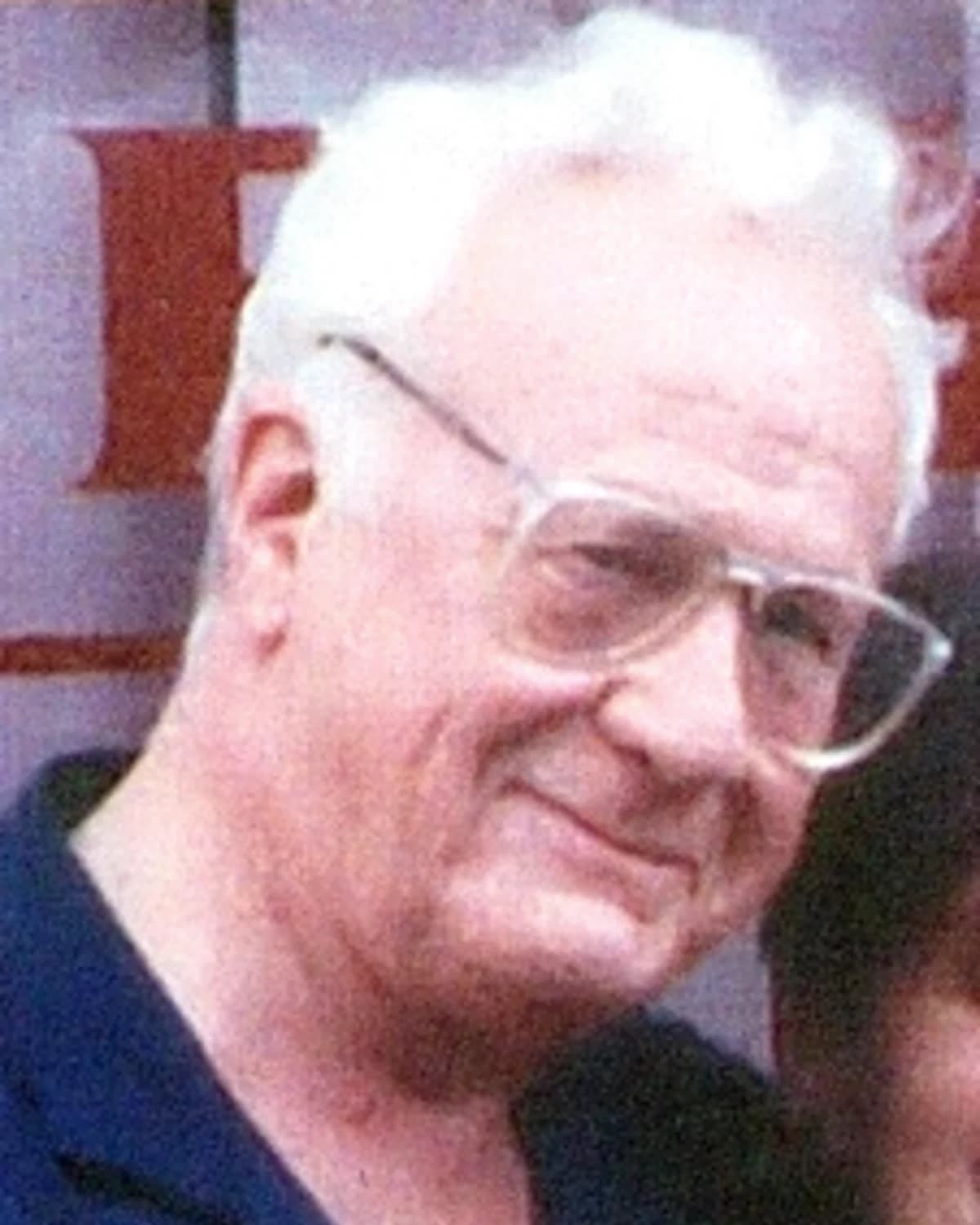
Clifton Pugh (1924–1990) won Australia’s Archibald Prize for portraiture three times, including for his portrait of Prime Minister Gough Whitlam (1972). A landscape painter and portraitist influenced by German Expressionism and Kandinsky, in 1951 he bought a block of bush near Melbourne, and around him there grew up the artists’ colony of Dunmoochin.
Biography
In 1951 Clifton Pugh bought about six hectares of bush near Cottles Bridge, fifty kilometres north-east of Melbourne, and called the place Dunmoochin. At first he lived there in a tent, then built a hut of woven sticks plastered with clay.
Soon other artists and potters settled nearby. To protect the land and manage it together, they formed the Dunmoochin Artists Co-operative, with a constitution of thirteen articles; it was not a commune in the full sense of the word, and only the ownership was shared. Over the years John Perceval, Fred Williams, Albert Tucker, Mirka Mora, John Olsen, Frank Hodgkinson and many others lived or worked at Dunmoochin. When the co-operative broke up, each member received a share of the land.
Pugh was born on 17 December 1924 in Richmond, Victoria, the son of an English-born assistant mechanical engineer and a mother born in Adelaide; both parents were amateur painters. In the 1940s he attended evening classes in cartoon drawing at Swinburne Technical College, and two years later, while living in Adelaide, he studied life drawing at the South Australian School of Arts and Crafts. During the Second World War he served with the Australian Imperial Force in New Guinea, and after the war with the British Commonwealth Occupation Force in Japan. One episode of the war, for which he later felt guilt, made him a pacifist and left its mark on his painting. In hospital in New Guinea he read Sheldon Cheney’s “The Story of Modern Art”.
Back in Melbourne, under the government’s retraining scheme for returned servicemen, Pugh enrolled at the National Gallery of Victoria Art School. The school gave him a firm grounding in drawing and tonal painting, but one day he took his teacher William Dargie to see Sidney Nolan’s Ned Kelly series, Dargie dismissed it, and Pugh left the school to find his own way. He regarded Kandinsky as his chief teacher: “I can see Kandinsky in everything I do.” German Expressionism also had a strong influence on him.
The turning point came on the road. In 1954 Pugh crossed the Nullarbor Plain to Perth, in 1956 he reached the Kimberley, and for the first time he saw the art of Aboriginal Australians. After that, incision, cross-hatching and collage appeared in his work. He showed these works in the Group of Four exhibitions of 1955 and 1956 at the Victorian Artists Society Gallery, together with John Howley, Don Laycock and Lawrence Daws. His first solo exhibition of landscapes and portraits was held there in 1957, and the critics received it well. In a letter to Bernard Smith in 1959 he wrote that art must grow out of the environment of a particular place and time, and called this “geographical art”. Close observation of nature, its cycles and savage rhythms, remained his constant theme: one painting of 1957 is called “A Cat in a Rabbit-Trap”. Among his early group exhibitions were “The Antipodeans”, for which Smith wrote a manifesto in defence of figurative painting (Arthur and David Boyd, John Brack, Robert Dickerson, Perceval and Charles Blackman also showed in it), and a joint exhibition with Barry Humphries in which the two responded to Dadaism.
The Sydney dealer Rudy Komon paid his artists a monthly stipend against future sales, and Pugh was one of them. The exhibitions of Australian art at the Whitechapel Gallery (1961) and the Tate (1963) in London made his name abroad; in 1966 he had a solo exhibition in St Louis, and in 1970 the Commonwealth Institute in London mounted a retrospective. In the same year, 1970, he worked for three months in Paris with Stanley Hayter and brought back to Australia Hayter’s method of colour printing with inks of different viscosity. Together with John Olsen he bought an etching press and set it up at Dunmoochin.
He won the Archibald Prize three times: in 1965 for his portrait of R. A. Henderson, in 1971 for Sir John McEwen and in 1972 for Gough Whitlam. His portraits of the Governor-General Lord De L’Isle (1964) and of Whitlam were bought by the Historic Memorials Committee. Pugh opposed the Vietnam War openly and joined the Labor Party for that reason; from 1971 he chaired its arts policy committee in Victoria, and in 1973 Whitlam appointed him to the Australia Council for the Arts. A year later he left the Council after a public disagreement with its chairman. In 1972, during an election campaign tour, he found the paintings of the unknown naive artist Eric Stewart in a junk shop and later organised posthumous exhibitions of his work. In the 1970s his name also became widely known through the books of Ivan Smith’s radio plays “Death of a Wombat” and “Dingo King”, illustrated with his drawings and paintings.
I think what describes him best is that after leaving the Council he simply went back to painting and never gave it up again.
In 1985 Pugh was made an Officer of the Order of Australia for services to art, and in 1990 he was appointed official artist of the Australian War Memorial for the commemorations of the 75th anniversary of the Gallipoli landing. In 1989 he gave part of the Dunmoochin land to the Victorian Conservation Trust. Clifton Pugh died on 14 October 1990 in Prahran. The Dunmoochin Foundation he set up provides residencies for artists on his bush property.
Profile notes
Profile and sources
Image
Artist image
Jane Morrison; Wikimedia Commons; CC BY 3.0.
