
19.01.1954–present
Cindy Sherman
Since the 1970s Cindy Sherman (b. 1954) has photographed herself in other people’s roles, acting as author, make-up artist, costumier and model. She made her name with the series “Untitled Film Stills” (1977–1980), in which she plays the heroines of non-existent films. Large colour formats followed, then the “History Portraits”, “Clowns” and “Society Portraits”; retrospectives have been held at the Museum of Modern Art in New York and the National Portrait Gallery in London.
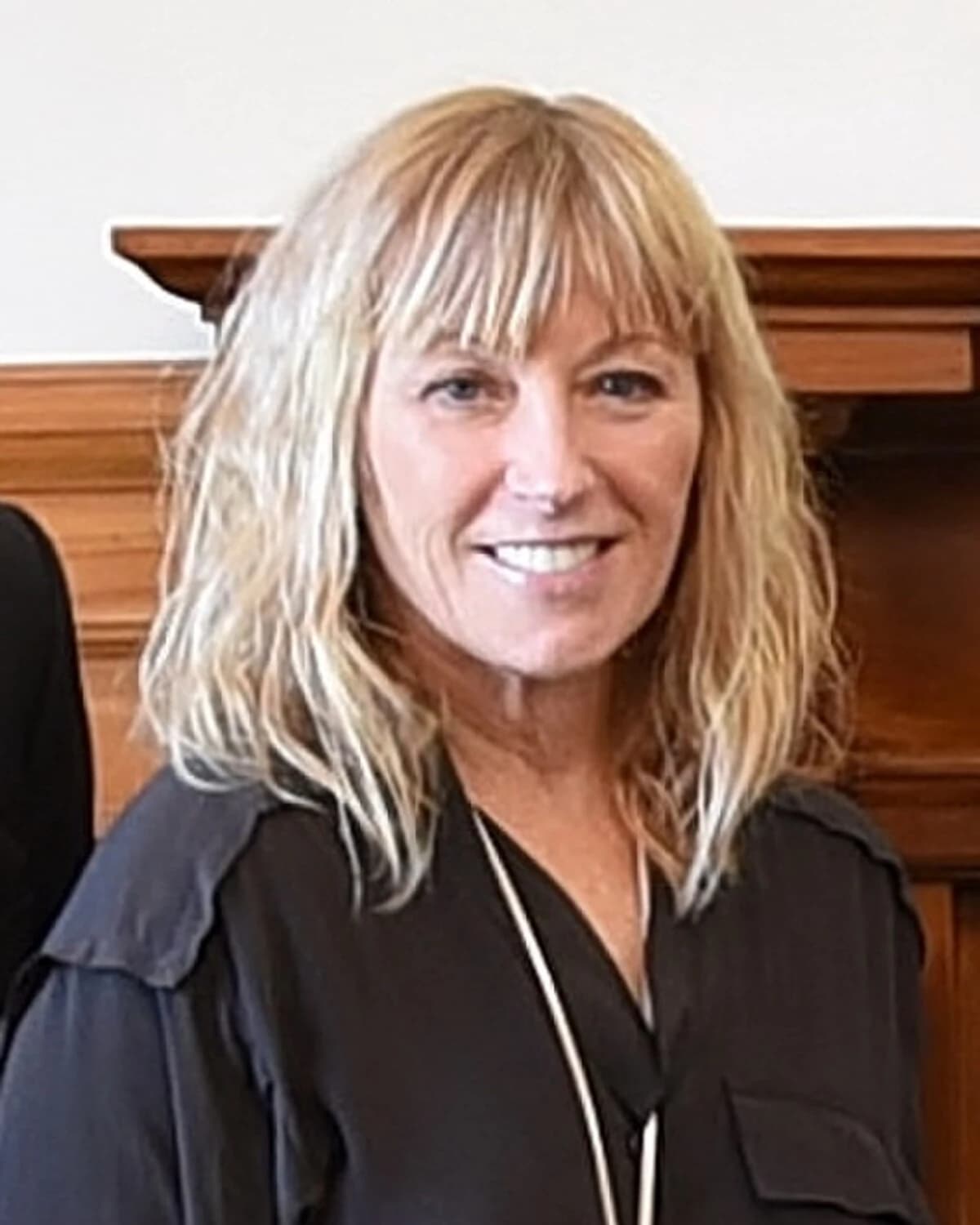
Biography
Sixty-nine black-and-white photographs, each about 22 by 28 centimetres, in identical plain black frames. In every one the same young woman: in the street, in a yard, by a pool, on a beach, in a room. They look like stills from films, from Italian neorealism or American noir of the 1940s to the 1960s, but not one of these films exists. Cindy Sherman began the series “Untitled Film Stills” in 1977, at the age of twenty-three.
She shot mostly in her own apartment, using her own props or ones borrowed from friends. She gave the pictures no titles, so as not to rob them of their ambiguity. Her heroines are usually alone, their faces expressionless, as though someone were watching them from the side. The librarian, the small-town girl, the seductress: all these roles are assembled from the stereotypes of mass culture, which is why each frame feels familiar. In 1980 Sherman stopped; as she explained it, she had run out of clichés.
She herself has said that she does not see herself in these photographs and does not consider them self-portraits. I think this should be taken literally.
Cynthia Morris Sherman was born on 19 January 1954 in Glen Ridge, New Jersey; soon afterwards the family moved to Huntington on Long Island. In 1972 she entered the visual arts department of the state college in Buffalo and at first studied painting. Even then she dressed up as different characters, putting together costumes from thrift-store clothes. Painting disappointed her: she was meticulously copying other people’s art and realised she could pick up a camera and spend her time on the idea itself. She failed the required photography course in her first year and retook it with Barbara Jo Revelle, who introduced her to conceptual art. Robert Longo, a student at the same college, suggested she photograph herself “dolling up” before parties, and the “Film Stills” grew out of that. In 1974, with Longo, Charles Clough and Nancy Dwyer, she founded the Hallwalls arts centre in Buffalo. It was there too that she saw the conceptual photographic work of Hannah Wilke, Eleanor Antin and Adrian Piper. She received her bachelor’s degree in 1976.
In 1980 her first solo exhibition in New York took place at the non-commercial space The Kitchen, and Metro Pictures, a gallery that opened the same year, began with her photographs. Sherman is counted among the Pictures Generation, together with Laurie Simmons, Louise Lawler and Barbara Kruger. In the series “Rear Screen Projections” (1980) she moved to colour and large formats: the heroine stands in front of a landscape projected onto a screen behind her. The “Centerfolds” (1981), twelve horizontal photographs about 60 by 120 centimetres, were commissioned by Artforum but never printed; in them she lies on the floor or in bed, as in a glossy magazine spread.
Things grew steadily more disturbing. In “Fairy Tales” (1985) and “Disasters” (1986–1989) prostheses and mannequins, the grotesque and decay, appeared for the first time. In 1989–1990 she made the thirty-five large colour photographs of the “History Portraits”, restaging the settings of European portraits from the fifteenth to the early nineteenth century; she was living in Rome at the time but worked from reproductions in art books rather than in museums. In the “Sex Pictures” of the early 1990s she removed herself from the frame altogether, leaving medical mannequins pieced together from parts. Critics read her work through the theory of the “male gaze”; Laura Mulvey and Douglas Crimp have written about her. Sherman herself says she hopes her work will be read as feminist but has no intention of theorising about it.
In December 1995 the Museum of Modern Art in New York acquired the entire “Film Stills” series. In 1997 Sherman directed a feature film, “Office Killer”, which met with a cool reception. The “Clowns” (2003–2004) were made with digital photography, and in the “Society Portraits” (2008) she plays affluent older women, using digital retouching to deepen the wrinkles. The series “Imitation of Life” (2016), named after Douglas Sirk’s 1959 melodrama, turns to the ageing divas of old Hollywood. Her awards include fellowships from the Guggenheim Foundation (1983) and the MacArthur Foundation (1995) and the Hasselblad Award (2000).
In 2012 the Museum of Modern Art showed more than a hundred and seventy of her photographs, and the exhibition then travelled to San Francisco, Minneapolis and Dallas. In 2019 the National Portrait Gallery in London mounted a large retrospective. Since 2019 Sherman has shown self-portraits woven as tapestries by a Belgian workshop, and in 2024 the Fotografiska museum in Stockholm held an exhibition of her tapestries based on digitally altered selfies from social media.
Profile notes
Profile and sources
Image
Artist image
New Zealand Government, Office of the Governor-General; Wikimedia Commons; CC BY 4.0.
