
1600–1700
Bishandas
Bishandas worked in the Mughal imperial workshop under Akbar, Jahangir and Shah Jahan and was regarded as the best portraitist at court. In 1613 Jahangir sent him to Persia to paint Shah Abbas I; the artist did not return until 1620, when the emperor gave him an elephant. His dates of birth and death are unknown, and his trail in the sources ends around 1650.
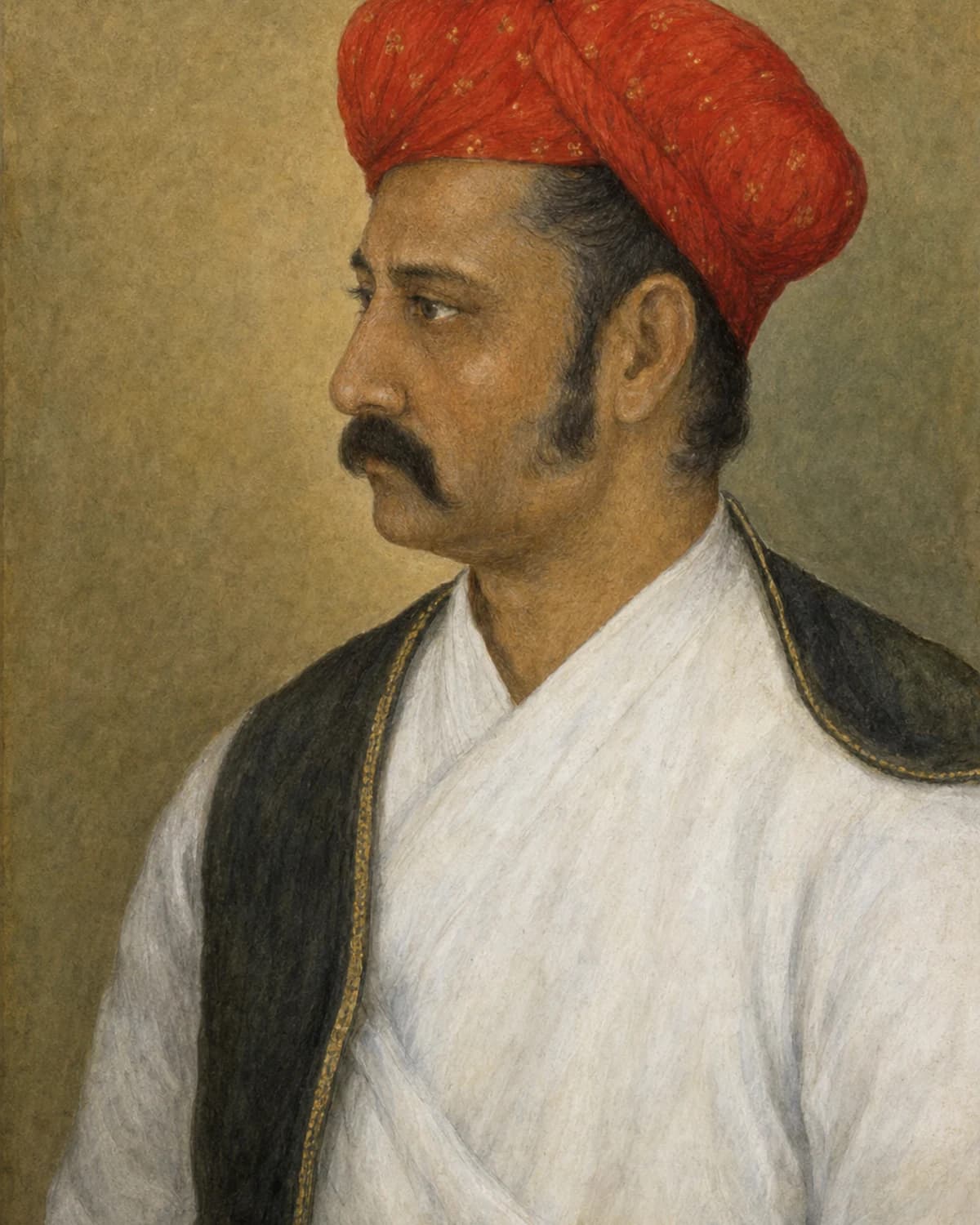
Biography
The artist received the elephant as a reward for spending seven years away from court. It happened in 1620, when Bishandas came back from Persia.
He was born into an Indian family; neither the place nor the date of his birth is known, and the dates 1600 and 1700 look conventional, since they do not fit what is known of his work from 1590. His uncle, the painter Nanha, taught him to draw. Around 1590 Bishandas entered the imperial workshop, the kitabkhana, where under Akbar he carried out commissions for the court. His name suggests he was a Hindu, as were a number of other masters of the workshop, but there is no direct evidence of this.
Fame came under Jahangir (who ruled from 1605), who particularly valued accurate, lifelike images of people. The emperor called Bishandas “unrivalled in the art of portraiture”. In 1613 he was included in the diplomatic mission of Khan ‘Alam to the court of the Persian shah Abbas I, and the task was a direct one: to paint the shah himself and his entourage, among them Abbas’s second son, Soltan Mohammad Mirza, as well as Saru Taqi and Isa Khan. The work in Persia dragged on until 1620. Portraits of this kind were painted from life, from quick sketches. Bishandas, it seems, also looked at the European portraits that reached India in miniatures and engravings. His realism rests on gesture and carefully worked facial features, while shading and spatial depth play a small part, and in this he differed from his predecessors, whose faces were more schematic. The conventions of the genre did not disappear: portraits usually had to be in profile and full-length, so the face took up less of the composition than in the European tradition.
He painted court scenes and battles, and groups of people in everyday life or at a festival. He often gathered his figures into groups, and this is more noticeable in his later works. Among his best-known pieces is “The Birth of a Prince” (around 1620), an illustration for the “Jahangirnama”, the emperor’s memoirs. In the collection of the Bharat Kala Bhavan there is a miniature by him showing a bazaar in Agra, where people of different standing make their way to the Sufi saint Shaikh Phul; to my mind it is one of his liveliest scenes, though it is hard to judge from descriptions.
He kept his position under Shah Jahan as well and painted for him on commission. Reports of his activity break off around 1650, and the date of his death is unknown. His likeness has come down to us thanks to the miniaturist Daulat, who portrayed Bishandas in a margin painting of the Gulshan Album (around 1605).
Related context
Associations
Works connected through artistic movements, cultural context and period. Priced works available in this market appear first.
Profile notes
Profile and sources
Image
Artist image
На основе открытого изображения: Daulat; Wikimedia Commons; Public domain.
