
14.01.1841–02.03.1895
Berthe Morisot
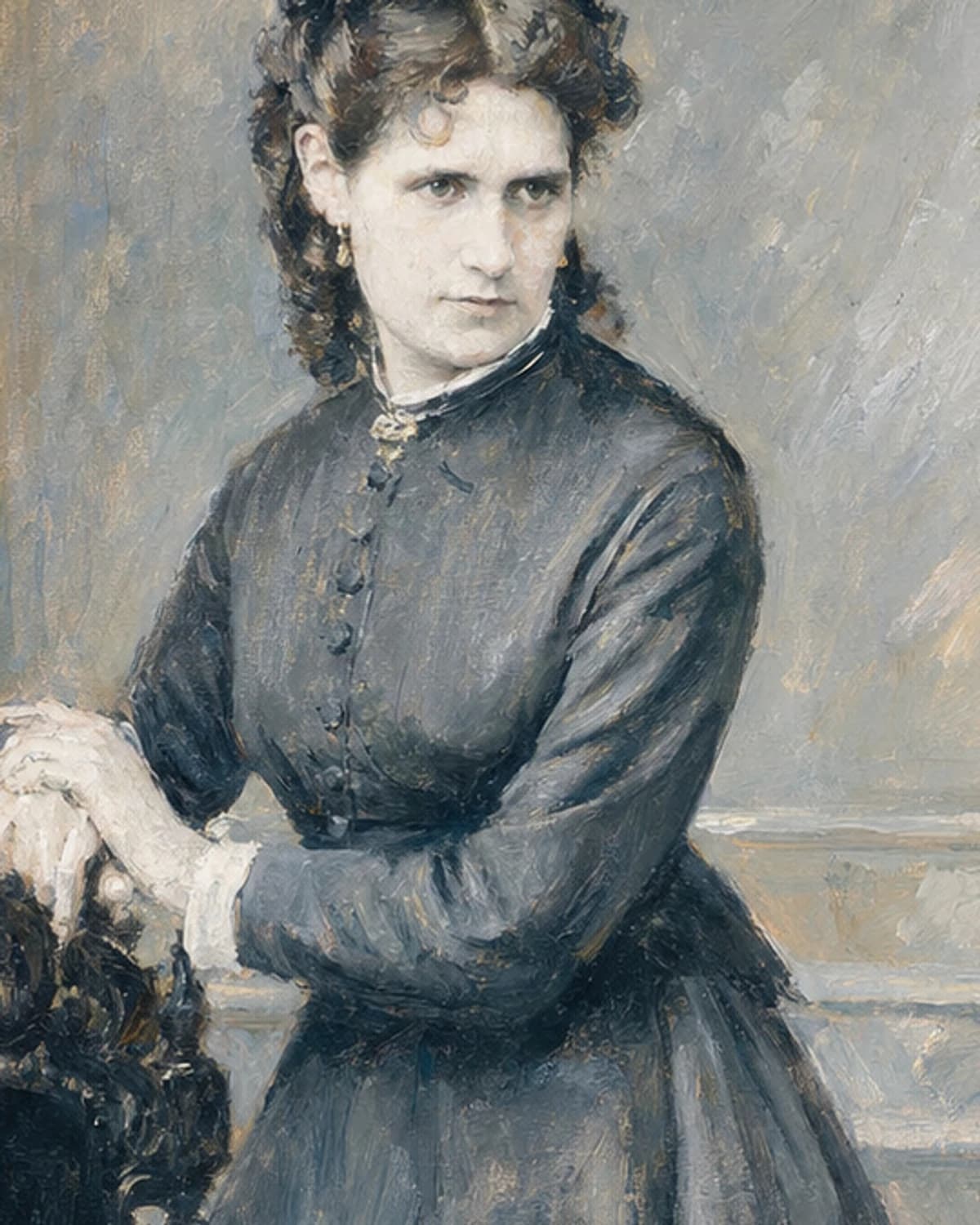
Berthe Morisot and her sisters began drawing lessons in 1857 to make their father a birthday present; in 1864 she was accepted at the Salon, and in 1874 she was the only woman to show work at the first Impressionist exhibition in Nadar’s studio. Then came “The Cradle”, “Summer’s Day”, “The Cherry Tree” and every exhibition of the group but one. She was the wife of Eugène Manet and the sister-in-law of Édouard.
Biography
“Five or six lunatics, one of them a woman,” wrote Albert Wolff in Le Figaro of the exhibition in the studio of the photographer Nadar in the spring of 1874. The woman was Berthe Morisot, aged thirty-three, regularly accepted at the official Salon since 1864. That year the Salon rejected her, and she never submitted again.
She was born on 14 January 1841 in Bourges, where her father, Edmé Tiburce Morisot, was prefect of the department of Cher; her mother, Marie-Joséphine-Cornélie Thomas, was a great-niece of Fragonard. There were two sisters, Yves and Edma, and in 1848 a brother, Tiburce, was born; in 1852 the family moved to Paris. The girls began drawing in 1857 for a birthday present for their father. The first teacher, Geoffroy-Alphonse Chocarne, struck Berthe as dull, and after a few months she asked for another; Joseph Guichard, who ran a school for girls in the Rue des Moulins, took her and Edma to the Louvre, where from 1858 they copied the old masters, always chaperoned, since women were allowed neither to work in the museum alone nor to train properly. In the Louvre she met Manet and Monet. When she wanted to paint out of doors, Guichard sent her to Corot; in 1861 he began giving the sisters lessons, and under his influence she took to plein air and to watercolour, which is easy to carry. From 1863 she studied with Achille Oudinot, and in the winter of 1863–1864 she modelled under Aimé Millet; no sculpture survives. Nor do the paintings, for that matter: almost everything made before 1869 she destroyed herself, never satisfied, so that tracing what each teacher taught her is hard.
In 1869 Edma married a naval officer, Adolphe Pontillon, moved to Cherbourg and almost stopped painting. “I am often with you in thought, dear Berthe. I’m in your studio,” she wrote to her sister.
Fantin-Latour introduced her to Édouard Manet in 1868. She posed for his “Repose” and “Berthe Morisot with a Bouquet of Violets”, he gave her an easel for Christmas, and in 1874 she married his brother Eugène. She always exhibited under her maiden name. In 1872 Durand-Ruel bought twenty-two paintings from her; in 1877 the critic of Le Temps called her the one real Impressionist in the group, and by the exhibition of 1880 even Wolff counted her among the best. Of the eight Impressionist exhibitions between 1874 and 1886 she missed one, in 1879: on 14 November 1878 her daughter Julie was born, her only child, who later posed for her mother, for Renoir and for her uncle Édouard. Morisot held her first solo exhibition in 1892. In 1894 Gustave Geffroy named her, with Marie Bracquemond and Mary Cassatt, one of the “three great ladies” of Impressionism.
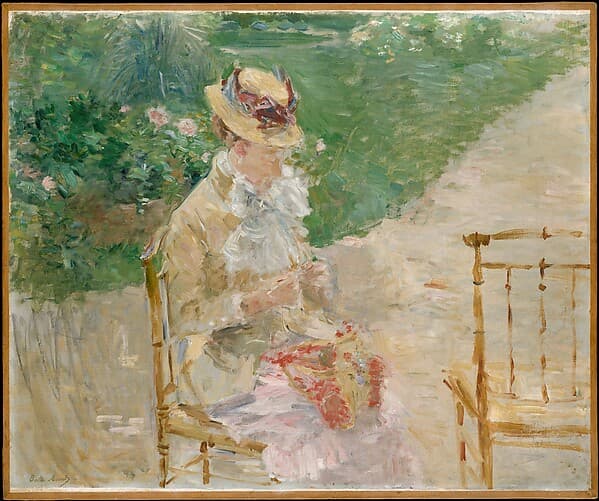
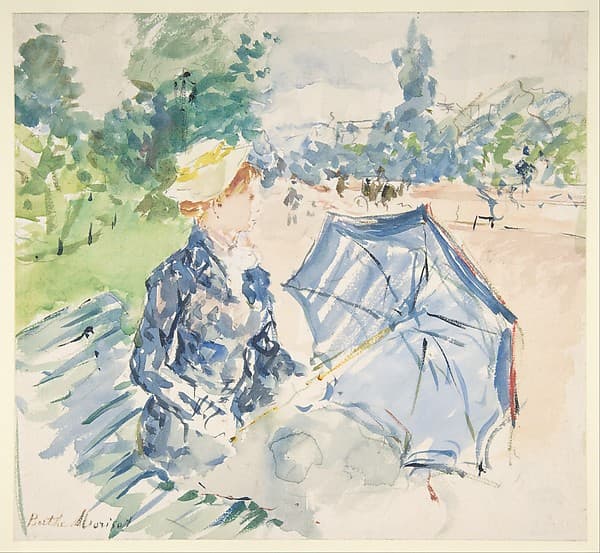
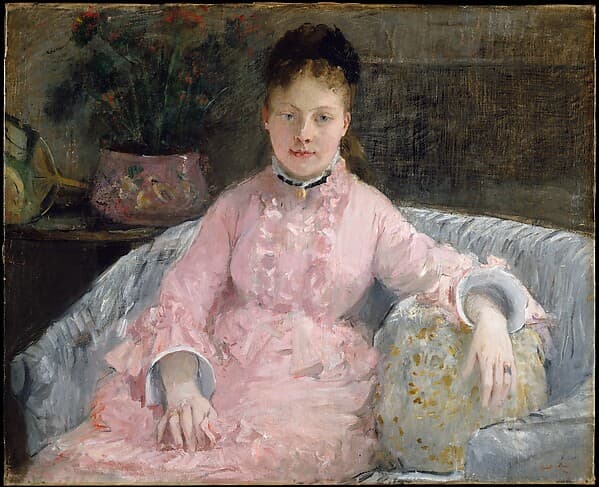
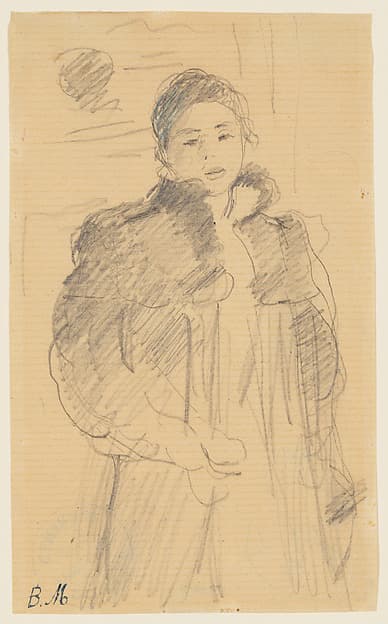
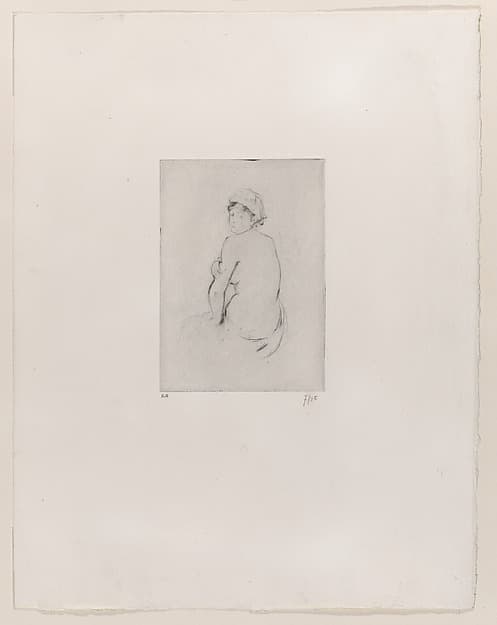
She painted what she saw at home: her sisters, her mother, her daughter, the nanny, women at their toilette, the garden, boats. There are no street scenes or city crowds, and the nude appears only late. “The Cradle” of 1872, with Edma sitting over her sleeping daughter, “The Harbour at Lorient” of 1869, “Eugène Manet on the Isle of Wight” of 1875, “The Psyche Mirror” of 1876 with a girl before the glass, “Summer’s Day” of 1879 with two ladies in a boat on the lake of the Bois de Boulogne: almost all of it small. Oil came hard to her; until the mid-1870s she worked mostly in watercolour, then, like Degas, in oil, watercolour and pastel at once. Around 1880 she began painting on unprimed canvas, as Manet and Eva Gonzalès were trying at the same time, and the brushstroke grew freer; in 1888–1889 the short quick touches gave way to long, sinuous strokes that model form, and she often left the edges of her pictures unpainted, with the canvas showing through. After 1885 she first drew in charcoal and coloured pencil, transferred the drawing to the canvas by squaring and tracing paper, and only then took up oil; from Japanese prints she acquired the habit of shifting the subject away from the centre. There is a great deal of white in her work, pure and mixed in; the palette is limited, and yet her colleagues called her a virtuoso colourist. Her largest picture, “The Cherry Tree” of 1891, is brighter than the rest. In a notebook of 1890 she wrote that she did not know of a man who had treated a woman as an equal, “and that’s all I would have asked for, for I know I’m worth as much as they”. To my mind that sentence is worth keeping in view when reading about the “feminine charm” the critics so readily found in her painting.
Eugène Manet died in 1892. Berthe Morisot died in Paris on 2 March 1895, at fifty-four, leaving the sixteen-year-old Julie; she is buried in the Passy cemetery, in the Manet family vault.
Artist works
Works by the artist
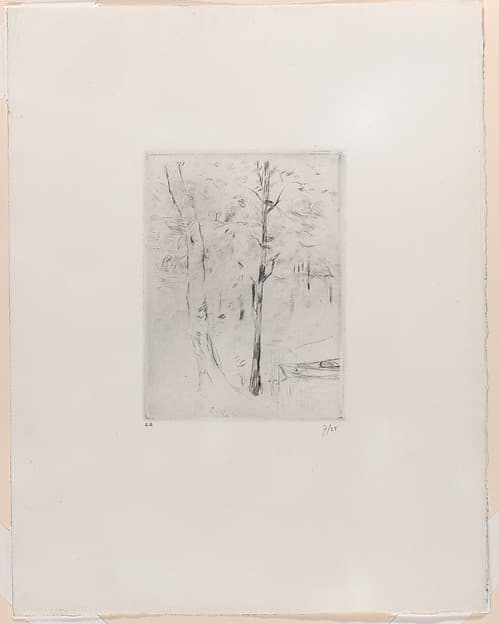
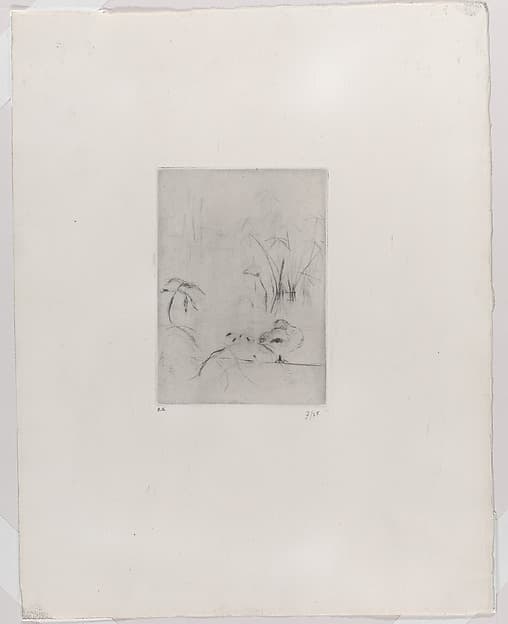
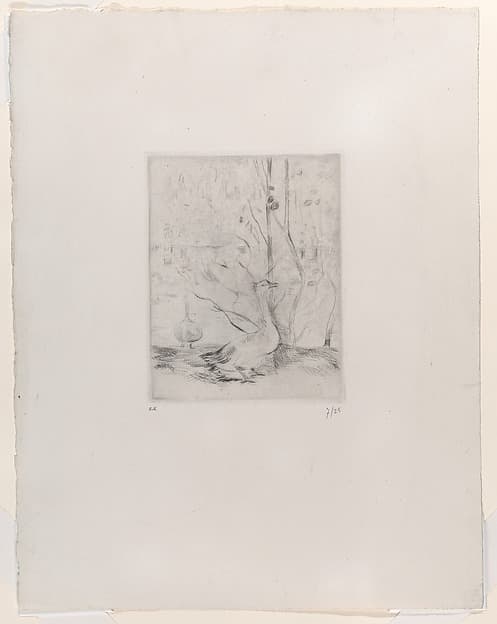
Works by Berthe Morisot available in this edition of NEOARCA.
Related context
Associations
Works connected through artistic movements, cultural context and period. Priced works available in this market appear first.








Profile notes
Profile and sources
Image
Artist image
На основе открытого изображения: Unknown author Unknown author; Wikimedia Commons; Public domain.
