
1548–1610
Bernardo Bitti
Bernardo Bitti, a Jesuit from Camerino, arrived in Peru in 1575, the first artist the order sent to South America, and for thirty-five years painted altarpieces for churches in Lima, Cusco, Juli, Arequipa, La Paz and Sucre. He brought Italian Mannerism, with its elongated figures and pastel colour, to the Andes; he is regarded as the founder of the Cusco School of painting.
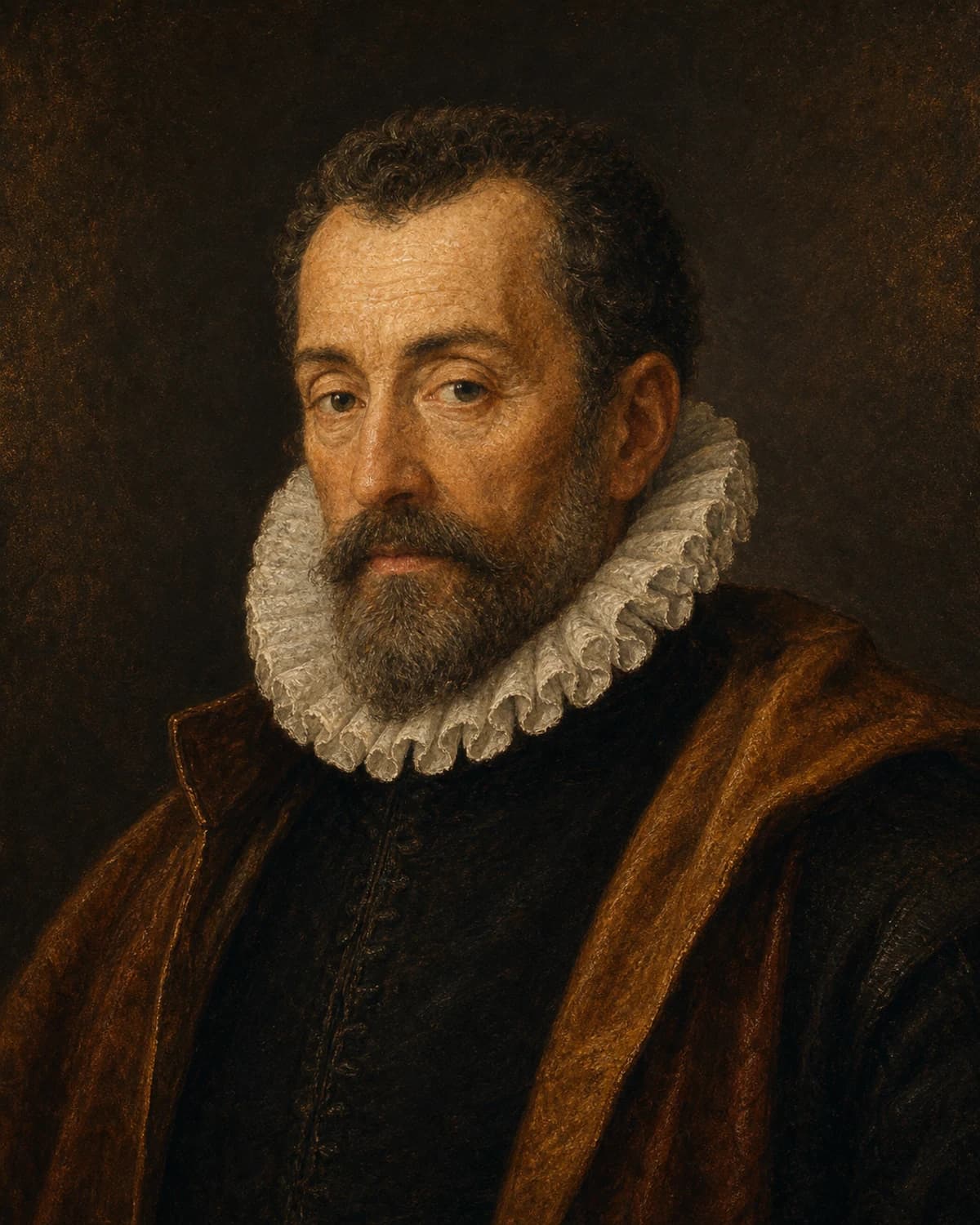
Biography
In 1612 the Inca Garcilaso de la Vega recalled the “Last Judgement” that Bernardo Bitti had painted for the Indian chapel of the Jesuit church in Cusco: according to him, the sight of this painting persuaded many natives to accept baptism. The painting has not survived. Bitti never signed any of his works at all.
Little is known of his life in Europe. He was born in 1548 in Camerino, in the Papal States, began painting early and as a teenager went to Rome, where he studied painting for five years among the Italian Mannerists. In 1568, at the age of twenty, he entered the Jesuit order and until 1573 lived in the novitiate of Sant’Andrea al Quirinale. He may have painted there too, but nothing has survived.
Meanwhile the Jesuits of the Viceroyalty of Peru were asking Rome to send them skilled painters. The choice fell on Bitti: a painter who was also a Jesuit was best suited to altarpieces. He was assigned to the mission in 1571 and became the first artist the order sent to South America. On the way the mission stayed in Spain, and for about fourteen months he apparently studied Sevillian painting; later, his pictures were found to resemble the work of Luis de Morales and to show the influence of Giuseppe Valeriano. He arrived in Peru in 1575. The provincial of the order, Father Bracamonte, had called him there “to evangelise through art”.
He worked for eight years in Lima, first for the Jesuit college and the church of San Pedro. His “Coronation of the Virgin” and “Virgin of the Candelaria” are still there; he also made a retablo for the church. The “Coronation” is Mannerist in its elongated figures, elegant poses and soft blue and pink tones, but it is unusually symmetrical, built around the Trinity, and the persons of the Trinity are clearly distinguished: God the Father and the Son are of different ages, and the Holy Spirit takes the form of a dove. This avoided the confusion that might arise among new converts at the sight of the Trinity as a three-faced man or as three identical figures. In 1583 Bitti moved to Cusco and by the end of 1584 had painted an “Immaculate Conception” for the Jesuit church, built its high altar and made that very “Last Judgement”. Then began his travels through Spanish America: Juli, where most of his works were made, Potosí, Arequipa, La Paz, Chuquisaca (present-day Sucre), Chucuito and Acora. From 1595 to 1598 he lived in Cusco again, alternating it with Chuquisaca and Arequipa, and around 1603 he worked once more in Arequipa. Together with another Jesuit, Pedro de Vargas, he made retablos all over Peru, and in the Regional Historical Museum of Cusco statues of saints carved from agave wood are attributed to him.
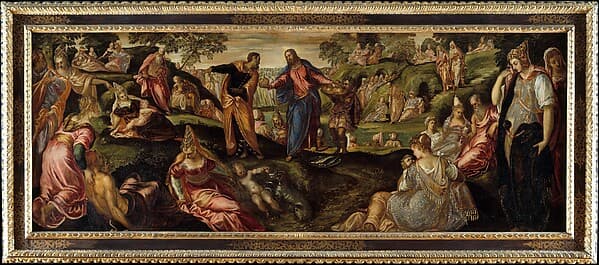
His manner is recognisable without a signature. The figures are elongated, with slender hands and fingers and refined poses, in tight compositions; the drapery breaks into crisp folds as if made of paper and seems to ignore the weight of the body; the colour is cool, most often pastel blue and pink, and in the works from Juli it grows more intense. He painted in tempera. What sets him apart from Italian Mannerism is the absence of learned complexity and sensuality. The “Immaculate Conception” in the Basilica of La Merced in Cusco shows this well: Mary’s sharp-featured face, a background with no landscape at all, a work made for devotion.
Whether he had a circle of pupils of his own is hard to say. According to some accounts, in the 1580s he set up a workshop in Cusco where he taught drawing and oil painting to Quechua and mestizo pupils; according to others, he never stayed anywhere long and set up neither a workshop nor a following of apprentices. The Jesuit Diego de la Puente, who continued his work, is named as his pupil; his influence is seen in Gregorio Gamarra, Lázaro Pardo de Lagos, Diego Cusi Guamán and Pedro Bedón, and through Bedón in the Quito School. Other Italians followed him to Peru, Mateo Pérez de Alesio and Angelino Medoro, but it was Bitti who proved decisive for the painting of the viceroyalty: Mannerism persisted in Peru and Bolivia long after it had gone out of fashion in Europe.
In 1604 Bitti returned to Lima for good, and he died there in 1610.
Related context
Associations
Works connected through artistic movements, cultural context and period. Priced works available in this market appear first.
Profile notes
Profile and sources
Image
Artist image
На основе открытого изображения: Atribuido a Bernardo Bitti; Wikimedia Commons; Public domain.
