
13.07.1875–23.06.1944
Arthur Segal
Arthur Segal, a native of Iași and the son of a banker, studied in Berlin, Paris and Munich, was among the founders of the Neue Sezession in 1910, and lived in Ascona, Switzerland, during the First World War. In 1923 he opened his own school in Berlin; after 1933 he was forced to leave Germany and in 1936 founded a second school in London.
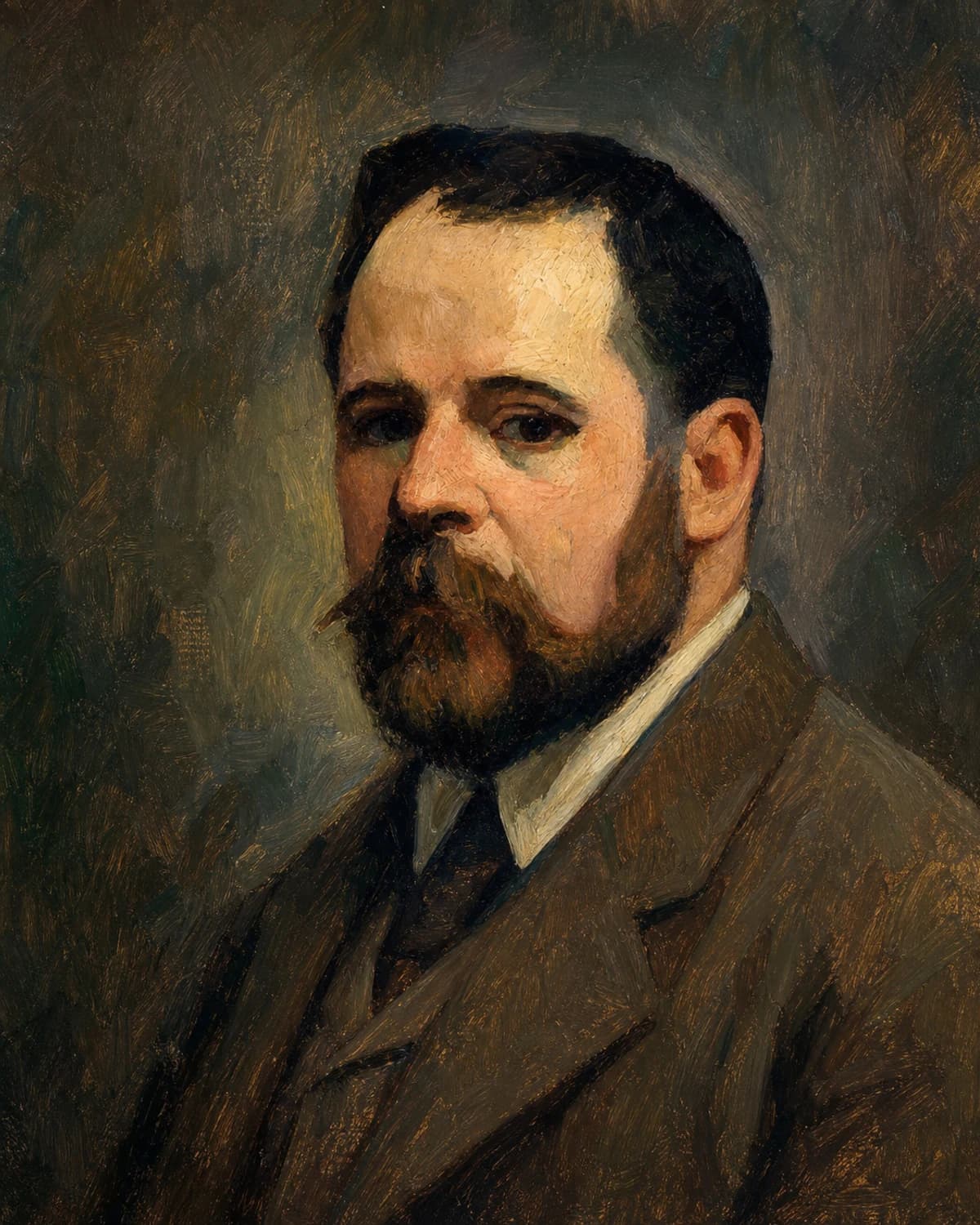
Biography
In 1933 Arthur Segal, who was Jewish by origin, was forbidden to exhibit in Germany, where he had lived for almost three decades. He left for Majorca, then for London.
He was born on 13 July 1875 in Iași, then in the Kingdom of Romania, into a Jewish family; his father was a banker. In 1892 Segal entered the Berlin Academy of Arts, where he studied with Ernst Bracht. In 1895 he studied at the Académie Julian in Paris, and in 1896 in Munich with Adolf Hölzel. In the early 1900s he continued his studies in Paris and in Italy. In 1904 Segal settled in Berlin. His work was shown at an exhibition where artists of the groups Die Brücke and Der Blaue Reiter, two leading German Expressionist groups, were also represented. In 1910 he became one of the founders of the Neue Sezession, an association of artists whose pictures had been rejected by the Berlin Secession. In 1912 he exhibited alongside Herwarth Walden and appeared in Walden’s magazine Der Sturm.
Segal’s early works show the influence of Impressionism and Neo-Impressionism. From 1910 his manner shifted towards Expressionism and Dada, and around 1916, as is generally held, he arrived at a style of his own. From the same year, 1910, he also made woodcuts, and many of them were anti-war in character.
In 1914, at the outbreak of the First World War, Segal, a pacifist, moved with his family to Monte Verità and then to Ascona in Switzerland, and stayed there until 1920. His house became a meeting place for artists in exile; those said to have visited include Jean Arp, Marianne von Werefkin and Alexej von Jawlensky. Together with the Dadaists he took part in exhibitions at the Cabaret Voltaire in Zurich. From 1919 Segal belonged to the Novembergruppe, an association of artists formed in Berlin after the revolution of 1918. In 1920 he returned to Berlin, and in 1923 he founded his own art school, which became a meeting place for many artists. He was offered a teaching post at the Bauhaus in Dessau, the German school of art, architecture and design; he declined. After the Nazis came to power, the ban on exhibiting forced him to leave. In 1933 he fled to Palma, Majorca, and when the Spanish Civil War began he moved to London. There in 1936 he founded another school, which his daughter Marianne also helped to run; it lasted until 1977. Segal wrote books and articles and often gave lectures. His son Walter Segal became an architect.
Segal died in London on 23 June 1944.
Related context
Associations
Works connected through artistic movements, cultural context and period. Priced works available in this market appear first.








Profile notes
Profile and sources
Image
Artist image
На основе открытого изображения: Arthur Segal (1875-1944); Wikimedia Commons; Public domain.
