
18.02.1860–22.08.1920
Anders Zorn
Anders Zorn (1860–1920) grew up in Mora, in Dalarna, on his grandparents’ farm and became one of the most sought-after portrait painters of his day, painting King Oscar II of Sweden and three American presidents. From the 1880s he took up etching and made about three hundred plates. He and his wife left their savings and collection to the state.
Biography
Zorn’s father, a German brewer from Bavaria, died in Helsinki in 1872 without ever seeing his son. Anders took his surname only later.
He was born on 18 February 1860 in Yvraden, near Utmeland, in the parish of Mora, in Dalarna. His mother worked in Uppsala, so for the first years the boy lived with her parents. He began early to carve wooden figures, and a small inheritance from his father allowed him to attend school in Enköping from the age of twelve. There he learned standard Swedish: in Mora at that time people spoke only the local dialect. It was also in Enköping that his teachers noticed his gift for drawing. Sketches of his classmates, views of the town and woodcuts of people and horses are kept today in the Zorn Collections in Mora. In 1875 he entered the Royal Swedish Academy of Arts in Stockholm, where he studied until 1880. At an exhibition in 1880 he showed the watercolour “In Sorrow” (I sorg), which was noticed in artistic circles. Wealthy Swedish families began to commission portraits from him. Through one of these commissions he met Emma Lamm, the daughter of a well-to-do Jewish merchant, and in 1881 they became engaged. He could not marry at once; the young artist had no means to support a family.
He looked for earnings abroad. For several years he lived mainly in England and Spain, studying the movement of water and the reflections on its surface, and this can be seen in the watercolour “Summer Fun” (Sommarnöje, 1886). In 1885 in Madrid he painted “Love Nymph”, which brought him success. Large commissions from Spanish and Portuguese nobility followed. Back in Sweden, he married Emma Lamm on 16 October 1885. On the honeymoon, in Hungary and Turkey, he fell seriously ill, and the journey was interrupted for three months.
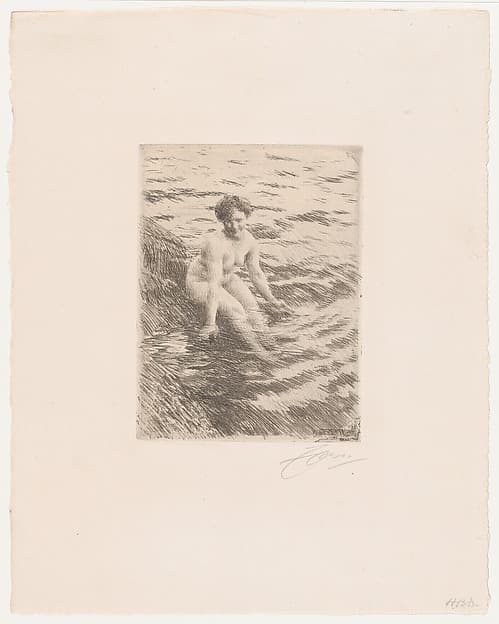
Zorn took up etching in London, made his first plate in 1883, and learned the technique from the Swedish artist Axel Herman Hägg. According to the catalogues, he made about three hundred etchings: portraits, genre scenes, nudes. In them he built form from bundles of free strokes, taking Rembrandt as his model. Among the best known are “Self-Portrait with His Wife” (1890), “The Omnibus” (1891), “Portrait of Ernest Renan” (1892) and “Madonna” (1900). The Hamburg Kunsthalle bought 42 etchings from him through its director Alfred Lichtwark, while the watercolour “Hamburg Harbour”, commissioned by Lichtwark, remained a single work.
In France, in 1889, at the age of 29, he received the Legion of Honour at the Exposition Universelle in Paris. In the 1890s in Paris he spent much time with the Finnish artist Albert Edelfelt. By 1887 he had firmly switched from watercolour to oils.
In 1893 Zorn went to the United States to paint portraits of politicians and industrialists. His portrait of President Grover Cleveland became widely known; later he painted Theodore Roosevelt (1905) and William Howard Taft (1911). In 1896 he received a large gold medal at the international exhibition in Berlin.
In the summer of 1897 Zorn visited Russia, where he was well received. He lived in Saint Petersburg and Moscow and grew close to Ilya Repin and Konstantin Korovin, with whom he stayed for the most part. In the same year, 1897, he painted “Midsummer Dance”, an evening scene from a rural festival, now in the Nationalmuseum in Stockholm. It seems to me that this work explains better than any portrait why he was regarded as an heir of Impressionism, although he himself used a sparing palette: lead white, yellow ochre, vermilion and ivory black.
In 1886 he and Emma bought land beside the church in Mora and moved into a cottage from his grandfather’s farm. It was enlarged, and the estate, Zorngården, was completed in 1910. At home he painted mostly Swedish landscapes and nudes, returned to sculpture (“Nymph and Faun”, “Morning Bath”, a statue of Gustav Vasa) and took up photography. He collected wooden houses of Dalarna in order to preserve the old craft of building them, and a collection of art, including Rembrandt.
Zorn died on 22 August 1920 in the hospital in Mora and was buried in the old cemetery. At the same time, at his wish, the Bellman Prize for literature was established. The couple left their estate to the state; in 1942, after Emma’s death, the house became a museum.
Artist works
Works by the artist
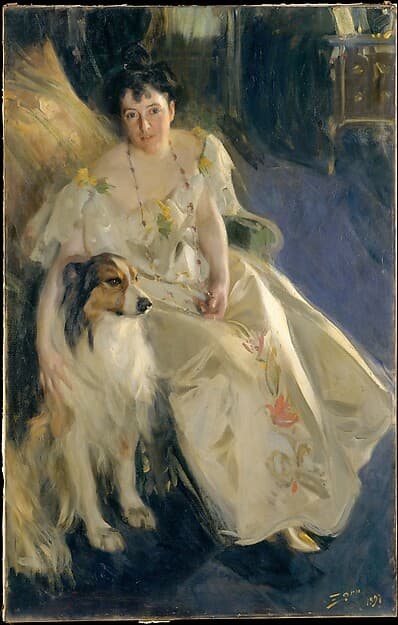
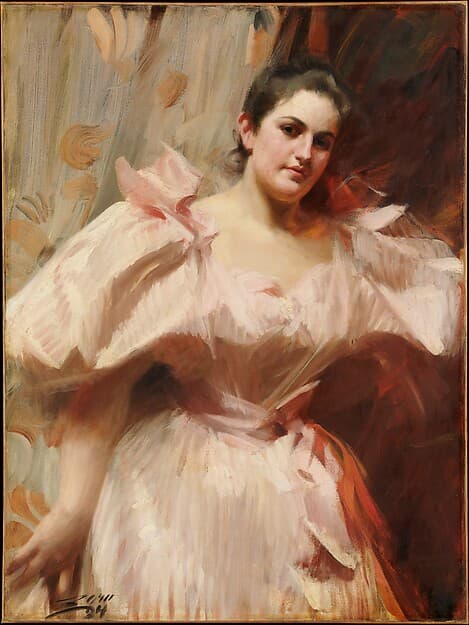
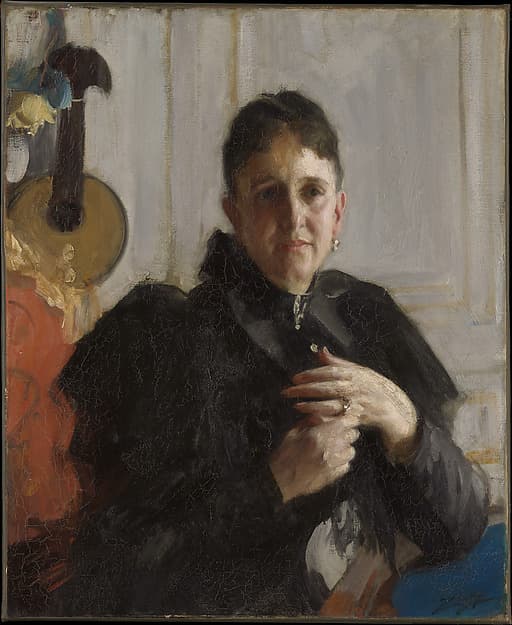
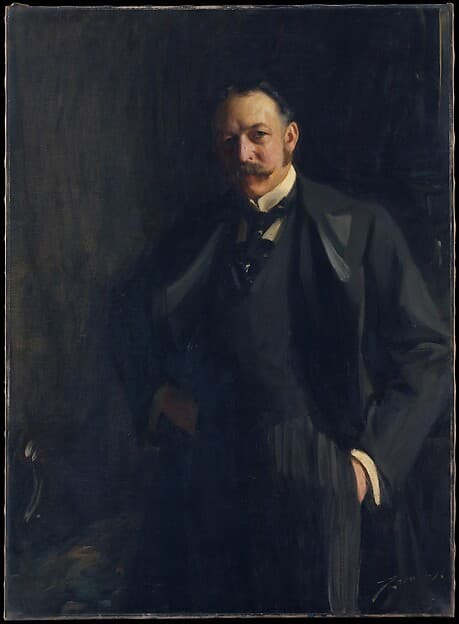
Works by Anders Zorn available in this edition of NEOARCA.
Profile notes