
13.07.1894–11.10.1951
Álvaro Guevara
A Chilean from Valparaíso who came to England as a teenager to study textiles and ended up at the Slade School of Art. His portrait of Edith Sitwell (1916) was bought by the Tate Gallery in 1920. In the 1920s he lived by turns in Chile, London and Paris, and from 1929 he settled in Aix-en-Provence. He was also a boxer: in 1924 he won the Valparaíso championship.
Biography
In 1920 the National Art Collections Fund bought for the Tate Gallery a portrait of the poet Edith Sitwell, painted four years earlier. Its author was twenty-five, and he became the first Latin American whose work entered the gallery’s collection.
His name was Álvaro Guevara, and in Europe he was known as “Chile Guevara”.
He was born in Valparaíso in 1894; the exact date differs between records (13 July, 5 July, 17 July and 10 June are all given), and I would accept only the year. His father, Luis Guevara Arias, was a wool exporter, and his mother, Ida Juana María Reimers, came from the Reimers family. Álvaro was the tenth of twelve children. His elder brother Lucho ran the family’s business in Yorkshire, and on his advice Álvaro and his two youngest sisters were sent to England in 1910; by some accounts he left Chile in 1909. He was placed at Bradford Technical College to study textiles. At the same time he spent two years secretly attending evening classes at the Bradford College of Art. His brother’s friends William Rothenstein and Albert Rutherston encouraged his interest in painting. He failed his technical examinations, but won a scholarship to the Slade School of Fine Art in London, where he studied from 1912 or 1913 until 1916.
His ties to the Bloomsbury Group, a circle of London writers and artists, were apparently not very close: he is described as only distantly associated with it. His one solo exhibition was held at the Omega Workshops, the design studio set up by members of that circle. The Sitwell portrait belongs to the same years. The memoirist Diana Holman-Hunt described their relationship as “romantic and spiritual”.
In 1923 Guevara settled in Viña del Mar and opened a studio. At the official Salon he showed five paintings, and his avant-garde manner was received coldly. In 1925 he travelled to the south of the country to paint Mapuche life and the landscapes there. In Chile he also became known as a boxer: in 1924 he beat Zózimo López in the middleweight division and became champion of Valparaíso.
In 1926 he returned to London with about fifty paintings, and in November thirty-four of them were shown at the Leicester Galleries. From 1927 he lived in Paris. In 1929 he married the painter Meraud Guinness (1904–1993), of the Guinness family, and the couple settled in Aix-en-Provence. They had a daughter, Alladine; the couple later separated.
In 1940 a German air raid destroyed many of his works stored at Bourlet. By one account about forty paintings survived, and some of them were sold in London in 1951. In 1941 he was arrested by the Gestapo, his works were confiscated, and he was held in a concentration camp. He was allowed to return to Chile in 1943. According to Pablo Neruda, he never recovered from his imprisonment.
In 1945 Guevara went to London as honorary consul of Chile, and the following year became cultural attaché in Switzerland. In 1948 he returned to Aix-en-Provence. Besides painting, he wrote two literary works: a novel, “The Dictator”, and the “Dictionnaire intuitif”, published in 1954, after his death. Guevara died in Aix-en-Provence in October 1951; 16 October is the date most often given.
Related context
Associations
Works connected through artistic movements, cultural context and period. Priced works available in this market appear first.








Profile notes
Profile and sources
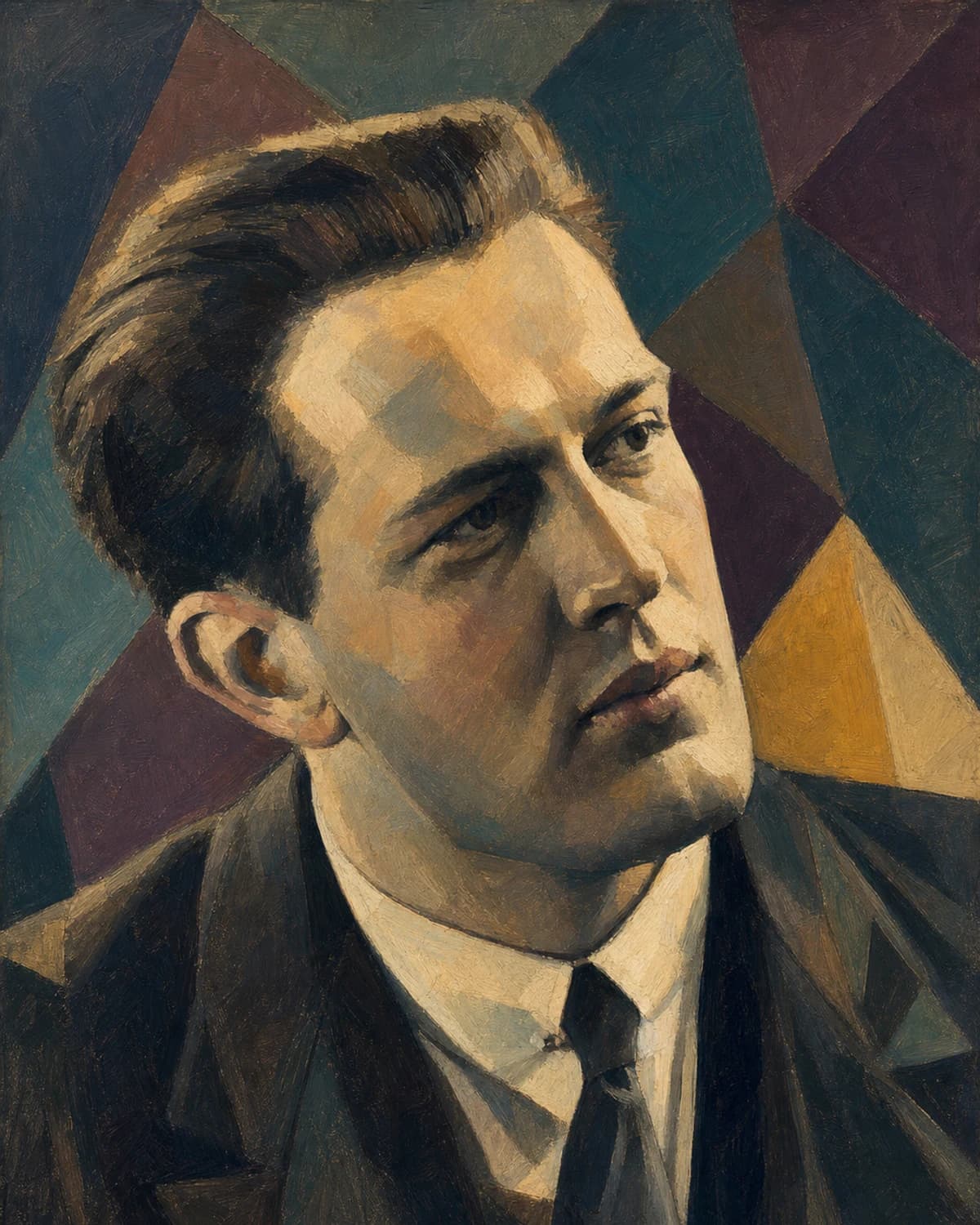
Image
Artist image
На основе открытого изображения: George Charles Beresford; Wikimedia Commons; Public domain.
