
14.03.1880–03.06.1930
Alexander Bogomazov
Alexander Bogomazov (1880–1930) worked in Kiev and was one of the leading painters and theorists of the Ukrainian avant-garde. In 1914 he wrote the treatise “Painting and Its Elements”, which was published in full only in 1996. He is best known for his Cubo-Futurist works of 1913–1917 and for his late “Spectralism”, to which the unfinished triptych “The Sawmill” belongs.
Biography
Alexander Bogomazov began the triptych “The Sawmill” in 1927 and never finished it. By June 1930 two of the three parts had been painted, the third remained a final sketch, and the preparatory drawings numbered more than three hundred. He himself called his late manner Spectralism.
He was born on 14 (26) March 1880 in the village of Yankov Rog in Kharkov Governorate (now Ivanivka in Sumy Oblast; according to other sources, in Yampol), the second child of Konstantin and Anisiya Bogomazov. His father worked as a bookkeeper at a sugar factory; his mother left the family early. At his father’s insistence the boy trained as an agronomist at the Kherson Zemstvo Agricultural School in 1896–1902. In 1902, against his father’s wishes, he entered the Kiev Art School, where he studied under Alexander Murashko and Ivan Seleznev; Alexandra Exter and Alexander Archipenko were fellow students. In 1905 he was expelled for taking part in demonstrations and strikes. He studied in the private studio of Sergei Svetoslavsky, then in Moscow in the studios of Fyodor Rerberg and Konstantin Yuon. In 1908 he went back to the Kiev school, began working for the newspaper Kievskaya Mysl (Kievan Thought) and took part in the exhibition “The Link” together with David and Vladimir Burliuk, Mikhail Larionov and Exter. At the school that year he met the artist Wanda Monastyrska, his future wife.
Like many of his generation, he passed through realism and Impressionism and lingered longer on Symbolism: he read Oscar Wilde and Knut Hamsun and wrote bluish, ghostly watercolours and poems about dreams, misty autumn and death. On 16 May 1911 he graduated from the school, and that summer Kievskaya Mysl sent him as a correspondent to the Grand Duchy of Finland. For a month and a half he travelled from Imatra to Savonlinna, painting the rapids, Monrepos Park near Vyborg and Lake Saimaa. The trip produced the Finnish Cycle: dozens of paintings, watercolours and ink drawings, their exact number unknown.
In 1913 he married Wanda; the wedding took place in Boyarka, near Kiev. In 1914, together with Exter, he organised the Cubo-Futurist group “The Ring”. Its exhibition in Kiev that March showed twenty-one artists, and Bogomazov himself had eighty-eight works there, mostly graphics. The journal Muza called the show “a new word in the artistic life of Kiev”, but responses were few, and the group broke up the same year. In “Train” and other works of 1913–1914 movement is conveyed by bundles of straight lines converging in rays and fans, and by forms set diagonally to the edge of the picture.
In September 1914, in Boyarka, he finished the treatise “Painting and Its Elements” and dedicated it to his wife. Its ten chapters examine the dot, the line, simple figures, colour and rhythm, and also the relations between object, artist, picture and viewer. Rhythm for him is a qualitative category as well as a quantitative one: it can depress the spirit or lift it. The treatise also names a black square on a white ground the most perfect form, a year before Malevich’s painting. The French scholar Andrei Nakov called it prophetic. I would treat comparisons with Malevich and Kandinsky with caution: the manuscript remained unpublished for more than eighty years.
From 1915 until the end of 1917 Bogomazov lived in the Caucasus and taught drawing in the small town of Geryusy (now the Armenian town of Goris). There he made the bright painting “The Caucasus” (1915), the charcoal “View of the Caucasus” (1916), drawn from his balcony, and Cubo-Futurist canvases later gathered into the cycle “Memories of the Caucasus”.
Back in Kiev, he taught in several places at once: at the Zolotonosha Commercial School and at the primary school in Boyarka. On 9 June 1918 he addressed the congress of Ukrainian artists with a paper titled “The Main Tasks of the Development of the Art of Painting in Ukraine”. In 1919–1920 he headed the department of art education in the All-Ukrainian Committee for Visual Arts and taught at the First State Studio of Painting and Decorative Art. For agitprop he decorated revolutionary festivals and clubs, made posters for Gosizdat and worked on the agitation and medical train of the 12th Army.
From 1922 until his death he taught at the Kiev Art Institute alongside Vladimir Tatlin, Vadim Meller and Viktor Palmov; in September 1922 he was elected professor of easel painting. He drew up his own colour charts and studied tonal contrasts, and in 1927 his ideas entered the institute’s curriculum. That same year he became one of the founders of the Association of Revolutionary Masters of Ukraine and took part in the all-Ukrainian exhibition “Ten Years of October” in Kharkov, Kiev and Odessa.
Bogomazov died in Kiev on 3 June 1930 and was buried in the Lukyanovskoye Cemetery. The money raised by a committee in his memory went towards building an aeroplane named “For Soviet Power” and towards cultural work on a collective farm in his native village. That same year parts of “The Sawmill” were shown in the Soviet pavilion at the Venice Biennale; afterwards the works went on other journeys abroad and came back damaged. Soon his name disappeared from the history of Soviet art, and his widow preserved his works.
The first exhibition after the years of oblivion took place in 1966 in Kiev, at the Republican House of Writers. In 1973 Nakov gained access to the studio, which was still in the widow’s hands, and that same year several works were shown outside Kiev for the first time, at the London exhibition “Tatlin’s Dream”. Then came Toulouse (1991) and the Russian Museum (2008), and his works entered museums in New York, Chicago, Cologne and Otterlo.
In 2019, at the exhibition “Alexander Bogomazov: Creative Laboratory” at the National Art Museum of Ukraine, one part of the triptych, “Sharpening the Saws”, was shown for the first time in ninety years, after three years of restoration.
Related context
Associations
Works connected through artistic movements, cultural context and period. Priced works available in this market appear first.








Profile notes
Profile and sources
Image
Artist image
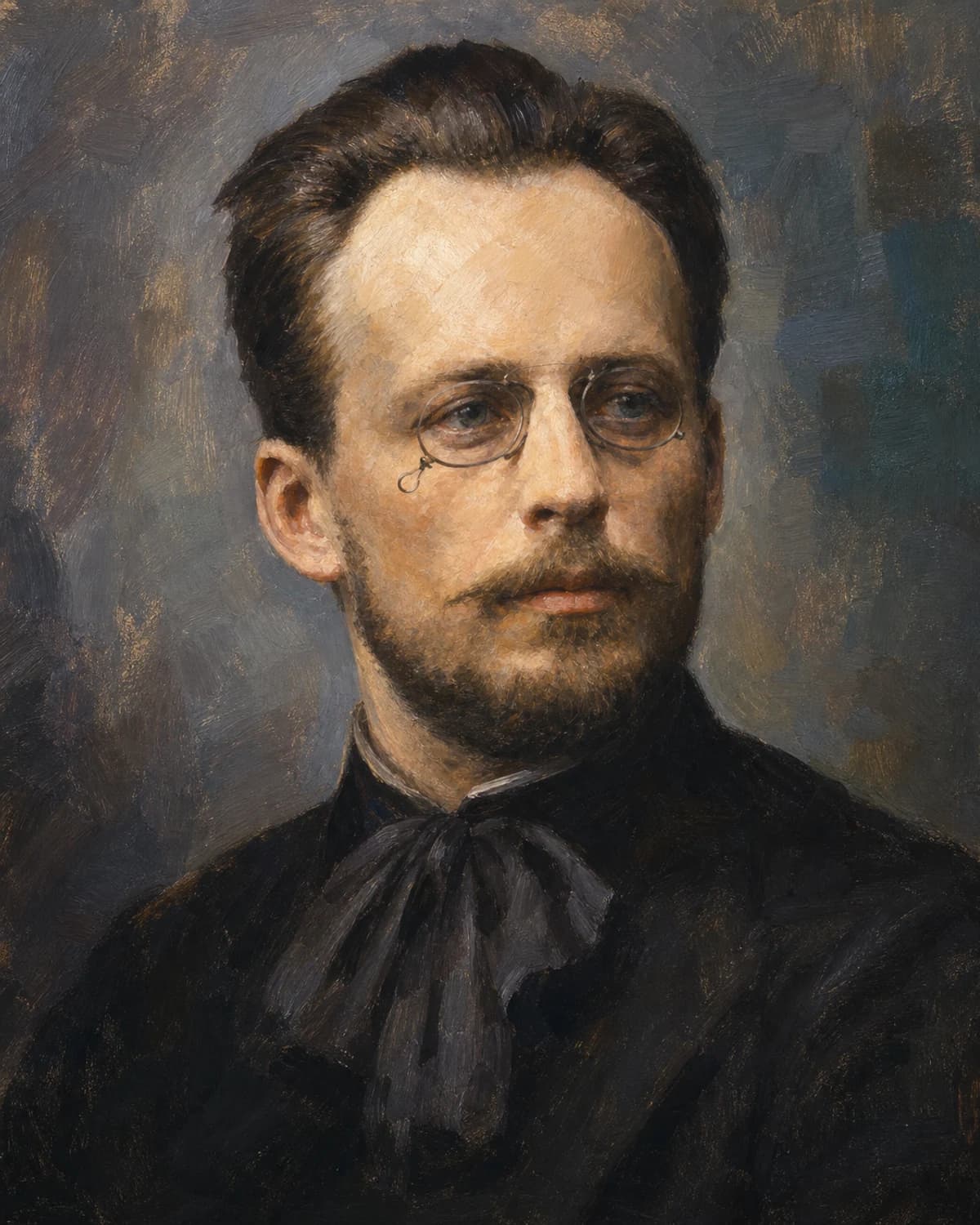
На основе открытого изображения: unknown photographer of mid-1920s; Wikimedia Commons; CC BY-SA 4.0.
