
12.08.1881–23.07.1963
Aleksandr Gerasimov
Aleksandr Gerasimov (1881–1963), a pupil of Korovin and Serov, began as a landscape painter close to Impressionism, and in the 1930s and 1940s became the author of official portraits of Stalin and Voroshilov, winning the Stalin Prize four times. In 1947–1957 he was the first president of the USSR Academy of Arts; under Khrushchev he lost his posts and his paintings were taken off display.
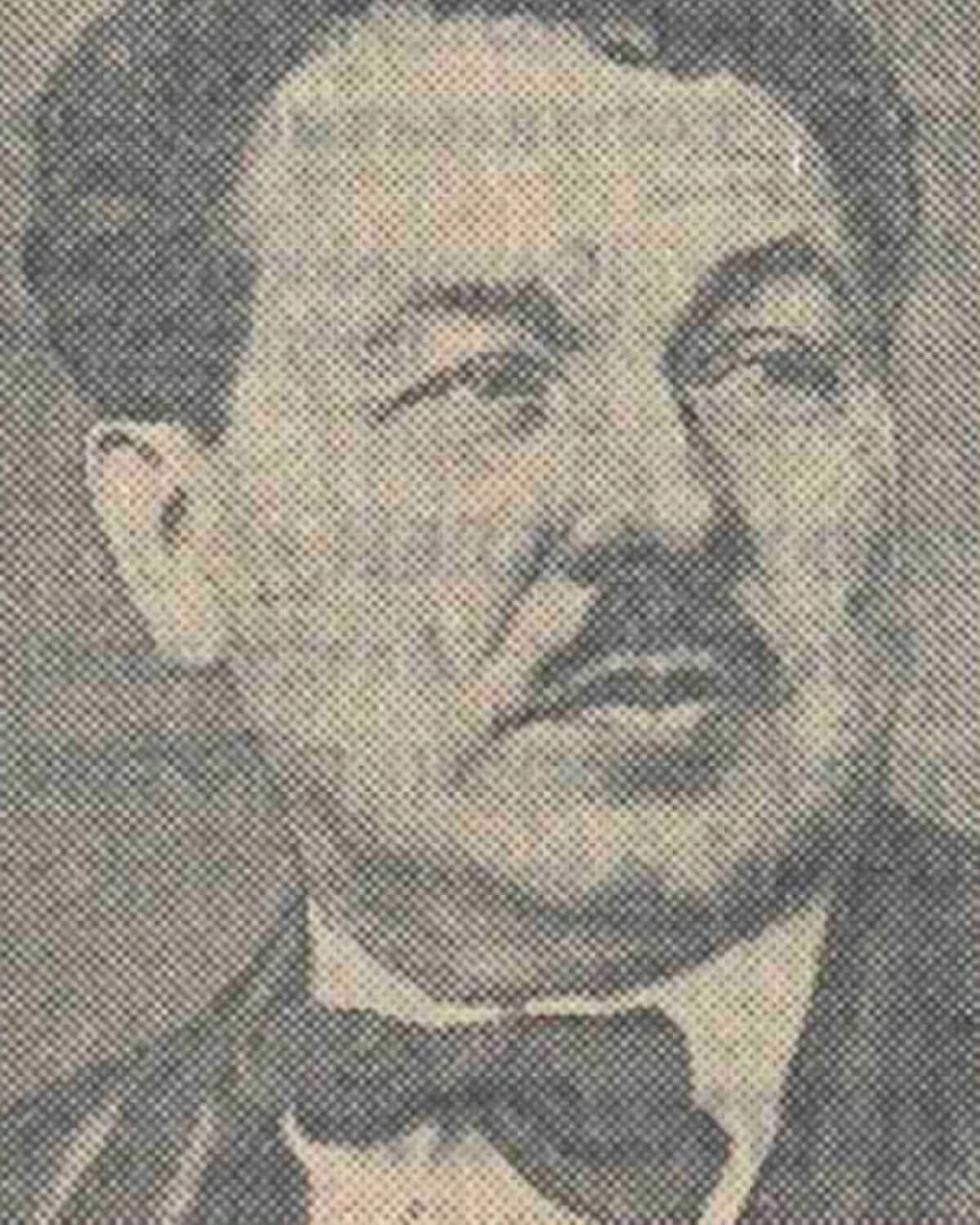
Biography
In 1935 Aleksandr Gerasimov painted “After the Rain”, a picture also known as “Wet Terrace”; it is now in the Tretyakov Gallery. Three years later came the canvas “Stalin and Voroshilov in the Kremlin”, for which in 1941 he received the Stalin Prize, first class, and which popular wit nicknamed “Two Leaders After the Rain”.
I think these two works should be kept side by side: almost all his work lay between a landscape like the one and a state portrait like the other.
He was born on 31 July (12 August) 1881 in Kozlov, Tambov Province, today’s Michurinsk, into a family of townspeople. Both his parents came from former serfs: his father from the peasants of the Chicherin landowners, his mother from those of the Satins. His father worked as a bathhouse keeper, then as a shop assistant, and by the age of thirty had set up his own business as a livestock dealer, driving horses and bullocks to Kozlov from the lower Don. In 1903–1915 the son studied at the Moscow School of Painting, Sculpture and Architecture under Konstantin Korovin, Abram Arkhipov and Valentin Serov. He also tried his hand at architecture: in 1913 a drama theatre building was put up in Kozlov to his design. In 1915 he was called up, and until 1917 he served as a non-combatant on a hospital train on the Southwestern Front. From 1918 to 1925 he lived and worked in his native Kozlov.
In 1925 Gerasimov moved to Moscow, joined the Association of Artists of Revolutionary Russia and taught at the 1905 Memorial Art School. His painting combined academic training with a light, almost Impressionist handling of light, and the leaders gradually became his main subject. “Lenin on the Tribune” (1930) and “Comrade Stalin’s Report at the Sixteenth Party Congress” (1931) are in the State Historical Museum, “The First Cavalry Army” (1935) in the Tretyakov Gallery. In the summer of 1934 he was given a three-month study trip to Germany, France, Italy and Turkey, and brought back “Paris at Night”, “Montmartre at Night” and “Hagia Sophia”. In 1936 he became Honoured Art Worker of the RSFSR, and in 1939 he took charge of the organising committee of the Union of Artists of the USSR, which he headed until 1954. His portraits of Stalin were regarded as canonical in the leader’s lifetime, and he painted Voroshilov many times. He also painted ballerinas and actresses, for instance Olga Lepeshinskaya and Alla Tarasova (1939), and illustrated Gogol’s “Taras Bulba”.
The Stalin Prizes followed one after another. The second, in 1943, was for “Hymn to October” (1942), and he gave the prize money towards building the tank “Ivan Michurin”; his personal savings went to the Defence Fund at the same time. That same year, 1943, he became one of the first four People’s Artists of the USSR, together with Boris Ioganson, Sergei Merkurov and Vera Mukhina. The third prize, in 1946, went to his group portrait of the four oldest Soviet artists (1944): Ivan Pavlov, Vasily Baksheev, Vitold Byalynitsky-Birulya and Vasily Meshkov. The fourth, second class, came in 1949 for the painting “Stalin at the Coffin of Zhdanov” (1948). In 1945 he painted the Tehran Conference.
In 1947, when the USSR Academy of Arts was founded, Gerasimov was among its first full members and became its first president. On his initiative the Academy was given Ivan Morozov’s former mansion on Prechistenka, which had previously housed the now abolished Museum of New Western Art. In 1949 he wrote commentaries in the magazine “Ogonyok” on reproductions of Western modernists, Salvador Dalí among them, presenting them as the art of militant imperialism; in the campaigns against “formalism” and “cosmopolitanism” of the late 1940s he was in the front rank. In 1950 he joined the Party, in 1951 he became a Doctor of Art History, and he was elected a deputy of the Supreme Soviet of the RSFSR. Yet he went on painting landscapes to the end, and they bear little resemblance to his state portraits: “Summer Day” (1950), “Thunderstorm” (1951).
In 1954 he painted a portrait of Jawaharlal Nehru, and in 1957 he left the post of president of the Academy and was succeeded by Ioganson. Under Khrushchev, Gerasimov was gradually relieved of all his posts, and his paintings were removed from museum displays.
He died on 23 July 1963 in Moscow and was buried in the Novodevichy Cemetery; the monument on his grave was made by Yevgeny Vuchetich in 1976. His book “The Life of an Artist” came out the same year he died, 1963. Since 1977 his house museum has been open in Michurinsk, holding the largest collection of his works, 141 pieces.
Related context
Associations
Works connected through artistic movements, cultural context and period. Priced works available in this market appear first.








Profile notes
Profile and sources
Image
Artist image
Unknown author Unknown author; Wikimedia Commons; Public domain.
